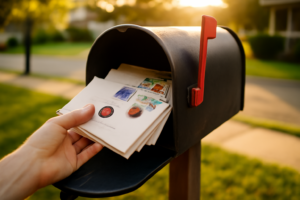
Collector forums love to argue about whether physical media is dying or making a comeback, and on the subject of letter writing the advice splits into two camps: one says it’s a dead art not worth reviving, the other insists any handwritten scrap counts as a real letter regardless of paper or ink. The second camp is wrong — a note scrawled on a torn notebook page isn’t in the same category as a proper letter, and conflating the two is exactly how people abandon the habit after one halfhearted attempt. I thought about this again last Tuesday, when my neighbor showed up at my door holding a cream envelope like it might be ticking. “Did you put this in my mailbox?” she asked, half-suspicious. I had — a two-page letter drafted the Sunday before, thanking her for feeding my cat while I was traveling. She lingered in the doorway, then said the thing I hear more often than I’d like: “I didn’t know people still did this.” Letter writing in 2026 apparently qualifies as a novelty act. That reaction alone is reason enough to keep sending them.
Ten years now I’ve been amassing analog tools — old watches, fountain pens, mechanical pencils — and running them through their paces with more scrutiny than most people would consider healthy. A $15 Seiko SNK809 gets handled with the same seriousness as a 1960s Omega Seamaster running a caliber 552 movement. What all that fussing has taught me carries straight over into letter writing: the vehicle changes the content. Words put down by hand, on paper that’s actually good, with a pen worth using, land differently than anything typed and sent. Call it intentionality rather than nostalgia, because that’s closer to what’s actually happening.
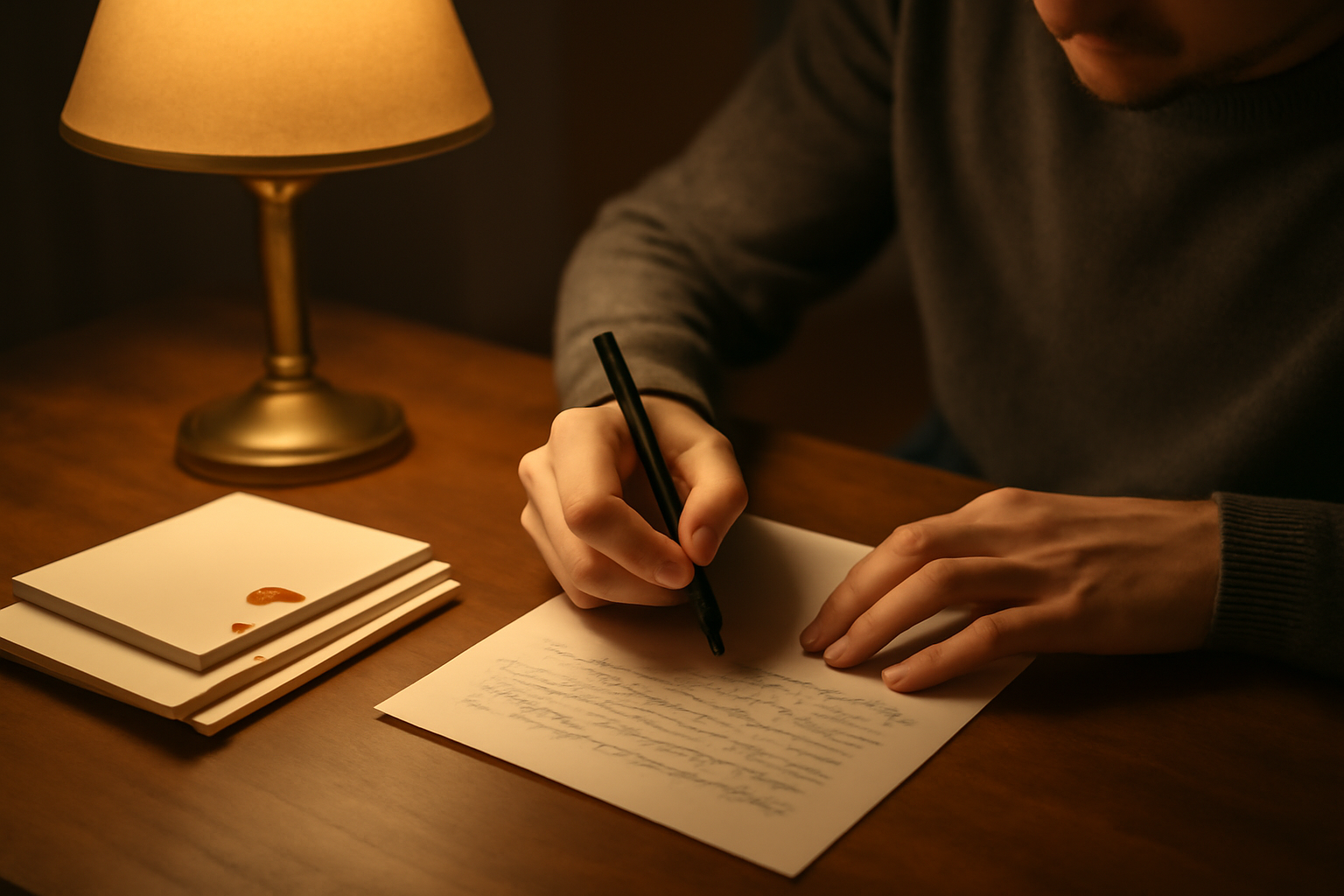
So each Sunday morning I sit down, TWSBI Eco loaded with a medium nib, ink well filled with Pilot Iroshizuku Kon-peki — a blue-black that behaves itself on the right stock without feathering — and I get to writing. One letter, every week, no exceptions. What follows is the case for why I’ve kept this up, and why 2026 might be exactly the year to start your own version of it.
Why a Handwritten Letter Lands Harder in 2026
Digital communication has us buried. The average inbox logs over 120 emails a day, on top of the hundreds of texts and app notifications ricocheting around any given person’s phone. Under that volume, any single message loses its weight — everything blurs into the same scroll. A physical letter landing in a mailbox, though, ignores that noise entirely. It announces something specific: someone sat down, thought of you specifically, and used their own hands to make this.
There’s a research basis for this beyond my own hunch. Work out of the University of Washington keeps finding that handwriting activates more complicated neural processes than typing does. The pace drops. Word choice gets more deliberate, since there’s no backspace key waiting to erase a false start — or there shouldn’t be, anyway. What I’ve noticed in my own letters is that they come out more honest, more considered, than anything I’ve ever typed, and I credit that directly to the friction of the process demanding more of me.
It’s not only the person receiving the letter who gets something out of it — I do too. That Sunday ritual has turned into one of the steadiest anchors in my week. The same way winding a mechanical watch each morning builds in a deliberate pause, sitting down to write a letter forces a kind of presence with someone else, even from a distance. Genuine presence like that is in short supply in 2026.
Tool Choice Changes Everything Here
I’ll admit this took a failure to learn. Early on, I reached for whatever paper happened to be in the house — usually 20 lb copy stock straight from an office supply run. The pen in rotation then was a Lamy Safari with a fine nib, inked with Diamine Oxblood, and the results were a mess: bleed-through on every page, feathering at nearly every letterform. My handwriting wasn’t the issue, but the letters read as careless regardless, and I couldn’t pin down why until another pen collector glanced at the stack of paper and said, flatly, “There’s your problem.”
Weight and coating on the paper make an outsized difference with fountain pen ink. Run-of-the-mill printer paper sits around 75–90 gsm with barely any sizing applied, so ink just spreads sideways through the fibers instead of staying put. What you actually need is paper at 90 gsm minimum with real surface sizing, giving you lines that stay crisp instead of blurred. Specifically, look for stock that holds up against bleed-through even with wetter ink formulas and doesn’t leave heavy ghosting showing through on the back.
That one bad batch of letters sent me down a rabbit hole of letter-writing paper, not unlike the rabbit hole of watch movements I’d already fallen into, and I never really climbed back out. Getting the stationery right changes the whole experience — it makes handwriting look better than it is, does justice to the ink, and tells whoever’s reading it that some thought went into every part of what landed in their hands.
Pairing Pen and Ink to the Paper You’re Using
Before getting into the stationery I actually reach for now, a word on pen and ink pairing. In my experience, medium nibs glide across textured letter paper better than fine or extra-fine nibs, which tend to snag on the surface texture. My TWSBI Eco medium handles this without complaint. That said, a well-cared-for Pilot Metropolitan with a medium nib and a cartridge of Pilot Iroshizuku will do the job just as well. Steer clear of heavily saturated, slow-drying inks — certain Noodler’s formulas come to mind — for formal letters, since your hand will drag through wet ink and smear the page as you go.
The Stationery That Finally Got Me to Stick With a Weekly Letter
Here’s the real constraint with a weekly letter habit: the stationery has to feel worth the time invested, but not so precious that using it up feels like a waste. Landing on that balance is the only reason this habit outlasted its first month instead of quietly dying like most of my other resolutions.
Where It Delivers
- That gold border gives just enough heft to a thank-you note or catch-up letter that it reads as a small gift rather than an obligation — people actually pause for a second when they open it.
- The cream shade photographs well and has real presence in hand, without tipping into precious territory — you can still fold it down for a standard envelope without a second thought.
- Buying the full set means you’re never counting sheets or hitting empty mid-week when the mood strikes — no lingering urge to hoard the good paper for some more special occasion.
Where It Falls Short
- That same decorative border resists very casual, off-the-cuff notes — it’s asking for a bit more intentionality than a quick “just checking in” letter usually carries.
- Once the weekly habit actually sticks, a set like this disappears faster than you’d guess, so budget for reordering sooner rather than later.
I almost talked myself out of ordering nice stationery, convinced that plain paper would be “authentic enough”—until I realized that small friction was exactly what was keeping me from making letters a real practice. XXINMOH 90 Piece Stationery Set – 60 Vintage-Style Paper
About This Article

Written by Ellen Ashford. Watch collector, fountain pen enthusiast, and lifelong journaler. Time & Ink is where I explore the craft of analog living — from vintage timepieces and fine stationery to the simple pleasure of putting pen to paper. More about this site.
Verify this against a primary source
Specifics change, and your situation may differ from the one described here. These are the authorities worth checking directly:
- NAWCC — horological reference, archives and research library
- Smithsonian Institution — collection records for historic timepieces and writing instruments