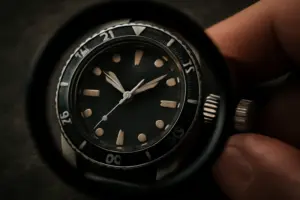
The week between Christmas and New Year’s is when calls like this start coming in: a neighbor presses his late grandfather’s Omega Seamaster into my hands, convinced it just needs a fresh battery. It takes a minute to explain — as gently as I can manage — that a mechanical watch has never run on batteries, only on winding and attention, and this one had gone without either for more than thirty years. Under all that dried, gummed lubricant, the mainspring could barely turn. That’s usually the moment someone realizes “stopped” and “broken” aren’t quite the same word.
How often does a mechanical watch need service?
Plan on every five to seven years for a modern mechanical worn regularly, and every three to five for a vintage piece. The interval matters more than most owners think: the failure mode is not a watch that stops, it is lubricant drying out while the watch keeps running, so the movement grinds metal on metal for years before you notice. That turns a routine service into a parts replacement.
Service Intervals at a Glance
Scroll the table sideways to see every column →
| Watch | Interval | What drives it |
|---|---|---|
| Modern mechanical, worn regularly | 5–7 years | Manufacturers usually quote five. Modern synthetic oils and better seals mean many run well past it. |
| Modern mechanical, worn rarely | 7–10 years, but run it periodically | Oils congeal faster in a watch that sits still than in one that is worn. A few hours of running a month helps. |
| Vintage, pre-1980 | 3–5 years | Older lubricants break down faster and period seals let in dust and moisture. |
| Chronograph | 4–6 years | More components under load, and the chronograph train only engages when you use it. |
| Anything worn in water | Pressure-test gaskets annually | Gaskets fail on a schedule of their own, well before the movement needs attention. |
| After a hard knock or a drop | Have it looked at now | A displaced jewel or bent pivot does not wait for your service schedule. |
| Timekeeping suddenly shifts | Now | A watch that loses or gains far more than usual is telling you something has already gone wrong. |
The honest caveat: these are planning numbers, not deadlines. A watch that keeps good time, winds smoothly and has a healthy power reserve is not obliged to visit a watchmaker because a chart said so. What I actually go by is behaviour — amplitude dropping off, a rotor that has started to sound rough, timekeeping drifting from its long-term average. The interval is what I budget for. The symptoms are what I act on.
Situations like that turn up more often than people expect. Mechanical watches are remarkable little machines, and also badly misunderstood ones. Folks strap them on every morning, hand them down through three generations, and never once wonder what’s happening under the caseback. Meanwhile, a cluster of gears, jewels, and springs is working nonstop in there. Skip the lubrication and parts wear down. Skip the cleaning and old oil hardens into varnish, slowly sanding the movement’s own components into dust.
Which raises the obvious question: how often does a mechanical watch genuinely need to see a workbench? The truthful answer is “it depends” — but not in the vague, hand-wavy way that phrase usually gets used. There’s an actual framework behind it. Here’s what years of collecting, tinkering, and quietly obsessing over these things have taught me.
The Baseline Service Window, and the Chemistry Behind It
Most watchmakers land on the same range: every 3 to 5 years. That figure isn’t arbitrary — it’s rooted in material science. Watch oils, things like Moebius 9010 for the fast-moving parts and 8200 for the mainspring, break down chemically as time passes. Heat, humidity, and ordinary daily wear all speed up that decay. Somewhere around year five, whatever lubricant hasn’t simply evaporated has typically oxidized into a sticky, abrasive residue.
COSC — the body behind official Swiss chronometer certification — has no say over service intervals; that’s left to individual manufacturers. Rolex long recommended the five-year mark, though newer models running updated synthetic oils have pushed that out to ten. Omega puts its modern calibers somewhere between five and eight years. None of this means servicing has become optional — it just reflects better oil chemistry than watches had thirty years ago.
Anything built before roughly 1990 still belongs on the tighter 3-to-5-year schedule. Tolerances were narrower, materials less forgiving, and whatever original lubricant was used is long since gone. In my experience, if a vintage piece has sat untouched in a drawer for ten years, it needs a full service before it goes back on your wrist — regardless of what the paperwork says about its last visit to a bench.
What Pushes Your Service Timeline Earlier or Later
No two watches age on identical schedules. A handful of variables can compress that window or stretch it out considerably, and knowing which ones apply to your piece will save you both money and needless wear.
Frequency of Wear
Strapping a watch on daily speeds up how fast its lubricant deteriorates — temperature swings, moisture exposure, and everyday shocks all add up. My Seiko SARB033, which I wear nearly every day, gets serviced close to the 4-year point. A dress watch that only sees the light three times a year is a different story entirely; it can coast 6 to 7 years between visits, simply because its movement isn’t cycling nearly as much.
Where You Live
Humidity is brutal on lubricant. Live somewhere coastal or tropical, and moisture finds its way past gaskets faster, contaminating the oil ahead of schedule. Extreme cold causes the opposite problem — it thickens oils and drags on the escapement. From what I’ve seen, collectors in humid climates should budget for the low end of the range, roughly 3 years for anything worn daily.
How Old the Movement Is, and What Kind
Vintage calibers simply demand more frequent attention — there’s no way around it. A 1968 Longines movement still running on decades-old oil isn’t merely losing accuracy; it’s grinding down parts that can’t be replaced. Modern calibers built with silicon components — the newer Omegas with Co-Axial escapements, for instance — tolerate longer stretches between services because silicon cuts down on friction and wear. Even so, “longer” isn’t the same as “never.”
Warning Signs That Mean Now, Not on Schedule
Think of the service interval as a guideline, not a countdown clock. Plenty of watches will flag trouble long before the calendar says it’s time. Here’s what I’ve come to watch for immediately.
- Timekeeping drifting past +/- 10 seconds a day — A movement that’s properly regulated doesn’t wander much. Steady inaccuracy points to worn parts or oil that’s given out.
- Power reserve falling short — A fully wound watch that stops early is telling you the mainspring or barrel needs a look.
- A crown that feels gritty or stiff — Usually means the stem or winding mechanism has run dry or picked up debris.
- Fog or moisture beneath the crystal — Treat this as urgent. Get it to a watchmaker without delay; water and delicate movement parts never mix well.
- A tick that sounds uneven or dull — A movement in good health has a clean, consistent beat. Anything off calls for inspection.
I learned the moisture lesson the expensive way. Years back, I brushed off a faint haze under the crystal of a Hamilton Khaki Field I’d worn on a hike, telling myself it was nothing. By the time I finally dealt with it, two jewels inside the movement had developed micro-rust. The repair bill ended up nearly double what a routine service would have cost. Learn from that one instead of repeating it.
What Actually Happens During a Full Service
A real service is nothing like a quick drop of oil here and there. A qualified watchmaker takes the entire movement apart — sometimes upward of 200 individual pieces — runs everything through an ultrasonic cleaning, examines each component for wear, swaps out anything damaged, rebuilds it with fresh lubricant, and dials in the timing on a machine built for exactly that. Water resistance gets pressure-tested afterward as well.
Here’s roughly what that costs as of 2024:
- Independent watchmaker, standard service: $150–$350 for most everyday Swiss movements
- Manufacturer-run service (Rolex, Omega, and similar): $600–$1,200+ depending on how complicated the caliber is
- Vintage movement work: $300–$800+, largely dictated by whether parts are still available
- Seiko or other entry-level Japanese calibers: $100–$200 through a solid independent shop
Send it to the manufacturer and you’ll get authentication paperwork plus a warranty on the work, typically two years. Independent watchmakers are a much more mixed bag — I always ask to see credentials and request the before-and-after timing charts. A genuinely skilled independent can match a brand’s service center in quality, often for considerably less money.
The Kit That Ended My $300 Habit at the Watchmaker’s Counter
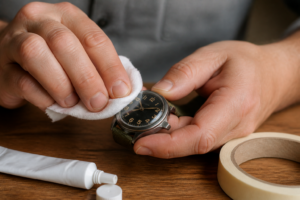
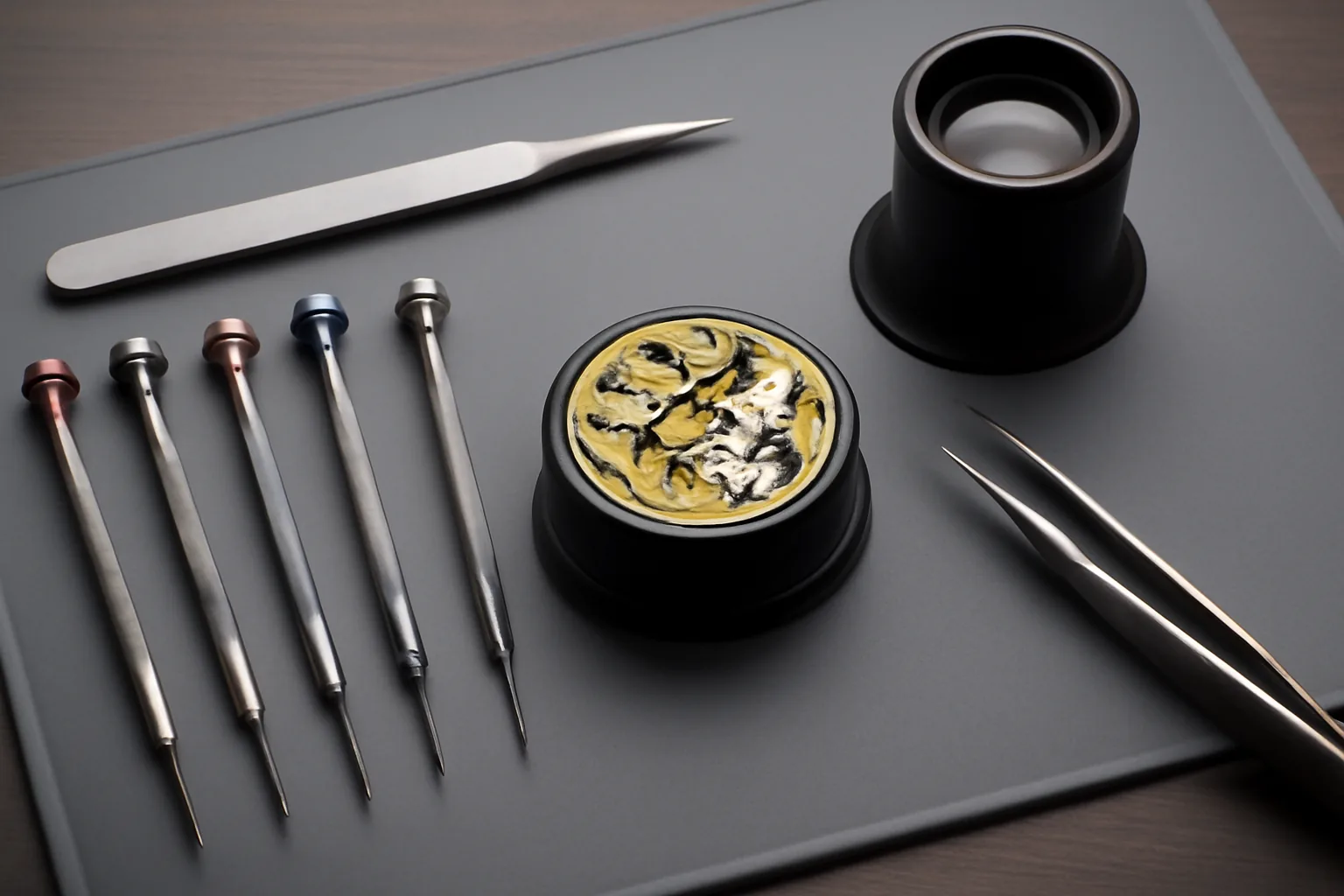
Inherit or pick up a mechanical watch that’s been sitting idle for years, and the real question isn’t whether it needs attention — it’s whether a $200–$400 professional bill makes sense before you’ve even ruled out simpler fixes. A decent repair kit lets you handle basic cleaning and light upkeep yourself, which means catching small problems before they turn into expensive ones.
Where it earns its keep
- The tools are genuinely scaled for movement work — tweezers, screwdrivers, and brushes fine enough to work in tight quarters without stripping a screw head or snapping a spring.
- The cleaning solution and soft cloths make it possible to lift years of hardened oil and grime off gently, no need to submerge the whole movement in something harsh.
- Between professional visits, it gives you enough confidence to check on a watch’s condition yourself and spot a mainspring drying out before it locks up entirely.
Where it falls short
- It’s no replacement for a proper overhaul — a watch that’s been dormant for decades, like my neighbor’s Omega, still needs a watchmaker to replace worn components and re-oil the movement the right way.
- A single slip with these tiny tools can scratch a dial or bend a fragile lever, so if you’ve never had a case open before, expect a real learning curve.
I’ll be honest—the first time I opened a watch movement with these tools, my hands shook; I was terrified I’d drop something irreplaceable into the carpet. But the kit’s layout and quality made me feel less like I was fumbling in the dark. If you’re ready to take basic care into your own hands, grab a JOREST Watch Repair Kit.
Mechanical Watch Servicing: Common Questions
How often should a mechanical watch be serviced?
Every five to seven years for a modern mechanical in regular use, and every three to five for a vintage watch. Chronographs sit at the shorter end of that range because more components are under load.
Why do service intervals matter if the watch still runs?
Because a mechanical watch does not warn you. Lubricant dries and thins invisibly, and the movement carries on keeping decent time while metal wears against metal. By the time the symptoms are obvious — poor amplitude, a rough rotor, timekeeping drifting — you are usually replacing parts rather than cleaning and oiling them.
Does a watch I never wear still need service?
Yes, and arguably sooner. Oils congeal faster in a movement that sits still than in one that is worn daily. Running an unworn watch for a few hours a month keeps the lubricants distributed and is the cheapest maintenance there is.
About This Article

Written by Ellen Ashford. Watch collector, fountain pen enthusiast, and lifelong journaler. Time & Ink is where I explore the craft of analog living — from vintage timepieces and fine stationery to the simple pleasure of putting pen to paper. More about this site.
Verify this against a primary source
Specifics change, and your situation may differ from the one described here. These are the authorities worth checking directly:
- NAWCC — horological reference, archives and research library
- Smithsonian Institution — collection records for historic timepieces and writing instruments