I have rewritten the same letter three times. Not because the words were wrong — the words were fine — but because a smudge ate the third paragraph, my lines drifted into a slope that made me look careless, and the envelope sealed itself shut before I had even folded the paper. Three attempts, three wasted sheets of Clairefontaine, one very patient friendship. That afternoon is what pushed me to actually solve my most common letter writing mistakes fixes included, one unglamorous problem at a time. What follows is not a glamorous guide. It is the repair manual I wish I had owned ten years ago.
Why I Stopped Blaming the Ink and Started Watching the Clock
Smudging was my first enemy. For years I blamed my fountain pens, then the paper, then my general impatience. The actual culprit was simpler: I never gave the ink enough time to dry before my writing hand swept across it.
Drying time is not universal. Iron gall inks — the acidic, historically traditional formula — bite into paper fiber and can be dry in eight to twelve seconds on a quality cotton or wood-pulp sheet. Dye-based inks, which make up the vast majority of modern fountain pen colors, sit on top of the paper’s sizing and take anywhere from fifteen seconds to well over a minute, depending on the paper’s absorbency and the nib’s flow. Pigmented inks, and particularly some of the shimmer inks loaded with mica particles, can take two full minutes on coated stock. I once ruined a letter written with a particularly wet stub nib and a slow-drying teal ink on smooth Rhodia paper. The smear was spectacular. It cost me about forty-five minutes of work and a fair amount of dignity.
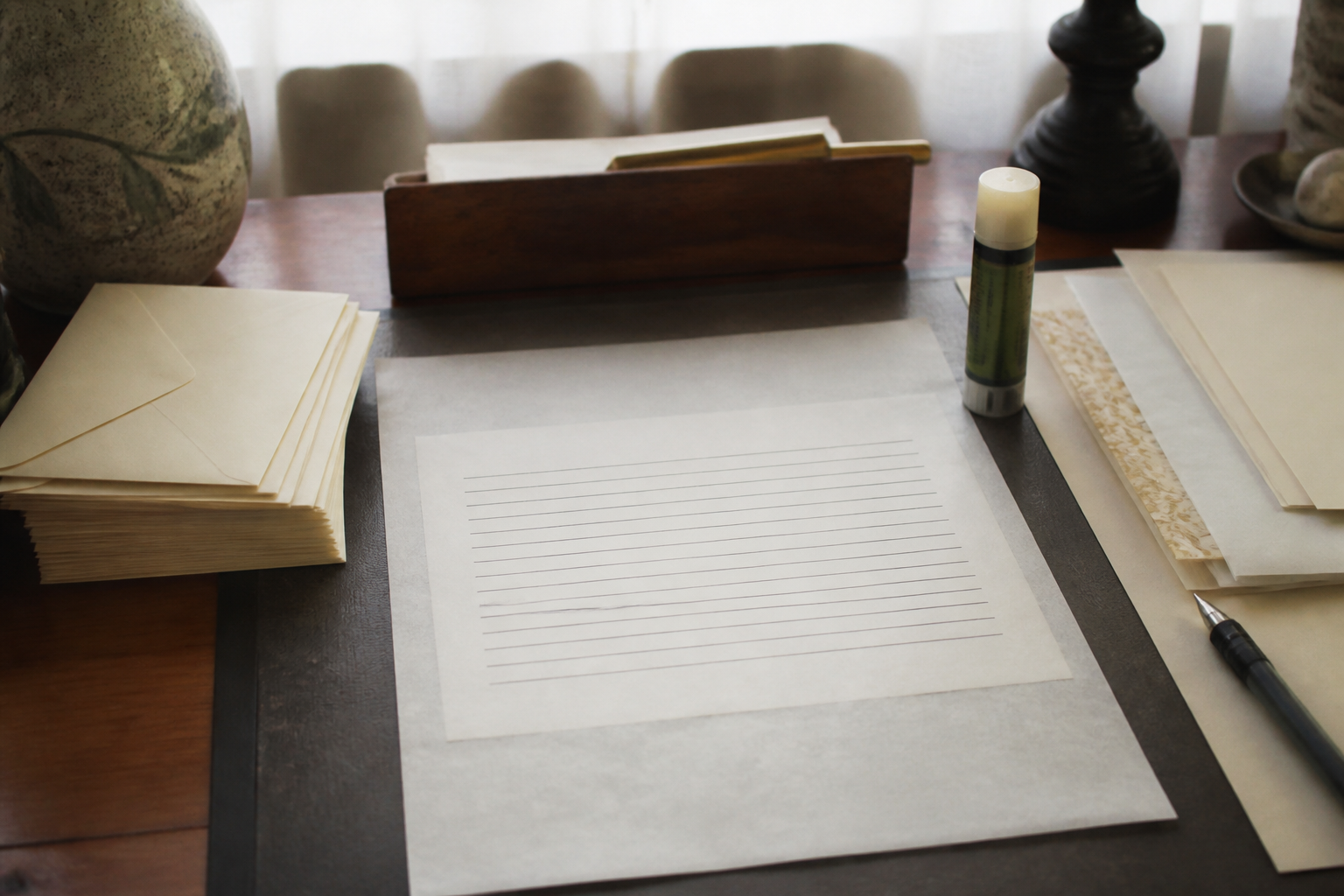
The Guard Sheet Fix I Use Every Single Time Now
About This Article

Written by Ellen Ashford. Watch collector, fountain pen enthusiast, and lifelong journaler. Time & Ink is where I explore the craft of analog living — from vintage timepieces and fine stationery to the simple pleasure of putting pen to paper. More about this site.
Verify this against a primary source
Specifics change, and your situation may differ from the one described here. These are the authorities worth checking directly:
- NAWCC — horological reference, archives and research library
- Smithsonian Institution — collection records for historic timepieces and writing instruments