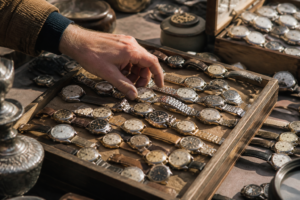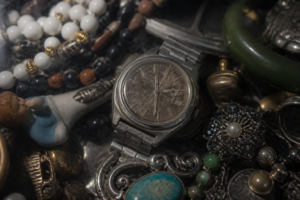
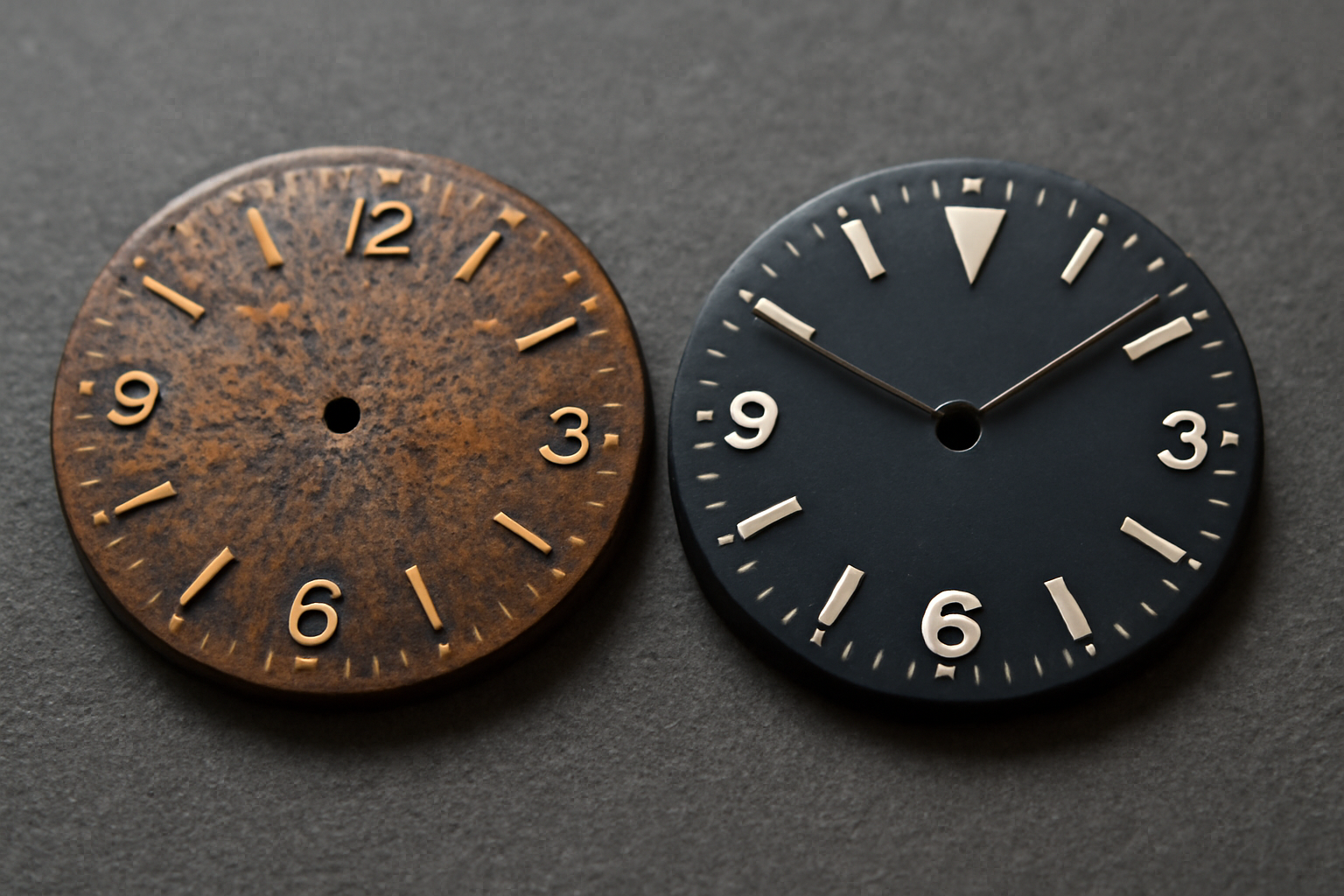
Estate sale season always starts the same way for me — the first warm Saturday after a long grey stretch, when families finally get around to clearing out a parent’s dresser drawer and half the tables in someone’s garage are suddenly covered in old jewelry boxes and wristwatches nobody wound in years. That’s how a 1968 Seiko 5 landed in my hand for $45: caliber 7005 movement, a matte black dial with applied silver indices still largely intact, a scatter of hairline scratches, some faint spotting down near six o’clock. Someone on a forum thread I’d stumbled across suggested a repaint would “freshen it right up,” and for about twenty minutes, I was genuinely tempted. What stopped me, in the end, was realizing that the very things I’d been ready to erase were exactly what made the watch worth owning. Few decisions in this hobby carry more weight than this one, and the boundary separating careful preservation from well-intentioned ruin is far narrower than most newcomers assume.
Ten-plus years into buying everything from $15 Seiko 5s to a vintage Omega Constellation running a cal. 561, I’ve come to understand that the word “restoration” shifts meaning entirely depending on who’s holding the watch. A dealer is chasing resale numbers. A purist wants nothing touched. Someone who plans to actually wear the thing daily just wants a dial that reads clearly and looks clean. None of those priorities are mistaken — they simply point toward completely different outcomes. What follows is my actual process: how I read a vintage dial, when I decide to leave it exactly as found, and the specific circumstances under which refinishing genuinely earns its place.
First, Figure Out What’s Actually In Front of You
Nothing gets touched until the construction is understood. The typical vintage dial from roughly 1950 through the 1980s starts life as a brass or copper disc. Layered on top of that base is lacquer or enamel, then the printed or applied text and hour markers, and finally a protective lacquer coat sealing everything in. A smaller category — think Longines, Jaeger-LeCoultre, and the higher-tier Omega references — uses fired enamel instead, which behaves nothing like the rest and demands entirely separate handling.
The type of dial sitting in front of you dictates every decision that follows. A lacquered dial can develop what collectors call “tropical” patina — a warm, browned shift in color that people will happily pay a premium for. Enamel, by contrast, chips or crazes the moment it’s handled carelessly. And gilt printing — that rich gold lettering you see on early Rolex and Tudor dials — won’t survive contact with any cleaning solvent whatsoever. If I had to name the single most important habit I’ve built, it’s this: identify exactly what kind of dial you’re holding before you do anything else to it.
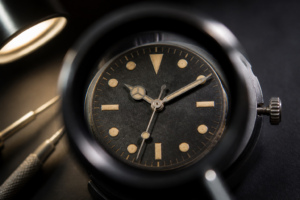
None of this works without real magnification — this isn’t a step you can skip. The naked eye simply cannot judge dial condition with any accuracy. For years I made do squinting through a cheap drugstore magnifier before finally buying a proper watchmaker’s loupe, and the gap between what I’d been missing and what suddenly came into focus was, frankly, embarrassing.
How to Tell a Dial Wants Preservation, Not a Repaint
My rule is simple and I don’t bend it much: if the original surface layers are still intact, leave the dial alone entirely. “Original” doesn’t require “flawless” — it just means the factory-applied layers remain physically present and sound, wear and all. Patina, minor spotting from humidity over the decades, small scuffs on the surface — these are the honest record of a dial’s life, and refinishing wipes that record out for good.
Here’s what I actually check for before deciding a dial deserves to stay untouched:
- Printed or gilt lettering that’s still fully adhered, with no lifting or flaking anywhere
- Applied markers still seated firmly, with the original lume undisturbed
- Patina that’s spread evenly across the whole surface, rather than isolated damage in one spot
- No corrosion actively creeping beneath the topcoat
- Text still readable, and the dial feet still sitting properly aligned underneath
Back to that 1968 Seiko 5: once I got it under real magnification, what I’d assumed were scratches turned out to be nothing more than dust settled into the lacquer. A gentle pass with a soft camel hair brush lifted it right off. That watch is now worth noticeably more than the $45 I paid, dial fully original. If I’d sent it out for a repaint instead, I’d have quietly destroyed both the value and the history in one afternoon.
Why Tropical Dials Break the Rule Even Further
Tropical dials warrant their own callout. This is the phenomenon — most associated with vintage Rolex references like the 1675 GMT-Master or the 5512 Submariner — where UV exposure and chemical shifts in the original lacquer turn the dial a rich brown or chocolate tone over decades. Genuine tropical examples routinely command anywhere from 20% to 300% above standard prices. Refinish one of these and you’ve torched real money for no reason. I’ve watched it happen to someone else’s watch. Don’t be the reason it happens to yours.
The Cases Where Refinishing Is the Right Call
None of this means preservation is always the answer — some dials are simply past the point of saving. Corrosion that’s already working beneath the surface layer won’t stop; it will keep spreading until the dial is gone. Water intrusion that’s lifted the printed text leaves you with something you literally can’t read. And enamel that’s cracked or crazed on a mid-tier watch with zero collector premium attached is just a plain ugly dial sitting on top of a perfectly good movement.
There are a handful of situations where I’ll actually recommend a refinish. If the watch is a workhorse you wear daily and carries no real collector value — a common Seiko 5 variant worth maybe $30 on a good day is the textbook example — a clean refinish gives you something enjoyable to live with, and you’re not losing anything meaningful in the process. The same logic applies when the watch matters to you emotionally rather than financially: your goals there simply aren’t a collector’s goals. Your grandfather’s Hamilton field watch, dial ruined by old water damage, should look right to you — not pass muster with strangers on a forum.
I found this out firsthand with a 1972 Bulova Accutron that cost me $80. Its dial had heavy spotting and two scratches running straight through the printed text. I sat on the decision for weeks before finally shipping it to a dial restoration specialist. The bill came to $95 — more than the watch had cost me to begin with. But what came back was clean, handsome, and something I actually reach for. I’ve never once regretted it. The takeaway I keep coming back to: settle what the watch means to you before you decide what its dial actually needs.
The Loupe That Finally Stopped Me From Guessing
None of the preservation-versus-refinish calls above are possible until you can actually see the dial clearly — and your eyes alone won’t get you there. What separates a hairline scratch from a bit of settled dust, or original finish from old, existing damage, only shows up once you’re looking through 20X magnification.
Where it earns its keep
- At 20X, the true condition of a vintage dial stops hiding — you can tell surface oxidation from actual lost paint before you commit to anything irreversible.
- Being a single loupe, it holds steady in your hand while you’re studying applied indices or printing quality, so your preservation call rests on what you actually saw rather than a guess.
- Small enough to toss in a watch kit and bring along to an estate sale, letting you check originality on the spot before any money changes hands.
Where it falls short
- Push it to 20X and the field of view shrinks fast — you get deep detail but lose the surrounding picture, so expect to keep repositioning it to piece the whole dial together.
- It offers zero light of its own, and lighting turns out to matter a great deal, so plan on strong natural light or a dedicated lamp if you actually want to see what’s there.
I nearly repainted that Seiko dial based on what looked like “heavy spotting” until I actually looked through proper magnification and saw it was just dust and light oxidation on an otherwise untouched original surface. Joyzan Watch Loupe, 20X Watchmaker Loupe Magnifying Glass is what turned my guessing into knowing.
Buying rather than restoring? The opposite question — whether someone has already refinished the dial in front of you — is covered separately in how to tell if a watch dial has been refinished.
About This Article

Written by Ellen Ashford. Watch collector, fountain pen enthusiast, and lifelong journaler. Time & Ink is where I explore the craft of analog living — from vintage timepieces and fine stationery to the simple pleasure of putting pen to paper. More about this site.
Verify this against a primary source
Specifics change, and your situation may differ from the one described here. These are the authorities worth checking directly:
- NAWCC — horological reference, archives and research library
- Smithsonian Institution — collection records for historic timepieces and writing instruments