Fountain Pen Buying Guide Under $50: Nib Sizing, Fill Systems, and 8 Pens Worth Buying
Ten years ago, I dismissed fountain pens as nostalgic affectations. Then I spent $35 on a pen that changed everything. The smoothness of the nib, the intentionality of every stroke—it wasn’t a gimmick. It was better than ballpoints in ways I hadn’t anticipated. Since then, I’ve tested everything from $8 Jinhaos to $400 vintage Pelikans, and I can tell you this: the right pick in this bracket comes down to matching nib sizing, filling system, and body material to how you actually write — not chasing one universal “best” pen.
That’s not hyperbole. This price bracket—$20 to $50—is where fountain pens stop being experiments and become legitimate daily drivers. You’re past the gimmick zone. You’re into actual engineering. The pens here have nib smoothness, build quality, and filling mechanisms that serious writers depend on. And you won’t lose sleep if you drop one.
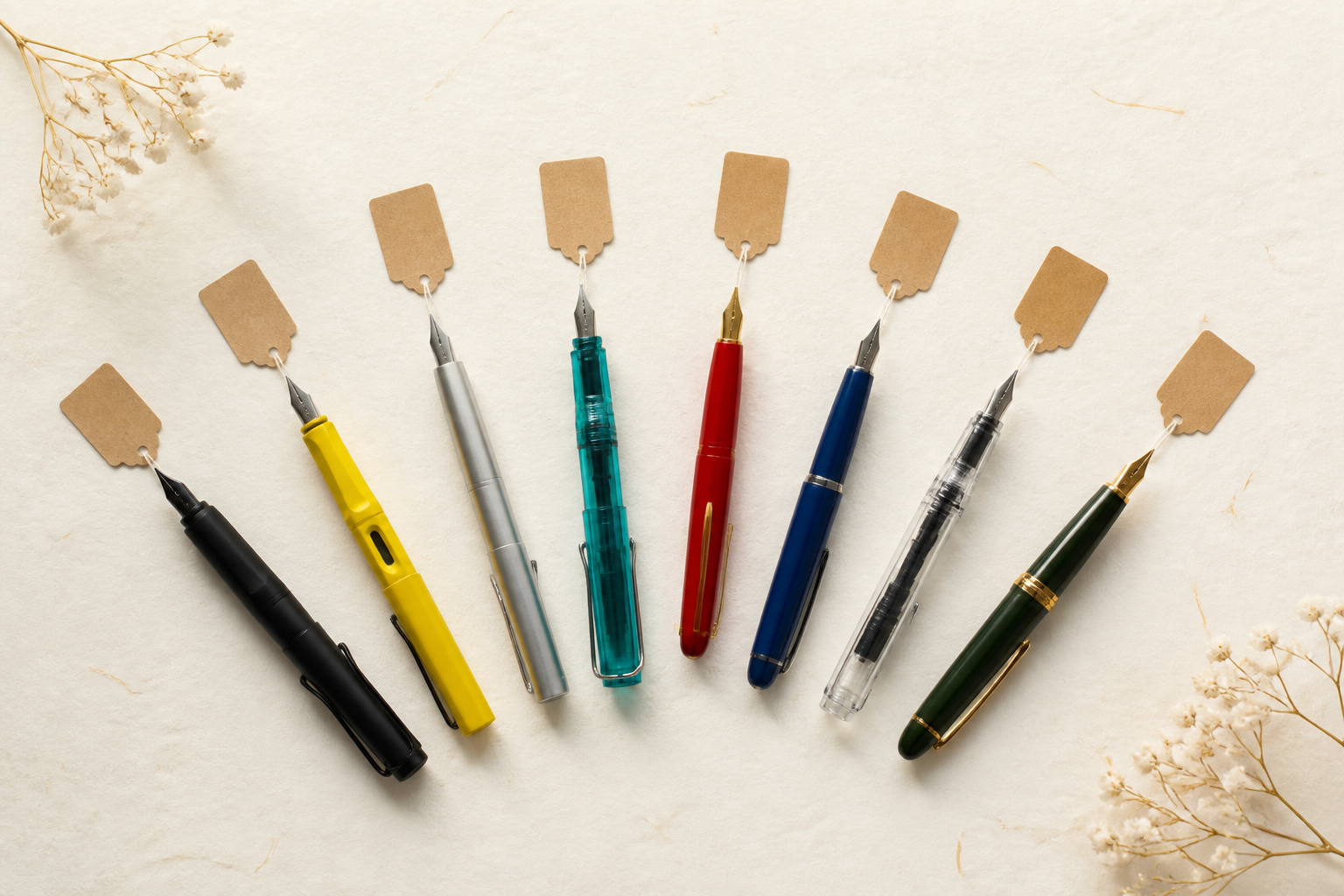
I’ve narrowed it down to eight pens I’ve used, tested on real paper, and compared against hundreds of alternatives — organized by nib sizing, fill system, and body material so you can match one to how you actually write. Whether you’re buying your first pen or your fifth, whether this is a gift or a personal investment—this guide cuts through the marketing.
What to Look for in a Fountain Pen Under $50
Before I rank them, you need three quick primers. These will save you from common mistakes that send beginners back to ballpoints.
Nib Material Matters. Steel nibs are standard at this price. They’re durable, affordable, and feel slightly stiffer than gold nibs (you’ll get feedback when writing). At sub-$50 prices, “gold” usually means gold-plated steel, not solid gold. Steel is honest. It works. Don’t chase “gold nib” marketing at this tier.
Filling Systems Divide the Category. Cartridge-and-converter systems (Lamy, Pilot, Kaweco) offer portability and simple refills. Piston fillers (TWSBI, Pelikan) hold more ink and feel premium but take longer to clean. Eyedropper fills (Moonman) hold massive amounts but can leak if pressurized (airplanes, altitude). Each has real tradeoffs. Choose based on how you’ll actually use the pen.
Body Material = Weight and Durability. ABS plastic (Lamy Safari) feels cheap but lasts forever and stays light. Brass (Pilot Metropolitan) feels heavy and premium but will show fingerprints. Metal bodies (Moonman, Jinhao) fall between them. Lighter pens suit travel. Heavier pens suit desk work. Neither is objectively “better.”
Japanese vs Western Nib Sizing: The One Thing Every Buyer Gets Wrong
This will save you a $30 mistake. I see it constantly: someone buys a Japanese F-nib pen thinking it will write fine, then complains it writes like a medium. They’re not wrong. They just didn’t know the conversion.
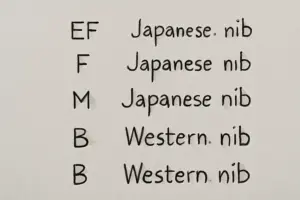
Japanese and Western nib sizing are offset by one full size. A Japanese Fine (F) nib writes approximately like a Western Extra-Fine (EF). A Japanese Medium (M) writes like a Western Fine (F). This isn’t an opinion—it’s consistent across brands. Pilot, Platinum, and Sailor all follow this standard. Western brands like Lamy and Pelikan use Western sizing.
Why does this matter? If you have small handwriting or prefer fine lines, a Japanese F will feel too broad unless you wanted that thickness. If you want true fine Japanese writing, buy the Extra-Fine (EF). Conversely, if you buy a Western EF expecting Japanese precision, you’ll get something scratchy and narrow. In my experience, most beginners want a Japanese F or a Western F—both land roughly in the “medium-fine” sweet spot visually.
The pens below specify which system they use. Pay attention to this before clicking “buy.” Specifically, Lamy and Kaweco use Western sizing. Pilot, Platinum, Moonman, and Jinhao use Japanese sizing. TWSBI splits the difference. This one decision prevents more returns than any other factor in this price range.
8 Fountain Pens Under $50, Organized by What You Actually Need
1. Pilot Metropolitan — Best Out-of-Box Experience
Price: $22–28 | Nib: Steel, Japanese sizing (F writes like Western EF) | Filling: Con-40 converter included + cartridge | Body: Brass | Ellen’s Rating: 9/10
The Pilot Metropolitan is the safest recommendation I can make. It’s the pen I give to friends who are fountain pen-skeptical, and it converts them every time. Here’s why: it arrives with both a cartridge and a converter, so you never hit a moment where the pen is “empty” and useless. That solves beginner friction immediately.
The nib is smooth. Legitimately smooth. It glides across paper without the micro-scratches or skipping that plague cheaper pens. The brass body is heavier than most pens at this price, which some call “premium” and others call “fatiguing”—personally, I love the weight for desk writing. It anchors my hand.
One honest note: the F nib writes broader than Western F nibs. It’s Japanese sizing, so expect Medium-width lines. If you want something genuinely fine, size down or look elsewhere. For most people, this is a non-issue. It’s a pen that rewards ink quality but doesn’t demand it. Run it on cheap copy paper and it works. Run it on Rhodia and it sings.
Best for: First-time buyers, desk pen users, anyone who wants a pen that just works without learning curve.
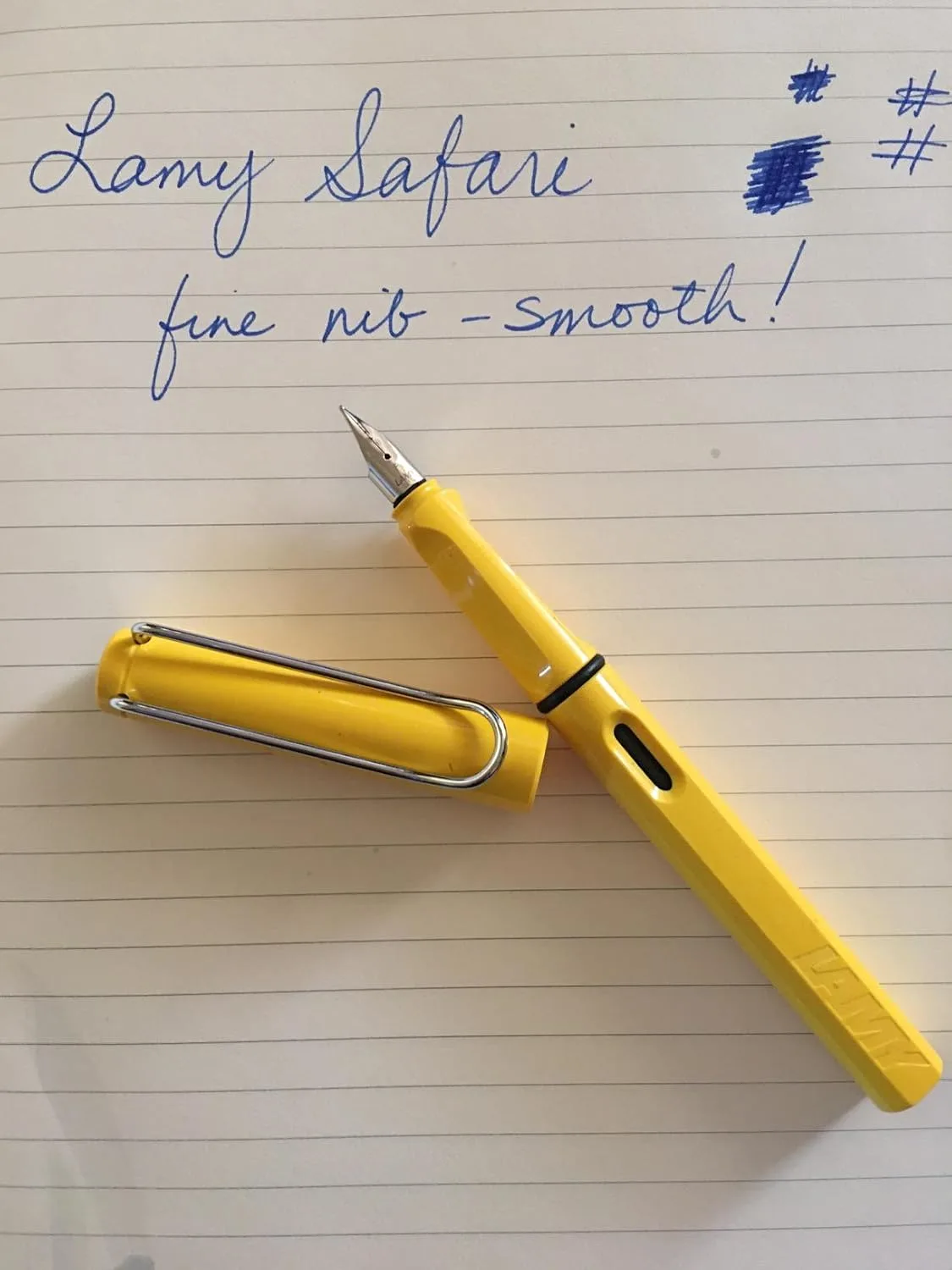
2. Lamy Safari — Best for Learning Proper Grip
Price: $29–37 | Nib: Steel, Western sizing, swappable | Filling: Cartridge, Z28 converter sold separately | Body: ABS plastic | Ellen’s Rating: 8.5/10
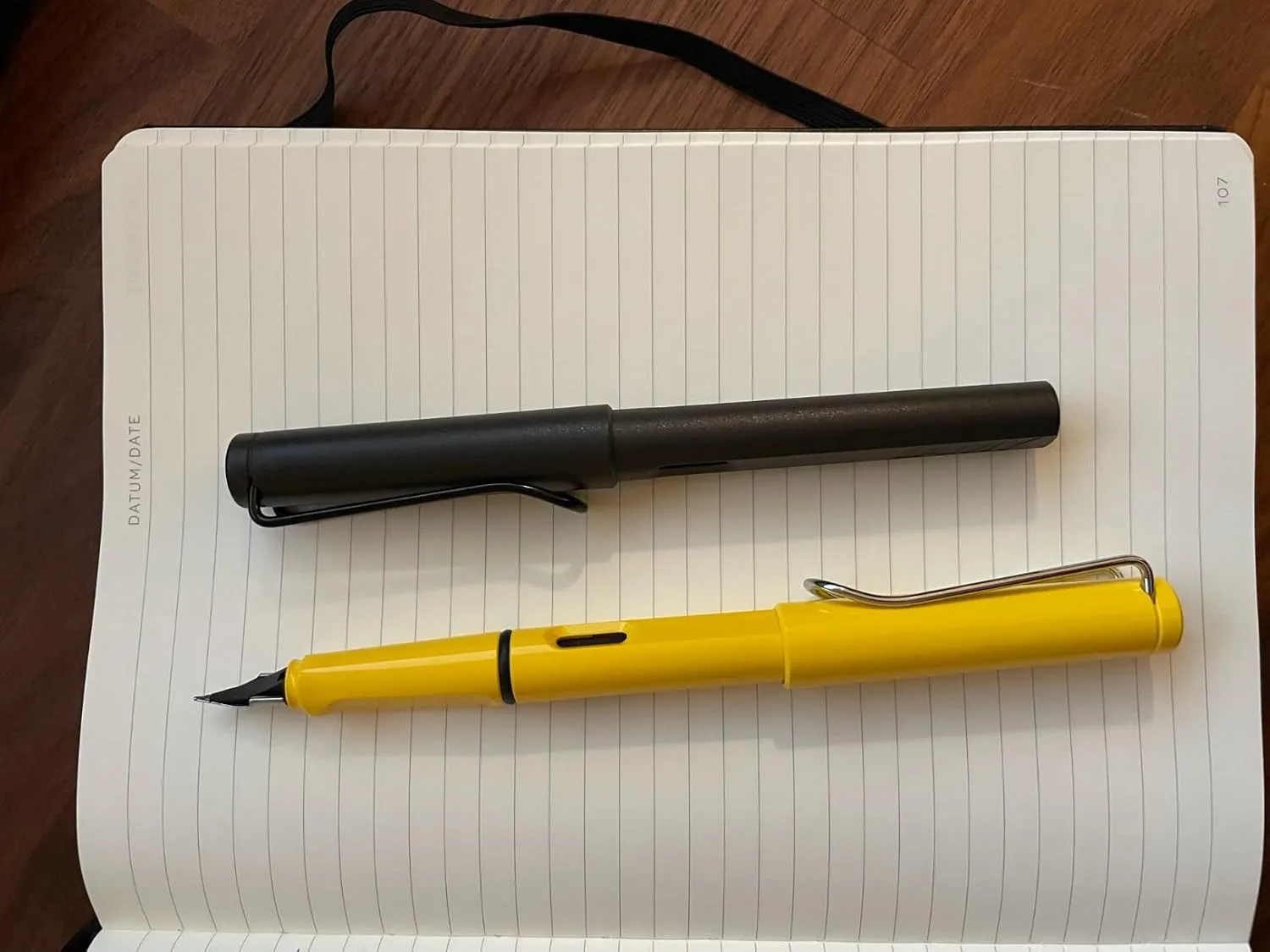
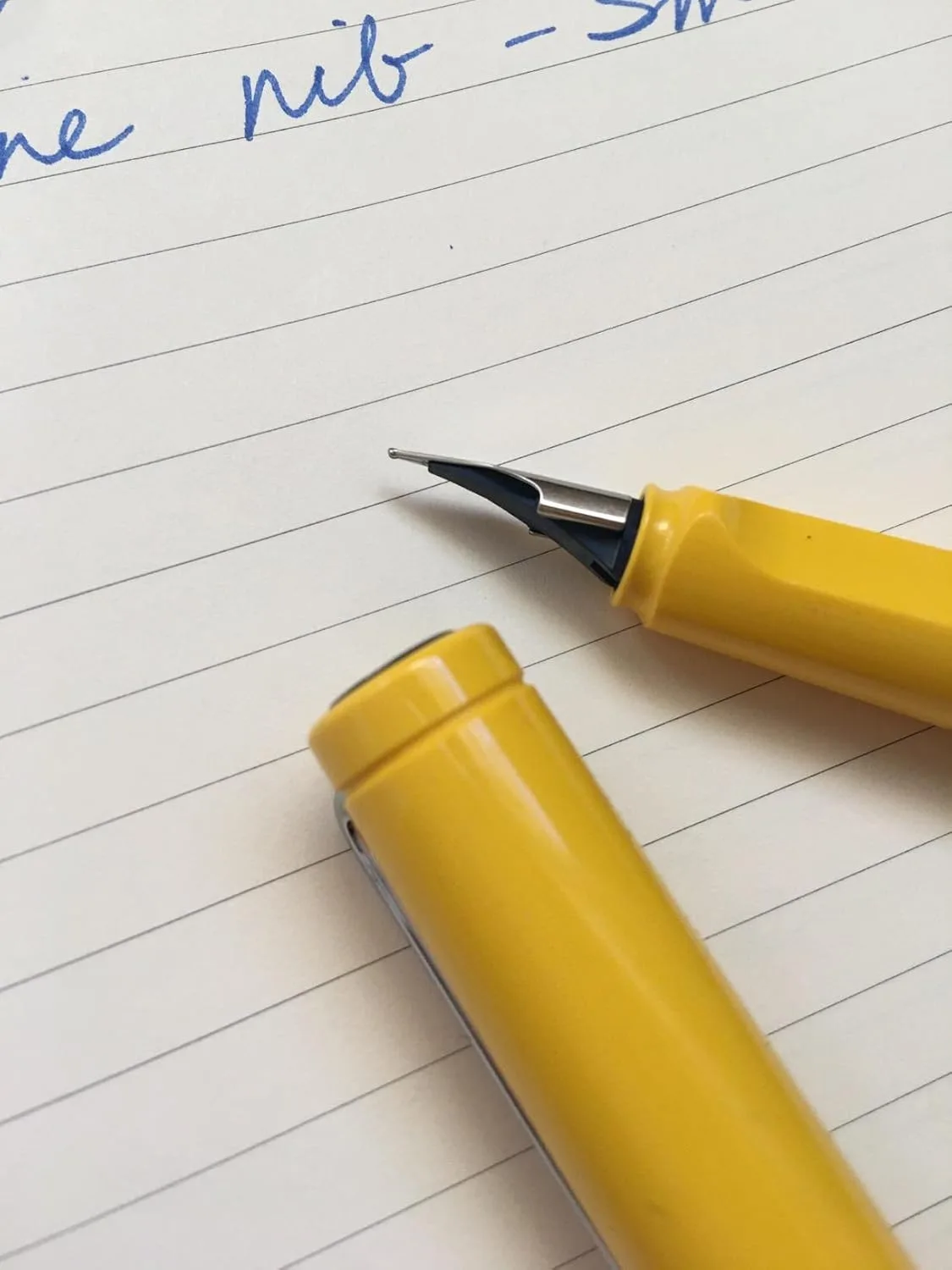
The Lamy Safari is the other pen everyone recommends first, and the recommendation holds up. The molded triangular grip forces your fingers into textbook position, which sounds restrictive until you notice your hand no longer aches at page four. Western nib sizing means the F actually writes fine, and the whole nib slides off and swaps in seconds — a $12 experiment instead of a new pen.
Two honest gripes. The converter costs extra, which stings at this price, and that grip section genuinely bothers people with unorthodox holds. Try holding a Sharpie the way you write; if your thumb wraps over, look at the Kakuno instead.
Best for: New writers building good habits, anyone who wants to experiment with nib sizes cheaply.
3. TWSBI ECO — Best Ink Capacity
Price: $32–36 | Nib: Steel, Western-leaning | Filling: Piston, ~1.8ml | Body: Clear demonstrator | Ellen’s Rating: 8.5/10
The TWSBI ECO Fountain Pen White EF Nib holds roughly three times the ink of a converter pen. That is the entire pitch, and for journalers and long-form writers it is decisive. The piston mechanism is smooth, the clear barrel shows exactly how much ink remains, and watching your ink slosh around is more satisfying than it has any right to be.
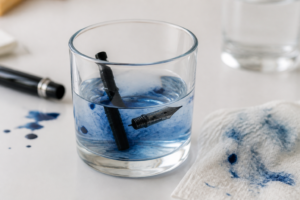
The trade-off is maintenance: piston fillers must be flushed properly when you change inks, and the ECO’s threads want an occasional dab of silicone grease. Nothing difficult, but it is a pen you own rather than merely use.
Best for: Daily journalers, bottled-ink lovers, anyone tired of refilling converters twice a week. If journaling specifically is your use case, see my dedicated writeup on the best fountain pen under $50 for journaling for the pen I actually reach for every morning.
4. Pilot Kakuno — Best Under $15
Price: $12–15 | Nib: Steel, Japanese sizing, smiley face engraving | Filling: Cartridge, Con-40 compatible | Body: Plastic, hexagonal | Ellen’s Rating: 8/10
Do not let the smiley face on the nib fool you — the Pilot Kakuno carries essentially the same nib quality as the Metropolitan in a lighter, cheaper body. It was designed for Japanese schoolchildren, which explains the faceted grip, the capless-roll-proof hexagonal barrel, and the near-indestructible build. Mine has survived two years in a jacket pocket.
It has no clip and looks like a school pen, because it is one. In my experience that stops mattering the moment it touches paper.
Best for: Absolute beginners, kids, a guilt-free pen to test whether fountain pens are for you.
5. Platinum Plaisir — Best for Occasional Writers
Price: $16–22 | Nib: Steel, Japanese sizing | Filling: Cartridge, converter compatible | Body: Anodized aluminum | Ellen’s Rating: 8/10
Every fountain pen dries out if you ignore it — except this one. The Platinum Plaisir uses the same Slip & Seal cap mechanism as Platinum’s premium pens, and it genuinely works: I have picked mine up after two months in a drawer and it wrote on the first stroke. If you write in bursts rather than daily, this feature outranks everything else on this list.
The aluminum body feels a touch hollow, and the fine nib runs needle-thin by Western standards. Both are easy to forgive at the price.
Best for: Occasional writers, gift-givers who can’t guarantee the recipient will write daily.
6. Kaweco Classic Sport — Best Pocket Pen
Price: $25–30 | Nib: Steel, Western sizing | Filling: Short international cartridge | Body: Octagonal plastic, pocket length | Ellen’s Rating: 7.5/10
Capped, the Kaweco Classic Sport is barely four inches long; posted, it becomes a full-size writer. That trick has made it the default pocket fountain pen for a century, and the 1930s octagonal design still looks terrific. Mine lives in my jeans pocket next to a Field Notes.
Know the compromises: it only takes short cartridges (the squeeze converter is mediocre), and the nib can run dry on the first stroke after a bumpy day in a pocket. As a desk pen it makes no sense — buy it specifically for carry.
Best for: Pocket carry, travelers, anyone pairing it with a pocket notebook.
7. Faber-Castell Grip 2010 — Best Western Nib Under $30
Price: $22–28 | Nib: Steel, Western sizing | Filling: Cartridge, converter compatible | Body: Plastic with rubber grip nubs | Ellen’s Rating: 7.5/10
The quiet sleeper on this list. The Faber-Castell Grip 2010 carries the smoothest Western steel nib I have used under $30 — Faber-Castell tunes their entry nibs like other brands tune their $100 ones. The dotted rubber grip works for any hold style, unlike the Safari’s molded section.
The looks are office-supply plain, and in the US you will usually order it online rather than try it in a store. That is most of why it is unknown.
Best for: Writers who found Japanese fine nibs too thin, Safari-grip refugees.
8. Jinhao X159 — Best Oversized Pen for Pennies
Price: $10–14 | Nib: Steel #8, Fine or Medium | Filling: Cartridge, converter included | Body: Oversized acrylic | Ellen’s Rating: 7/10
The Jinhao X159 is a cigar-sized, Montblanc-149-shaped pen that costs less than lunch. The big #8 nib writes wet and smooth out of the box more often than not, and the included converter means bottle-fill from day one. For large hands, nothing else at this price feels this substantial.
Quality control is the catch — perhaps one in five needs light nib alignment (a five-minute fix with a loupe). At this price I consider that part of the hobby, but if tinkering repels you, spend up for the Pilot or Lamy.
Best for: Large hands, tinkerers, anyone who wants an oversized pen without the oversized price.
The Pen That Finally Made My Handwriting Feel Intentional
If you’ve spent years reaching for ballpoints without thinking, the jump to a fountain pen can feel intimidating—especially when you’re not sure which nib width will actually work for your hand. The extra-fine nib is where most hesitant writers should start, and it’s where I wish I’d begun instead of overthinking it.
What works
- The EF nib writes with precision that feels natural, not finicky—no need to adjust your grip or angle like you might with broader nibs when you’re still learning.
- At $35, it’s affordable enough to commit to without the sticker shock that makes you afraid to actually use the pen daily.
- The matte Umbra finish resists fingerprints and feels substantial in hand—it signals intention without screaming “luxury fountain pen owner.”
What doesn’t
- The plastic barrel means it won’t feel premium compared to metal pens, which bothered me for about a week before I stopped caring.
- An extra-fine nib needs consistent pressure and won’t show much line variation, so if you’re drawn to bold, expressive strokes, this won’t scratch that itch.
I almost returned mine after three days because the feed felt slightly inconsistent on some strokes, but that turned out to be me adjusting my angle—a learning curve, not a flaw. If you’re serious about finding your first real fountain pen, grab The LAMY Safari in Umbra with EF nib and commit to a week of daily writing.
About This Article

Written by Ellen Ashford. Watch collector, fountain pen enthusiast, and lifelong journaler. Time & Ink is where I explore the craft of analog living — from vintage timepieces and fine stationery to the simple pleasure of putting pen to paper. More about this site.
Verify this against a primary source
Specifics change, and your situation may differ from the one described here. These are the authorities worth checking directly:
- NAWCC — horological reference, archives and research library
- Smithsonian Institution — collection records for historic timepieces and writing instruments