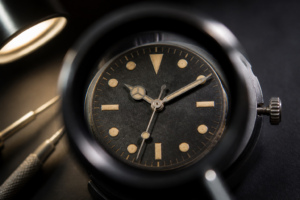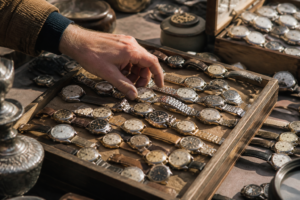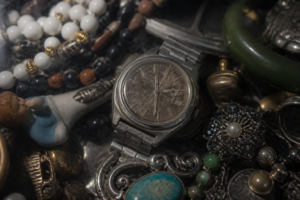
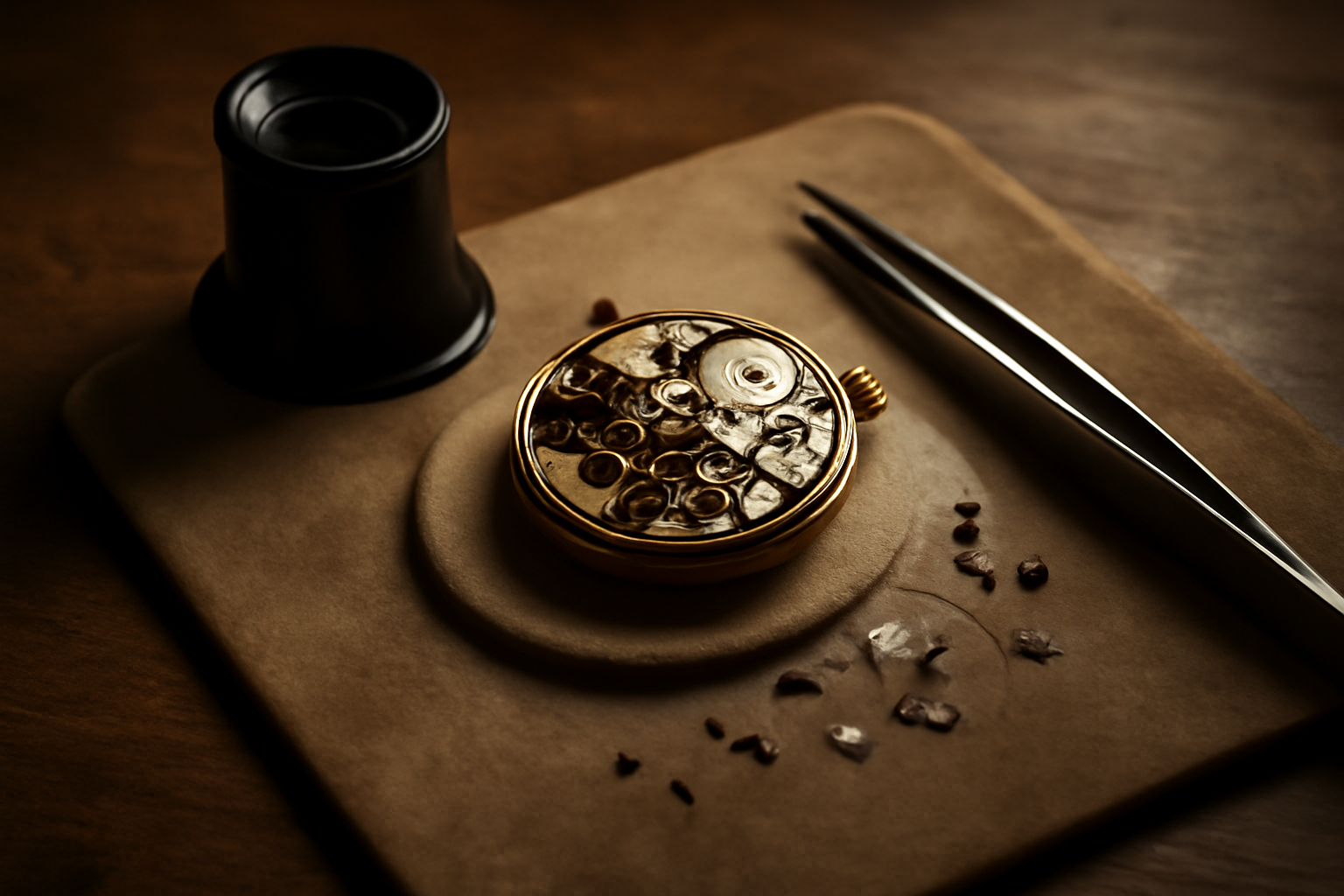
Right now, on the felt tray beside my loupe, sits the watch that started this whole expensive habit: a $45 Seiko 5 from an estate sale, its case back rattling and its crystal so scratched it had gone milky. I figured a wipe-down and a fresh strap would sort it out. I had no real sense of what vintage watch repair actually runs, and that Seiko taught me the hard way — another $180 in service fees before it held time reliably again. What that watch proves, sitting there today, is simple: every vintage piece is a potential money pit, and the only defense against overpaying is knowing precisely what you’re looking at before you buy it or hand it to a watchmaker.
Ten years into this hobby, I’ve bought, serviced, and — more than once — mangled my way through dozens of watches, everything from a $15 Seiko 5 SNK809 to a vintage Omega Seamaster running a caliber 565. Rusted crowns, snapped mainsprings, delaminating dials, crystals fogged from decades of humidity — I’ve paid to fix all of it. Along the way I’ve cycled through three watchmakers before settling on ones I trust, and I’ve taught myself to read a movement before any money changes hands. What follows is the full accounting: the vintage watch problems that show up again and again, and what they genuinely cost to put right.
Beyond a Wind-Up: Why Old Movements Need Real Attention
Plenty of people new to this assume a vintage mechanical just needs winding and it’s off to the races. That’s almost never the case. Mechanical lubricants break down with age — the general rule among watchmakers is service every five to eight years. A piece that’s spent two decades in a drawer has thickened oil, dust working its way into the movement, and possibly corrosion on top of it. Wind it and run it without service first, and you risk chewing through pivots and jewels in a matter of weeks.
From what I’ve seen, the biggest error newer collectors make is treating a “running” vintage watch as synonymous with a healthy one. A movement can hold to within three minutes a day, plus or minus, and still be on the edge of needing serious work. More than once I’ve bought a watch billed as “running strong” that turned out to be coasting on the last bit of tension in a nearly-seized mainspring. Once that spring goes, it can take out other components with it. Whatever the seller tells you, budget for a service anyway.
The Repairs That Come Up Again and Again — and Their Real Price Tags
Here’s a rundown of the issues I run into most, drawn from years with vintage Seiko, Omega, Longines, and Tudor pieces passing through my hands. Every figure below comes from actual invoices from independent watchmakers here in the U.S. — not brand service centers, and not the inflated numbers dealers like to quote.
The Baseline: Full Clean, Oil, and Adjust
This is where every repair conversation starts. A full service means the movement comes apart entirely, every part gets an ultrasonic bath, worn gaskets get swapped, pivot points and the keyless works get fresh lubrication, and then it’s all reassembled, timed, and cased back up. A straightforward caliber like the Seiko 7S26 runs $80 to $150. Something more involved — an Omega 1120, say, or a vintage ETA 2824 — climbs to $150 to $300. If the watchmaker hands you a timegrapher printout with the results, take that as a sign they’re doing the job properly.
When the Mainspring Snaps or Wears Out
A snapped mainspring ranks among the vintage watch problems I’ve dealt with most. It’s the coiled ribbon of metal inside the barrel that stores the watch’s running energy, and decades of use fatigue that metal until it gives out. When it breaks, the sudden release of tension can damage whatever’s nearby. The part itself is cheap — $5 to $20 typically — but proper labor to install it tacks on another $40 to $80 to your service bill. Treat mainspring replacement as a line item within a full service, not something you fix on its own.
Crystal Replacement
Acrylic — hesalite — crystals scratch at the slightest provocation but polish out beautifully. Mineral crystals resist scratching better but crack or chip instead. Sapphire holds up best of all but costs the most to replace correctly. On a vintage Seiko, an acrylic crystal runs $5 to $15 for the part and $15 to $30 in labor. A mineral crystal for a vintage Omega lands around $30 to $60 for the part plus $20 to $40 labor. Sapphire on a vintage-spec piece can total $80 to $150. I found this out the expensive way on a vintage Longines — $220 for a sapphire swap, roughly double what I’d budgeted, because the right diameter turned out to be a special-order item.
Stem and Crown Issues
Crowns take a beating on vintage watches — bent, corroded, threads stripped from decades of winding. Worse still, the stem connecting crown to movement can shear off inside the case. Replacing both typically runs $30 to $80 on most vintage pieces. Step up to a signed crown on a vintage Omega or Rolex, though, and authentic parts get considerably pricier. I paid $95 once for just the correct Omega crown, before the watchmaker even charged for fitting it.
Dial and Hand Damage
This is the category where costs can run away from you fastest. A repainted or refinished dial tanks collector value, full stop — so a damaged dial on anything desirable either stays as-is (patina reads as acceptable) or gets swapped for a correct original. New old stock dials for common Seiko references land anywhere from $40 to $200 depending on how scarce they are. Step up to vintage Omega or Rolex and an original dial can run hundreds, sometimes thousands. Faded lume plots are purely cosmetic and most collectors shrug them off, but bubbling, peeling, or moisture damage is different — budget $50 up to $500 or more for a correct replacement, depending on the reference.
The Magnifier That Stopped Me Paying Watchmakers to Point Out the Obvious
Before I got any good at examining a vintage watch myself, I’d hand it to a repair person and just hope the diagnosis lined up with the invoice. A decent loupe changes that entirely — it’s the line between accepting a quote on faith and actually knowing whether that $200 service is warranted.
What works
- At 20X, real problems reveal themselves — hairline cracks in the crystal, wear inside the movement, damage to the dial — before you’ve committed a dollar to buying or servicing
- It’s the difference between a $50 fix and a $300 one, because you can see exactly what you’re negotiating over with the person doing the repair
- Walking in already knowing what’s wrong flips the power dynamic — you’re far harder to upsell on repairs that aren’t actually necessary
What doesn’t
- 20X magnification shows everything — every speck of dust, every fingerprint — so without steady hands and decent light, you won’t actually see what matters
- There’s a learning curve to interpreting what you see; telling ordinary wear apart from a genuine mechanical fault takes some reps
I almost bought a vintage Omega once without really examining the dial under magnification, and only when I borrowed a friend’s loupe did I see the hairline cracks that would’ve cost me hundreds to restore. Get the Joyzan Watch Loupe, 20X Watchmaker Loupe Magnifying Glass and learn to look before you leap.
About This Article

Written by Ellen Ashford. Watch collector, fountain pen enthusiast, and lifelong journaler. Time & Ink is where I explore the craft of analog living — from vintage timepieces and fine stationery to the simple pleasure of putting pen to paper. More about this site.
Verify this against a primary source
Specifics change, and your situation may differ from the one described here. These are the authorities worth checking directly:
- NAWCC — horological reference, archives and research library
- Smithsonian Institution — collection records for historic timepieces and writing instruments