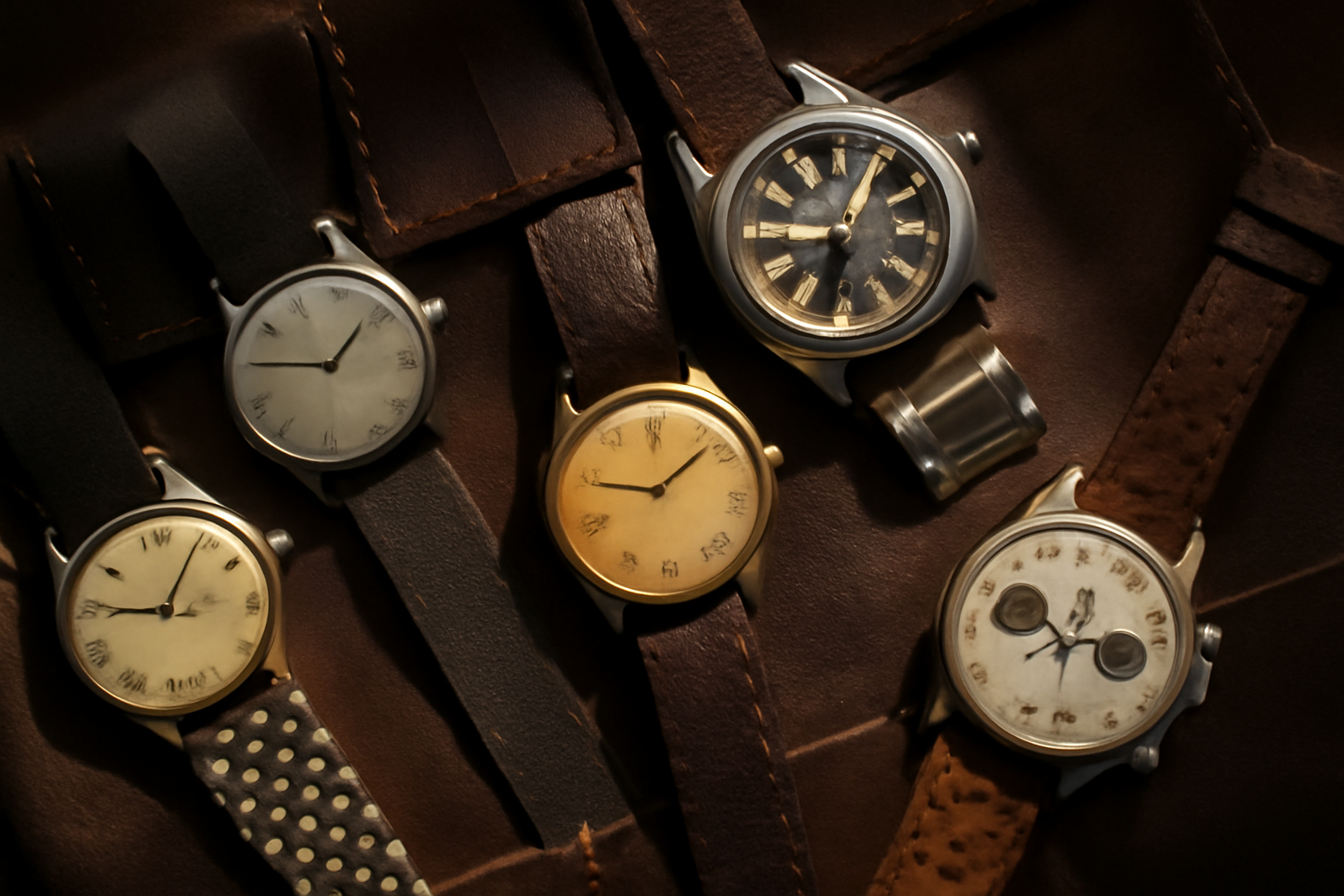
Nearly every beginner walks into a vintage watch purchase assuming that a clean-looking dial and a confident seller are proof enough of originality — and that assumption is exactly wrong. It’s why I once stood frozen in front of a tray of watches at a Portland flea market, listening to a seller swear up and down that his piece was “all original.” It wasn’t. That afternoon set me back $140 and a fair chunk of my confidence, but it taught me something no forum thread had managed to explain: buying vintage watches well is a learned skill, and skills demand real tools, real knowledge, and someone willing to be honest with you. Consider this my attempt at handing you all three before you spend a dime.
Across roughly ten years of doing this, I’ve had my hands on hundreds of pieces — $15 Seikos plucked from thrift store bins, and a gorgeous 1960s Omega Seamaster running a caliber 562 movement that I watched and waited on for three full months before finally buying it. There’s genuine value and genuine delight to be found in this world. There’s also no shortage of frankenwatches, quietly repolished cases, and sellers who don’t actually understand what’s sitting in their own display case — which, honestly, can be more dangerous than dealing with someone who’s trying to deceive you on purpose. What follows is where to hunt, what to check before handing over money, and which mistakes are worth skipping entirely.
Why the Vintage Learning Curve Is Worth Climbing
Modern watchmaking produces genuinely impressive machines, no argument there. Still, nothing quite replaces a watch built in 1965 that keeps ticking today, decades on. Vintage pieces wear their history in the design itself — applied indices, dials gone soft with patina, handwound movements that turn winding into a small daily ritual worth looking forward to. Anyone who also collects fountain pens will recognize the pull immediately. It’s the same draw: objects made with real intention, kept alive by hand, engineered to outlast the person who bought them first.
Purely in terms of dollars spent versus what you get, vintage tends to come out ahead. A properly serviced early-1970s Seiko 5 with a caliber 7009 movement typically runs $60 to $120. It’ll hold reasonable time, look wonderful on the wrist, and gain a little value if you look after it. Put that same money toward a new fashion-brand watch and the vintage piece wins on nearly every point that matters. My honest recommendation for a starting place: Japanese movements from the 1960s and ’70s. They’re sturdy, thoroughly documented online, and remarkably tolerant of a beginner’s mistakes.
The Best Places to Hunt for Your First Vintage Piece
Where you shop changes everything about the transaction. Each venue carries its own level of risk and its own pricing logic, and grasping those differences ahead of time will save you money before you’ve even made an offer.
eBay: Enormous Selection, Equally Enormous Need for Caution
eBay is still, by a wide margin, the biggest vintage watch marketplace on earth. The selection is staggering — on any random day you’ll turn up thousands of Seiko, Omega, Longines, and Hamilton listings spanning every price bracket imaginable. The catch is that seller knowledge and honesty swing wildly from listing to listing. I’ve walked away with real prizes here, a Longines cal. 30L dress watch for $95 that only needed a light service, among them. I’ve also gotten burned by listings where the dial photos had clearly been brightened to mask damage that was very much still there.
My own eBay habits: sort by “sold listings” first so you know what things actually go for, not what people wish they’d go for. Read through feedback looking for repeated patterns rather than a single number. Send sellers pointed questions before you buy anything — is the crown original, has the case ever been polished, when was it last serviced. A seller who dodges those questions, or doesn’t answer at all, has just told you everything you need to know.
Watchuseek, r/Watchexchange, and the Wider Forum World
Forums — r/Watchexchange in particular, along with the Watchuseek sales boards — are where collectors who genuinely know what they’re doing sell to each other. Prices stay honest because the buyers on the other end already know the market. Sellers there tend to hand over thorough photos, service records, and condition notes that don’t sugarcoat anything. A first-timer stands to gain enormously from that level of openness. Account history and posting reputation build an accountability that eBay just doesn’t have an equivalent for.
My actual advice: spend a solid week just reading before you buy a single thing. Get familiar with what separates “honest patina” from a “tropical dial” from plain old moisture damage. That vocabulary alone will keep you out of trouble. Most people selling in these communities take real pride in disclosing flaws — it’s a culture that runs on respecting the objects and respecting each other.
Estate Sales, Antique Shops, and Local Flea Finds
Estate Sales, Antique Shops, and Local Flea Finds
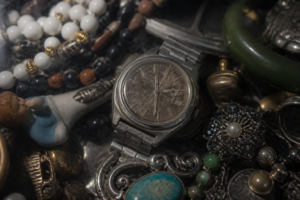
The best discoveries still happen close to home, but you need to move fast and already know what you’re looking at. Estate sales — the ones run by professional liquidation companies rather than a grieving family sorting things themselves — routinely price vintage watches well under market simply because nobody organizing the sale is a specialist. I once walked out of an estate sale with a Hamilton Khaki, dial in near-mint shape, for $45. It needed a fresh gasket and a regulation, but a $60 service later it was a legitimately fine watch worth $180 to $200 in that condition.
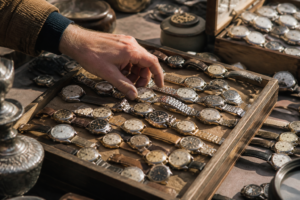
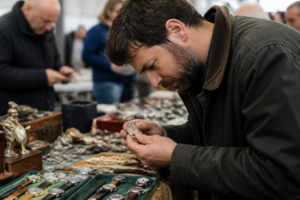
Antique shops run the opposite way. Dealers there have usually already done their homework on a piece, and their pricing reflects it — sometimes ambitiously so. That’s not a knock on their honesty, but it does mean there’s very little room to overpay by accident. Flea markets sit somewhere between the two extremes. That $140 lesson from earlier in this post? A flea market table, an “all original” Omega, a swapped dial, and a crown that didn’t match anything else on the watch. Do your homework before you go, not after you’ve paid.
What to Check Over Before You Hand Over Money
This is the stage where most new buyers stumble — not because they mean to cut corners, but because nobody’s told them what they should actually be checking. Vintage watch inspection follows a fairly logical order, and sticking to it will catch nearly every problem before it becomes yours to deal with.
The Case: A Polish Job Kills Value Faster Than Anything Else
A case that’s been polished on a vintage watch is, almost without exception, a bad sign. Original brushed finishing — especially along the lugs — is gone for good the moment a buffing wheel touches it. Check the lug edges for sharpness. Drag your thumb across the sides of the case and feel for whether that brushed texture is still there, or whether the whole thing has that wet, mirror-like shine that over-polishing leaves behind. A polished case isn’t unwearable by any stretch, but it’s a sign of less careful ownership somewhere along the line, and it usually translates into weaker resale numbers and less collector enthusiasm.
Lug thickness deserves attention too. Vintage Seikos and Omegas were made with real margin in their metal to begin with. Decades of repeated polishing can whittle that down to something dangerously thin — I’ve come across 1960s cases with lugs under 1mm thick that were structurally shot. None of this shows up in a photo. You have to hold the watch to know.
The Dial: Telling Original From Restored
Dial originality might be the single most nuanced judgment call in this hobby. A refinished dial — one a restorer has repainted, reprinted, or touched up in some way — knocks the value down significantly no matter how flawless it looks in the listing photo. In my experience, a dial that looks suspiciously perfect on a watch turning 60 years old is a warning sign, not a bonus. Genuine original dials show their age honestly: a bit of patina settling into the lume plots, perhaps faint dust marks, or that “tropical” color shift that decades of UV exposure produces.
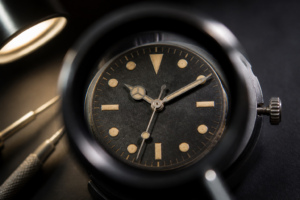
Get in close with magnification and study the printing itself. Original text carries a slight softness and depth to it. Refinished dials, by contrast, tend to look flat, with font weight that’s inconsistent or lettering that visibly sits on top of the surface instead of belonging within it. This is precisely where owning a decent loupe stops being a nice-to-have and becomes non-negotiable.
The Loupe That Turned Me From a Mark Into a Skeptic
You’ll never catch a frankenwatch or a redone dial by holding a watch at arm’s length, and every seller counting on that fact knows it too. A real loupe is what separates simply believing someone’s story from actually confirming it yourself — which is precisely the step that Portland flea market taught me I’d skipped.
Where it earns its keep
- At 20X magnification, it’s plenty strong to reveal dial flaws, refinishing marks on a case, and swapped parts your bare eye would sail right past — without pushing you into territory so extreme it’s useless out in the field.
- It’s compact enough to toss in a bag on the way to an estate sale or to have ready the moment an online order lands on your doorstep — so verification actually happens instead of getting skipped.
- The optical quality is sharp enough to judge printing and lume condition closely, which is often all it takes to date a watch correctly or spot an amateur polish job that quietly wrecks the value.
Where it falls short
- Holding it steady and dialing in focus takes some practice — early on it feels clumsy, and you’ll second-guess whether you’re seeing a real flaw or just an artifact of the magnification.
- A loupe only fixes the seeing part of the problem, not the knowing part — without understanding what you’re looking for, you’ll end up staring at a dial with no better idea of what’s original than before you picked it up.
I second-guessed buying one for months, convinced I’d just spend money on another thing I’d misuse. Then I used it on a watch I almost bought and caught a hairline crack in the crystal that the seller had completely glossed over—the loupe paid for itself immediately. Pick up the Joyzan 20X Watchmaker Loupe.
About This Article

Written by Ellen Ashford. Watch collector, fountain pen enthusiast, and lifelong journaler. Time & Ink is where I explore the craft of analog living — from vintage timepieces and fine stationery to the simple pleasure of putting pen to paper. More about this site.
Verify this against a primary source
Specifics change, and your situation may differ from the one described here. These are the authorities worth checking directly:
- NAWCC — horological reference, archives and research library
- Smithsonian Institution — collection records for historic timepieces and writing instruments