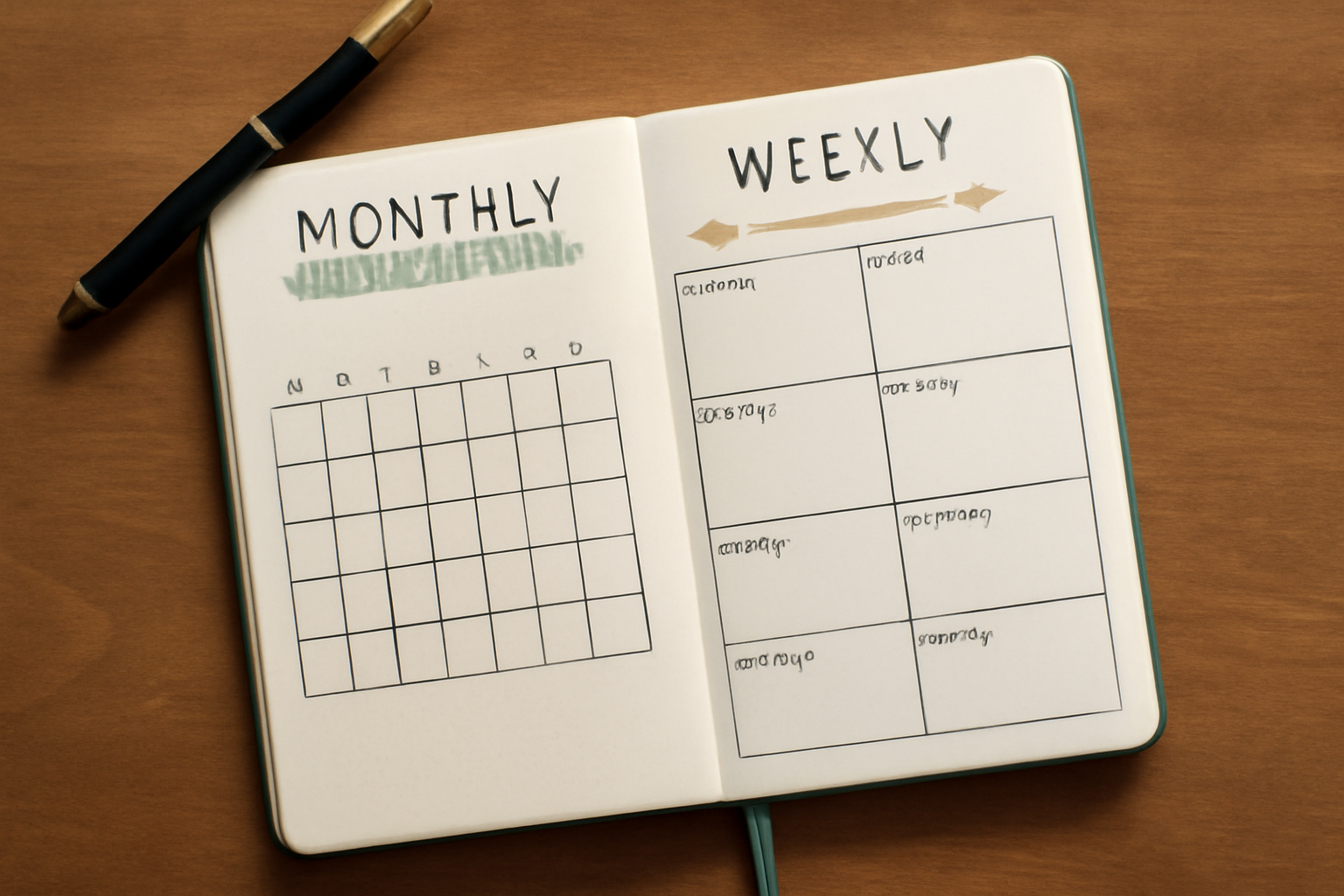
The assumption nearly everyone starts with is that a decent pen will simply behave itself on whatever paper happens to be lying around — that ink is ink, paper is paper, and the pairing hardly matters. It’s wrong, and I still own the ruined notebook to prove it. Three years back I sat down with a brand-new journal and a freshly filled pen, and within four pages the ink had soaked clean through, turning what should have been a tidy monthly spread into something closer to an abstract painting. Wrong paper, wet-writing nib, forty-five seconds flat before the damage was permanent. That single afternoon cost me a notebook, half a bottle of Diamine Oxblood, and whatever dignity I’d walked in with. It also shoved me into a research rabbit hole I have never once regretted.
Three years of daily fountain-pen journaling later, here is what I’ve settled on: the setup matters a great deal, but none of it is mysterious once you know why each piece earns its place. Paper weight, nib size, ink flow — none of these are arbitrary tastes. They function as one interlocking system. Nail the system and a fountain-pen bullet journal turns into one of the more satisfying analog habits you can keep up. Miss it, and you’re just quietly murdering expensive notebooks in purple ink.
Along the way I’ve put everything from a $12 Pilot Kakuno to a vintage Pelikan M400 with a custom-ground stub nib through daily use, filling more than a dozen notebooks in the process. What follows is the setup I actually landed on, along with the honest reasoning that got me there.
Why a Fountain Pen and a Bullet Journal Belong Together
The common expectation is that fountain pens are delicate, high-maintenance tools meant for calligraphy or the occasional signature on something important. My actual experience runs the other way entirely. A properly maintained fountain pen glides across the page with less hand fatigue than any ballpoint I’ve ever picked up. In a system built on daily task-logging, note-taking, and reflection, that difference adds up fast — my wrist notices, and it’s grateful.
There’s also something inherently physical about the bullet journal method itself. Ryder Carroll designed the whole system around deliberate, hands-on engagement with your own time, and a fountain pen only deepens that. Uncapping the pen is its own small ritual, and that brief pause genuinely helps me settle into whatever I’m about to write. I realize that sounds a bit precious. But after a decade spent collecting analog objects — vintage Seiko movements, mechanical typewriters, the whole lot — I’ve learned the ritual itself is often where the real value sits.
None of this works, though, unless your materials actually get along. Fountain pen ink is water-based and considerably wetter than anything in a ballpoint or gel pen, which means it needs paper built to receive it. This is precisely where most newcomers stumble — and precisely where I stumbled first.
Picking Paper: The Decision That Matters Most
Paper is the whole foundation of a fountain-pen journaling setup, and I don’t think that can be overstated. A cheap pen on excellent paper will still produce beautiful results. An expensive pen on poor paper will produce nothing but frustration. I learned this the hard way after burning through two Moleskine notebooks convinced the pen itself was defective. It wasn’t. Moleskine paper runs around 70 gsm and is famously unfriendly to fountain pen ink — bleeding and ghosting badly no matter what you load into the pen.
These days I tell anyone starting out to look for 80 gsm at an absolute minimum, with 90 gsm hitting the sweet spot for most fine and medium nibs. LEUCHTTURM1917 notebooks run 80 gsm and hold up to most fountain pen inks, with only faint ghosting showing up under especially wet writers. Clairefontaine notebooks use 90 gsm French-milled paper and are, frankly, exceptional — bleed is next to nonexistent and the surface is silky smooth. Where they fall short is indexing and page numbering, which is exactly what makes LEUCHTTURM1917 the more practical choice for bullet journaling specifically.
Tomoe River paper, at a mere 52 gsm, is its own category entirely. It’s absurdly thin yet holds up beautifully against fountain pen ink thanks to a dense surface coating, and inks bloom into remarkable sheen and shading on it. I’ve used it inside a Hobonichi Cousin and genuinely loved writing on it. The catch is slow dry time, which makes it a poor starting point for anyone still using wetter pens.
Matching Nib Size and Ink to Everyday Journaling
Early on I made the rookie move of buying a broad nib simply because it looked more impressive. On 80 gsm paper with a wet ink, though, a broad nib lays down enough ink that dry time turns into a genuine problem — I smeared half a weekly log before I caught on. For bullet journaling on standard notebook paper, a fine or extra-fine nib is simply the smarter call.
My daily driver right now is a Pilot Metropolitan with a fine nib, running about $15 to $20 — reliable, tough, and well-mannered on LEUCHTTURM1917 paper with barely any ghosting. I also keep a TWSBI Eco with an extra-fine nib in rotation; being a piston filler makes it a natural fit for heavy daily use since you’re not constantly swapping cartridges. For something a step up in refinement, the Platinum 3776 Century with a fine nib writes beautifully and runs roughly $70 to $80.
On the ink side, I lean toward formulas that are moderately wet but dry fast. Pilot Iroshizuku inks behave impeccably and dry in about 10 to 15 seconds on LEUCHTTURM1917 paper. Diamine offers serious value at roughly $10 to $12 for an 80 ml bottle, with more colors than any one person needs. What I steer away from for daily journaling are the heavily saturated, slow-drying inks — some Robert Oster shades among them — which are stunning on paper but a nightmare when you’re logging tasks at speed.
What’s Actually in My Bullet Journal Kit Three Years In
Here’s the unvarnished list of what I reach for every single day — nothing aspirational about it. This is the exact kit currently sitting on my desk, proven out across multiple finished notebooks.
- Main pen: Pilot Metropolitan, fine nib — roughly $18, filled with Pilot Iroshizuku Shin-ryoku (a deep forest green)
- Backup pen: TWSBI Eco, extra-fine nib — roughly $32, filled with Diamine Oxblood for headers and signifiers
- Ruler: A narrow 15 cm stainless steel ruler for grid lines — plain, unglamorous, under $5
- Blotter: A folded scrap of smooth card tucked loose into the back cover — free, cut from an old packaging insert
- Notebook: LEUCHTTURM1917 A5 Hardcover, dotted, 80 gsm, 251 numbered pages
It took roughly six months for the two-pen habit to feel natural. Splitting inks between everyday entries and headers or signifiers builds a visual hierarchy that noticeably speeds up how fast I can scan a page. Of every upgrade I’ve made to a bullet journal system, this ranks among the most useful — and it’s free if two pens are already sitting in your drawer.
The Paper That Finally Solved the Bleed-Through Problem
Once that early ink disaster settled into a lesson, I understood that plenty of bullet journal paper simply can’t hold fountain pen ink without feathering or soaking through. The LEUCHTTURM1917 A5 Hardcover Dotted changed the equation entirely — its thick, specially treated paper is one of the rare journals that shrugs off wet-writing nibs without ruining the look of a spread.
Where it earns its keep
- That 80 gsm sheet holds off feathering and bleed-through even under fairly wet fountain pen nibs, so you can write without flinching.
- The dot grid stays quiet enough that it all but vanishes once the writing’s done, leaving a clean canvas free of heavy-handed grid lines.
- The hardcover binding is rigid enough to write on your lap or standing up without the page flexing and ghosting onto its neighbor.
Where it falls short
- It costs more than a standard bullet journal, and that price gap stings if you’re coming from cheaper notebooks — though the paper quality earns it back once you’re actually using the thing.
- That same hardcover is sturdy at the expense of flexibility, so it won’t squeeze into a small bag or backpack the way a softcover journal would.
I hesitated before committing to the higher price point, worried I’d be overspending on paper, but the moment I loaded my favorite wet-writing nib and saw the ink sit cleanly on the page without ghosting to the back, all that doubt evaporated. I grabbed the LEUCHTTURM1917 A5 Hardcover Dotted — Forest Green (Amazon) and haven’t looked back since.
About This Article

Written by Ellen Ashford. Watch collector, fountain pen enthusiast, and lifelong journaler. Time & Ink is where I explore the craft of analog living — from vintage timepieces and fine stationery to the simple pleasure of putting pen to paper. More about this site.
Verify this against a primary source
Specifics change, and your situation may differ from the one described here. These are the authorities worth checking directly:
- NAWCC — horological reference, archives and research library
- Smithsonian Institution — collection records for historic timepieces and writing instruments