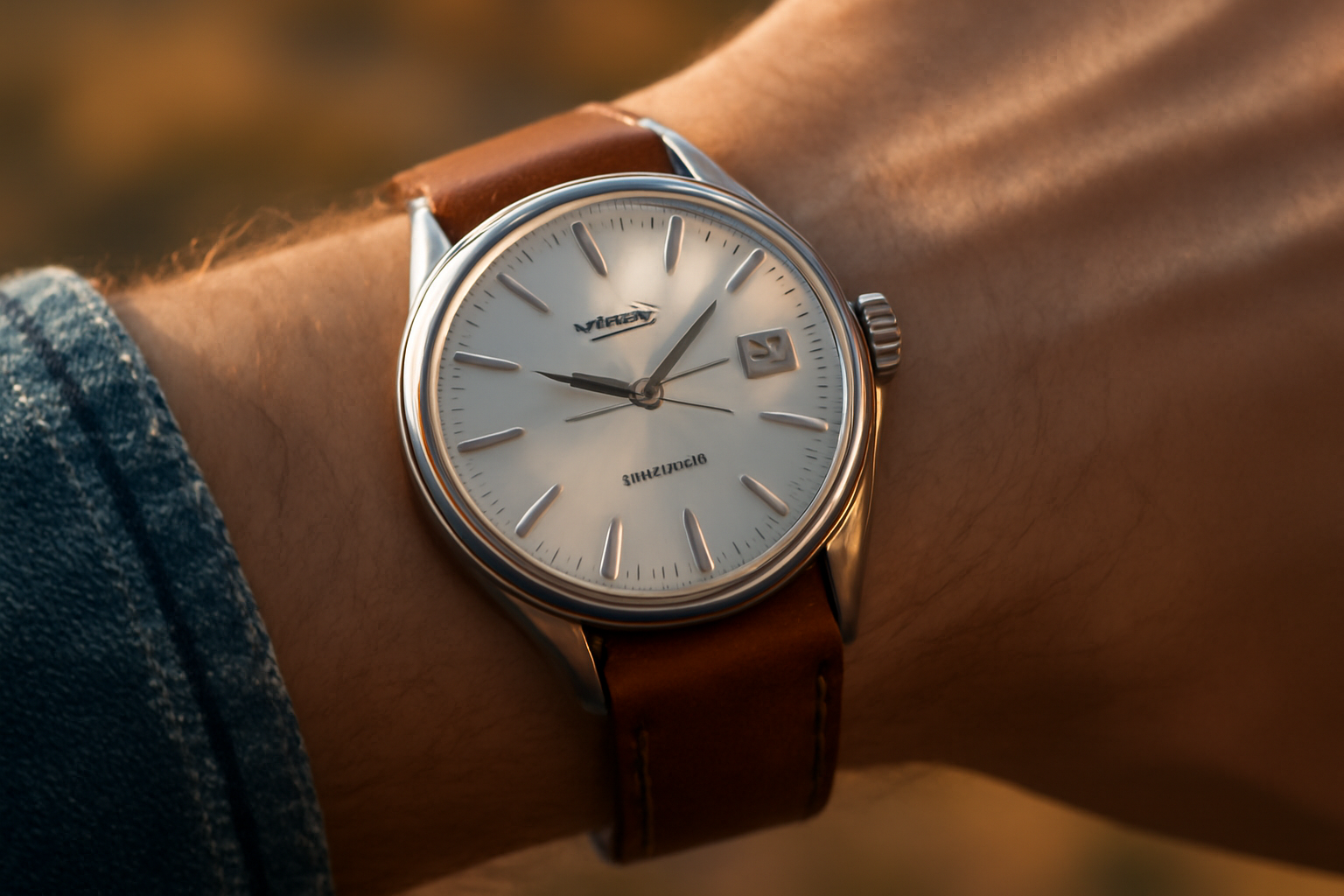
Open the second drawer of my writing desk and you’ll find an old cufflink box doing double duty as a watch tray — eleven pieces inside, not one of them over $200, and right up front sits a $45 Seiko 5 I almost passed on because I figured anything that cheap had to be trouble. That 7S26 movement has humbled me more than once since: it keeps tighter time than a $300 quartz piece I wore daily for years before it got demoted to the same drawer. A decade of picking through flea market folding tables, estate sale boxes, and late-night online listings has taught me something no price tag will — the sub-$200 vintage market is one of the quietest bargains left in horology, as long as you actually know what you’re reaching for.
People hear “vintage” and assume “worn out” by default. The truth runs the other way — mechanical calibers built between the 1960s and 1990s were made to outlast their original owners, not just satisfy them. A huge number were serviced exactly once, then shut away in a drawer somewhere and forgotten entirely. That neglect is your opening. The catch is you still need to know which calibers deserve trust, which brands have parts and watchmakers who’ll touch them, and what to check before any money leaves your pocket. That’s the ground I want to cover here.
I’ve bought pieces I regretted within a week and pieces I still strap on every morning. Somewhere along the way I learned to tell a dial that photographs beautifully apart from a movement that actually performs. Everything below comes from real transactions, real dollar figures, and a decade of stubbornly collecting mechanical things — watches and fountain pens both. Let’s get into the details.
Why Old Mechanical Movements Beat Their Price Tags So Often
Here’s what caught me off guard early on: a well-built mechanical movement doesn’t wear down with age the way circuit boards and batteries do. The ETA 2824-2, the Seiko 7S26, and the Citizen 8200 were all built to tolerances that today’s bargain-bin movements simply don’t touch. Find one that’s been serviced recently, or barely worn at all, and what you’re holding is decades of engineering discipline for a sliver of its original sticker price.
I once set a 1974 Seiko 5 next to a brand-new $120 automatic from a fashion label, just to see. The Seiko sat at roughly ±15 seconds a day, untouched and unadjusted. The new watch wandered 45 seconds a day straight out of the box. That gap tells you everything about the difference between a caliber built with real craftsmanship and one assembled to hit a marketing price point. Every time I’ve run this comparison, the vintage movement from an established maker has come out ahead.
None of this means the movement arrives problem-free, though — you’re still buying decades-old mechanical hardware. A caliber that hasn’t seen fresh oil in twenty years will likely need cleaning and lubrication before it behaves the way it should. Set aside another $50 to $80 for a proper watchmaker’s service if daily accuracy matters to you. Even with that expense folded in, you’re frequently landing under $200 total for something that would run you $400 to $600 new.
Which Vintage Watch Brands Are Worth Chasing Under $200
Not every vintage name is worth your time at this price ceiling. I’ve narrowed my own hunting to three manufacturers that consistently pair dependable movements with real service support and active collector communities: Seiko, Citizen, and Timex.
Seiko: The Movement That Refuses to Quit
Seiko is my standing recommendation for anyone new to this hobby. The 7S26 inside the Seiko 5 lineup is close to bulletproof and about as easy to service as automatic movements get. I found a 1980s Seiko 5 SNK809 variant at an estate sale for $38, and after a $60 visit to my local watchmaker, it now sits at ±10 seconds a day — genuinely strong performance for an automatic at any price. Worth tracking down: the Seiko 5 line broadly, the 6119 dress series, and the early-’90s SKX divers, though the SKX has gotten noticeably pricier lately.
Citizen: Quietly the Best Value on the List
Citizen doesn’t get the respect it’s earned among vintage collectors. Their 8200 and 8210 calibers from the ’70s and ’80s are genuinely lovely movements — accurate, nicely finished, and routinely available for under $80. My 1979 Citizen Automatic, a 36mm case, comes to every pen show I attend because it slides under a shirt cuff without a fight. Citizen’s vintage dress watches simply outperform what they cost, and that’s exactly why they’re catching on with collectors who’ve already picked the Seiko catalog clean.
Timex: The Unpretentious Budget Choice
Timex splits opinion in collector circles, but I’ll stand up for it here. The manual-wind and electric Timex models from the ’60s and ’70s have real charm and cost almost nothing — usually $15 to $40. Nobody’s calling them an investment. What they do offer is reliability, good looks on a NATO strap, and a low-stakes option for days you don’t want to risk something more valuable. My own 1968 Timex Marlin holds ±30 seconds a day, which is an honest number for what it is.
The Checks I Run Before Any Vintage Watch Purchase
I learned this lesson the expensive way: a gorgeous dial can hide a movement that’s completely wrecked underneath. My second vintage buy was a stunning 1971 Omega De Ville, well past what I’d normally spend but too tempting to walk away from. The dial looked untouched. The movement, it turned out, had been through water damage and dried out badly afterward. Between the $180 purchase and the $200 in repairs that followed, the lesson never left me.
These days I run through five checks before anything changes hands. One, crystal clarity and scratch depth — deep gouges usually mean careless handling. Two, dial condition, specifically moisture damage that shows up as spotting or fading around the edges. Three, whether the crown pulls out cleanly to the hand-setting position. Four, the case back, checked for scratched slots or gouged edges that point to an amateur having opened it before. Five, whichever movement view is visible through a case back window, if the watch has one.
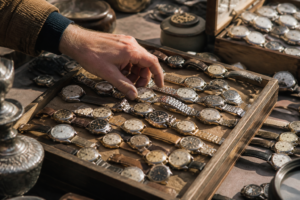
In person, this kind of visual check is fairly straightforward to pull off. Online, though — and that’s where roughly 70% of my collection has come from — you’re entirely dependent on the seller’s photo quality and your own magnification. Telling degraded lume apart from ordinary aging at 20x, or catching a hairline crack in a jewel setting, takes real optical precision. Which brings me to the one tool I no longer collect without.
The Loupe That Finally Showed Me What I Was Really Paying For
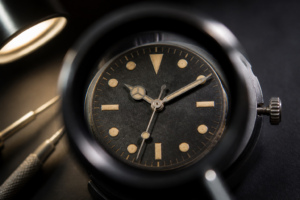
Chasing vintage watches under $200 means you can’t lean on blurry photos or a seller’s flattering description — you need to see dial condition, movement cleanliness, and whether that “light patina” they mentioned is actually corrosion in disguise. A decent magnifying loupe is the difference between guessing and knowing.
Where it earns its keep
- At 20X, it’s sharp enough to catch hairline crystal cracks, the true state of lume on the hour markers, and rust inside the movement — exactly the details that separate a $40 steal from a $40 regret.
- Small enough to toss in a jacket pocket for flea markets and estate sales, letting you inspect a piece in person before committing, which pays for itself many times over.
- Watchmaker-grade glass holds focus without the eyestrain or color fringing you get from cheaper units, so you actually use it every time instead of leaving it in a drawer.
Where it falls short
- There’s a learning curve to finding the right focal distance — get too close and it’s nothing but blur, which made for a couple of clumsy moments at my very first estate sale.
- At 20X, even a small hand tremor gets amplified, so you’ll want a steady grip or something solid to rest against if you want the fine details to hold still.
I almost talked myself out of buying one because I thought I could just trust my eyes and good lighting, but the first time I caught hidden dial damage that would’ve cost me $80 in regret, I understood why every serious watch collector keeps one in their bag. Grab the Joyzan Watch Loupe 20X Watchmaker Loupe Magnifying Glass before your next hunt.
About This Article

Written by Ellen Ashford. Watch collector, fountain pen enthusiast, and lifelong journaler. Time & Ink is where I explore the craft of analog living — from vintage timepieces and fine stationery to the simple pleasure of putting pen to paper. More about this site.
Verify this against a primary source
Specifics change, and your situation may differ from the one described here. These are the authorities worth checking directly:
- NAWCC — horological reference, archives and research library
- Smithsonian Institution — collection records for historic timepieces and writing instruments