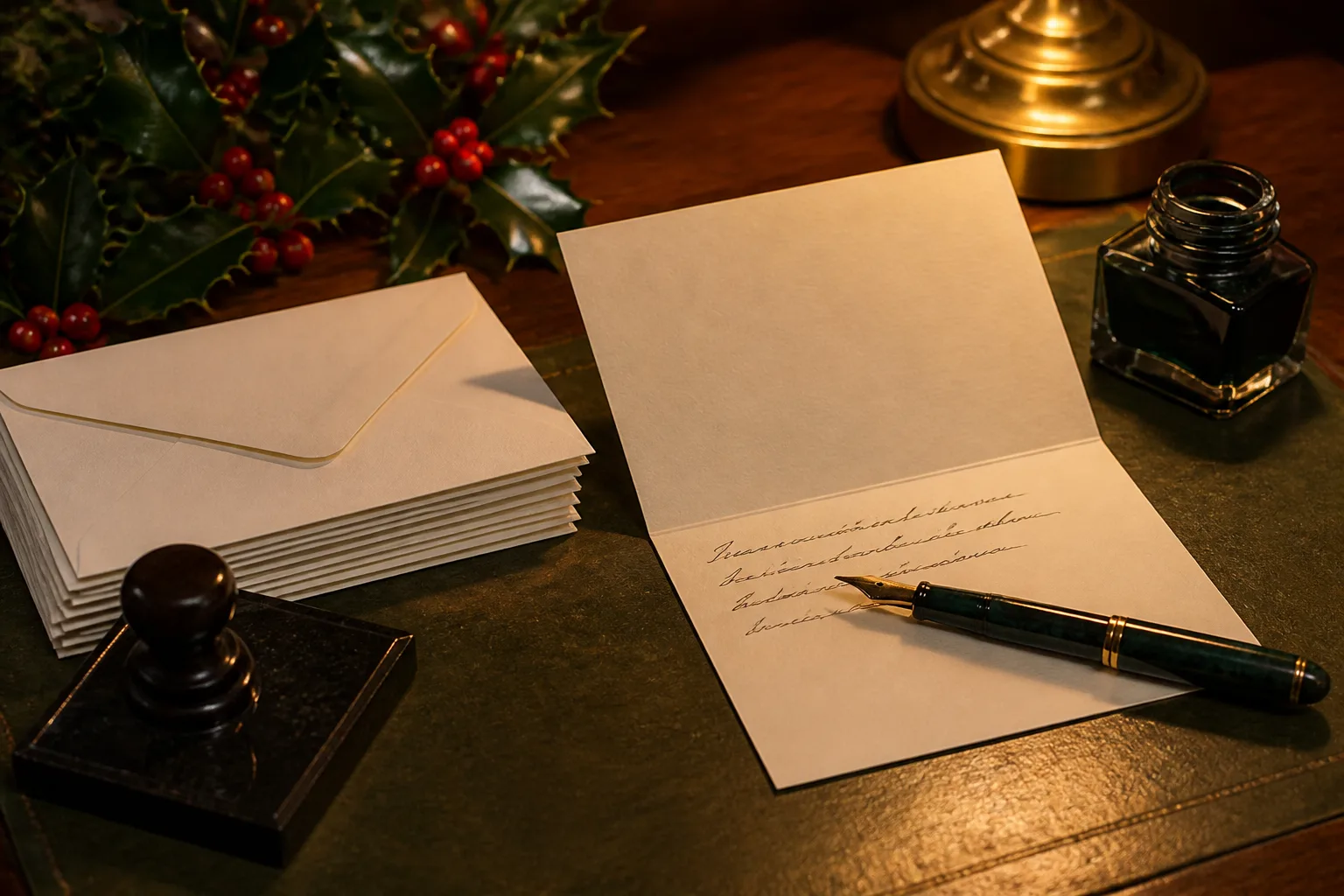
Every December I sit down with a stack of cards, a full converter, and the best intentions, and every December I learn the same lesson again. The paper is the problem. The message I wanted to write looks lovely for about four seconds, then one loose sleeve of my hand drags across the line I just finished and it is a smudge.
If you write with a fountain pen, greeting cards are probably the worst paper you will touch all year. The good news is that the fix is quick and mostly about knowing what to look for before you commit a whole evening to it. You can test a card in about ten seconds, choose a nib that suits the surface, and address the envelope so it survives the trip through a damp mailbox. Here is how I do it.
Why Greeting Cards Are So Difficult
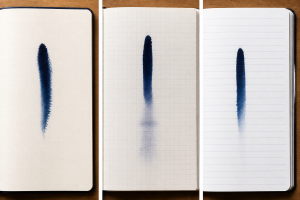
Fountain pen ink is water-based, and it is designed to soak into paper. Good writing paper drinks the ink in and holds it in place while the fibers take up the color. Most commercial greeting cards are coated or glossy, and that coating is there to make the printed image look sharp. Unfortunately, it also stops the ink from soaking in. On a coated surface the ink sits on top, takes minutes to dry, and smears the moment anything rubs against it.
Very soft, absorbent stock has the opposite problem. The ink soaks in so eagerly that the edges of each line can feather and fuzz. So you are really looking for the middle ground: a surface that is matte and uncoated, with enough sizing to hold a crisp line without drinking it all in.
The Ten-Second Test
Before you write a single message, test the card. You do not need a special kit, just the pen you plan to use and the ink you plan to use with it. Here is the routine I follow:
- On the back of the card, or on the inside flap of the envelope, make a few strokes. Write a short word and a couple of loops so you get a feel for both straight lines and curves.
- Wait about ten seconds. Do not blow on it or tilt it toward a heater.
- Drag a fingertip across the strokes, lightly, the way a hand would drag across a card as it moves through a stack.
- If the line smears, it is coated stock, and you should switch cards or plan to write only with a fast-drying nib.
- If the line stays put but looks fuzzy at the edges, the stock is too absorbent, and you should use a finer nib or a drier ink.
I have done this test on cards that looked perfectly fine on the rack and failed it completely. Trust the finger, not the look.
Matching the Nib to the Surface
Once you know what kind of card you have, pick the nib to match it. On coated stock, a fine or extra-fine nib that writes on the dry side lays down less ink and dries faster. That is the easiest way to keep the smear down without changing paper. Save the broad, wet-writing nibs and shimmer inks for good paper, where they can show off instead of puddling.
On uncoated matte card or cotton stock, you have more freedom. A medium nib is usually comfortable, and most inks will look as they should. If you notice feathering on very soft paper, drop down a nib size or choose an ink with a reputation for better behavior on absorbent sheets.
Surface Guide for Cards and Envelopes
This table is the quick reference I keep taped inside the lid of my writing box. It covers the surfaces you are most likely to meet during the holidays.
| Card or envelope surface | What the ink does | What to use |
|---|---|---|
| Glossy or coated card | Sits on top, dries slowly, smears | Fine or extra-fine nib on the dry side, or a pigment ink |
| Matte uncoated card | Soaks in evenly, dries predictably | Medium nib with a standard dye or ink of your choice |
| Cotton or very soft stock | Soaks in quickly, may feather | Finer nib, drier ink, and a light touch |
| Glitter or foil finish | Flakes catch the nib and can clog the feed | Write around the finish, or use an opaque gel or paint pen |
| Dark red, green, or navy envelope | Fountain pen ink is transparent and disappears | Opaque gel, paint pen, or a pigment liner |
Drying Without Disaster
Slow-drying lines are the real enemy of a holiday batch. The temptation is to rub the wet ink with a sleeve or a tissue, which only spreads the color across the card. Instead, press a blotter or a rocker blotter onto the line and let it lift the excess. Press, do not rub. If a line still looks wet after a minute, the card is coated, and you should move it to a flat spot and leave it alone rather than handling it.
I work in batches of about ten and set each finished card open on the table to dry. Once the first few are dry to the touch, I start closing them in the order they were written. That way the last card in the stack is never the one I am tempted to hurry.
Envelopes That Survive the Rain
An envelope has a harder life than the card inside it. It rides in a mail truck, sits in a damp box, and may get soaked before anyone reads the address. Most fountain pen inks are dye-based, which means they will run if the envelope gets wet. Pigment inks and iron gall inks are water-resistant once dry, which is why they are my first choice for addresses. Platinum Carbon Black and Sailor Kiwa-guro are both pigment inks, and Rohrer & Klingner Salix is an iron gall ink. Each of them holds up well once it has dried.
If you only have a dye ink on hand, there is an old trick that still works. Once the address is fully dry, rub a white candle lightly over it to wax the surface. The wax resists water and keeps the ink from running. Test the candle on a scrap first, because it can leave a faint sheen on some papers.
The simplest answer is to address the envelope in ballpoint or a pigment liner and keep the fountain pen for the message inside. The postal service also asks for good contrast between the address and the envelope so sorting machines can read it, so a dark, crisp address on a light envelope is the goal. That matters more than the pen you choose.
Looking After Your Pen Through the Season
A holiday batch is hard on a pen. Saturated reds stain converters and clear demonstrator pens, so flush the pen properly once you are finished, and keep an eye on the feed for any color that does not wash out. Pigment and iron gall inks need the pen cleaned more often, and they should never be left to dry inside a pen. If you are switching between inks during the season, flush between them so the colors do not mix in unexpected ways.
If you notice the ink flow changing or the nib starting to skip during a long session, stop and clean the pen before you push on. A clogged feed is much harder to fix once the card is covered in half-finished lines.
Frequently Asked Questions
Can I use a fountain pen on glossy holiday cards at all?
Yes, but you need to adjust your expectations and your technique. Use a fine or extra-fine nib that writes on the dry side, give each line time to dry, and run the ten-second test first. If the card fails the test, it is better to switch to a matte card than to fight the smear.
Which ink is best for addressing envelopes that might get wet?
A pigment ink or an iron gall ink is the safer choice, because both are water-resistant once they have dried. Dye-based inks can run if the envelope gets damp. If you only have a dye ink, wax the dry address with a white candle or write the address in a pigment liner instead.
Why does my ink smear even after it looks dry?
Coated stock can take several minutes to dry, and the surface may feel dry long before the ink underneath has set. Press a blotter gently on the line to lift any excess, and then leave the card flat without touching it. Patience is the real fix here, not extra pressure from your hand.
How many cards should I write in one sitting?
I suggest batches of about ten. Handwriting tends to fall apart when your hand is tired, and a tired hand makes sloppy lines that are harder to read and more likely to smear. Stopping after a batch lets the ink dry and keeps the last cards as neat as the first.
About This Article

Written by Ellen Ashford. Watch collector, fountain pen enthusiast, and lifelong journaler. Time & Ink is where I explore the craft of analog living — from vintage timepieces and fine stationery to the simple pleasure of putting pen to paper. More about this site.
Verify this against a primary source
Specifics change, and your situation may differ from the one described here. These are the authorities worth checking directly:
- NAWCC — horological reference, archives and research library
- Smithsonian Institution — collection records for historic timepieces and writing instruments