Premium Rollerballs That Write Better Than Most Fountain Pens
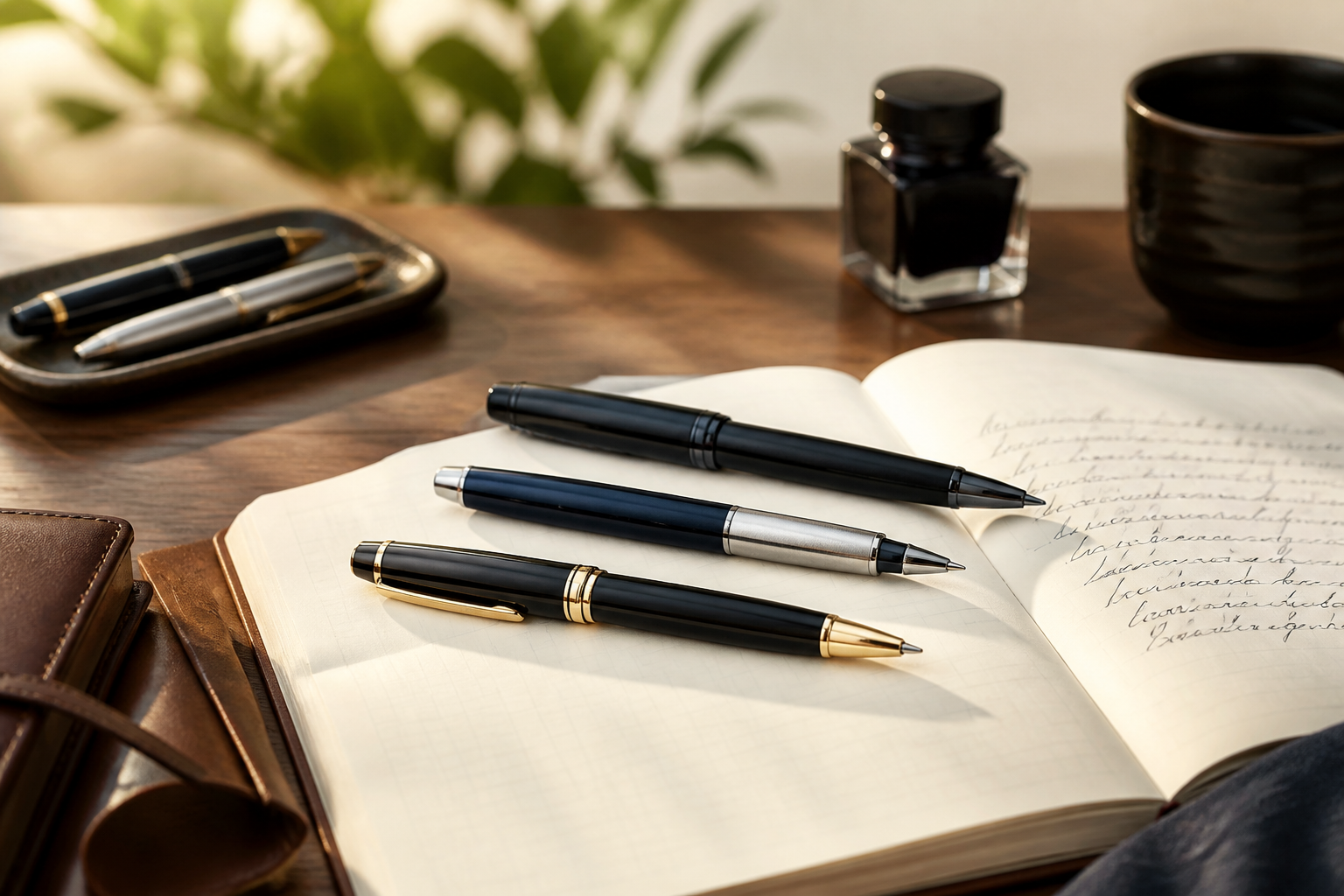
This is an awkward thing to write on a site with this much fountain pen content, so let me be direct: for a lot of everyday writing, a good rollerball is the better tool. Not the more interesting one. The better one.
A rollerball starts instantly after a month in a drawer. It does not care whether the paper is Rhodia or a receipt. It survives a flight without burping ink into the cap, and it needs no cleaning routine at all. Everything I like about a fountain pen is about the experience of using it; almost everything a rollerball does better is about not having to think.
Prices move constantly on all of these. The figures below are what I paid or what I last saw them at — treat them as a band, not a promise.
Where Rollerballs Genuinely Win
- Bad paper. A liquid-ink rollerball lays down a controlled line on copier paper where a wet fountain nib feathers into a mess.
- Cold starts. No priming, no scribbling, no soaking. It writes on the first stroke after weeks capped.
- Travel. No pressure changes forcing ink into the cap, no half-empty converter leaking in a bag.
- Lending it. Anyone can use a rollerball. Hand someone a fountain pen and you will watch them press too hard and spring the nib.
Where they lose is line variation, ink choice, and the simple pleasure of the thing. A rollerball refill gives you one width and one colour, and when it is empty you throw it away. If that trade sounds fine, the five below are worth owning.
The Five
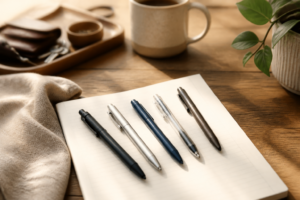
1. Retro 51 Tornado — Best Overall
Price: around $35–40 | Refill: Schmidt P8126 capless | Mechanism: Twist | Ellen’s Rating: 9.5/10
The Tornado is the pen I recommend to anyone who says they want “a nice pen” without wanting a project. The twist mechanism is satisfying in a way clicking never is, the brass body gives it real weight, and the Schmidt refill it ships with is the best rollerball refill in general production — a genuinely black, genuinely smooth 0.7mm line.
There is no cap, which means no cap to lose and no two-handed fumbling. It is also the pen most likely to start a conversation, because Retro 51 released hundreds of designs and people who know, know. The stainless version is the one I would buy first.
Best for: Almost everyone. The default answer.
2. Retro 51 Tornado Classic Lacquer — Best Looking
Price: around $38 | Refill: Schmidt P8126
Mechanically identical to the stainless, in a deep lacquer finish that hides fingerprints and scratches far better than bare metal. If the pen is going to live in a jacket pocket and be seen, this is the one. The classic lacquer.
3. Retro 51 Deluxe Stealth — Best Blacked-Out
Price: around $45 | Refill: Schmidt P8126
Matte black on black, including the trim. It reads as considerably more expensive than it is and it is the least ostentatious pen here despite being the most deliberate-looking. The coating does mark eventually — a year of pocket carry leaves it slightly polished at the ends, which I have come to like. The Stealth.
4. Lamy Studio — Best Built
Price: around $65–80 | Refill: Lamy M63 | Mechanism: Twist
The Studio is the most solidly engineered pen on this list — the propeller-shaped clip is the signature, and the whole thing has the density of something machined rather than assembled. It balances noticeably better than the Retro 51s for long writing sessions.
The M63 refill is good but not Schmidt-good, and it is more expensive to feed. Buy the Studio for the object; the refill is the compromise. The Glacier finish is the one I would pick.
5. Caran d’Ache 849 — Best Slim Carry
Price: around $50–62 | Body: Hexagonal aluminium
The 849 is the thinnest pen here by a distance, which makes it the one that actually fits in a shirt pocket or a notebook’s elastic without bulking it out. The hexagonal barrel stops it rolling off a sloped desk — a small thing that matters more than it sounds.
It is light, and if you prefer a weighty pen you will not get on with it. The matte black is the most versatile finish.
Rollerball, Gel or Ballpoint: What the Words Mean
These three get used interchangeably in product listings and they are not the same thing. A ballpoint uses thick oil-based ink, which is why it survives everything, lasts for years, and writes a comparatively pale, effortful line. A gel pen uses water-based pigment ink — darker and smoother than a ballpoint, but slower to dry and prone to needing a restart after sitting capped.
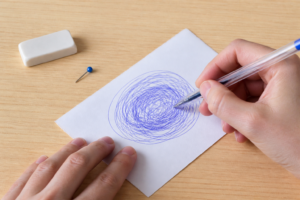
A rollerball sits between them, using liquid ink fed to a ball. You get close to fountain pen darkness and flow with none of the priming, and because the ink is thinner than gel it starts reliably. The trade is that it drains faster than a ballpoint and will show through thin paper more than one.
If you find fountain pens appealing but the maintenance tedious, a liquid-ink rollerball is the closest thing to the writing experience without the routine. That is the entire argument of this page.
A Note on Refills
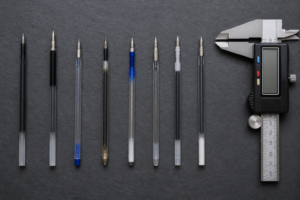
The single biggest upgrade available to any rollerball is the refill, and most pens ship with something worse than what will fit. The Schmidt P8126 in the Retro 51s is the benchmark; several other bodies will take it or a close equivalent.
Before you buy replacements, check what your body actually accepts — I have covered the formats in the refill compatibility guide and the follow-up on D1 and Euro-format. Getting this right turns a mediocre pen into a good one for a few dollars.
Would I Give Up My Fountain Pens?
No. But I stopped pretending that a fountain pen is the right tool for a phone message, a form, a delivery slip or a notebook that lives in a coat. The Tornado handles all of that without a thought, and the fountain pens get the writing that deserves them.
About This Article

Written by Ellen Ashford. Watch collector, fountain pen enthusiast, and lifelong journaler. Time & Ink is where I explore the craft of analog living — from vintage timepieces and fine stationery to the simple pleasure of putting pen to paper. More about this site.
Verify this against a primary source
Specifics change, and your situation may differ from the one described here. These are the authorities worth checking directly:
- NAWCC — horological reference, archives and research library
- Smithsonian Institution — collection records for historic timepieces and writing instruments