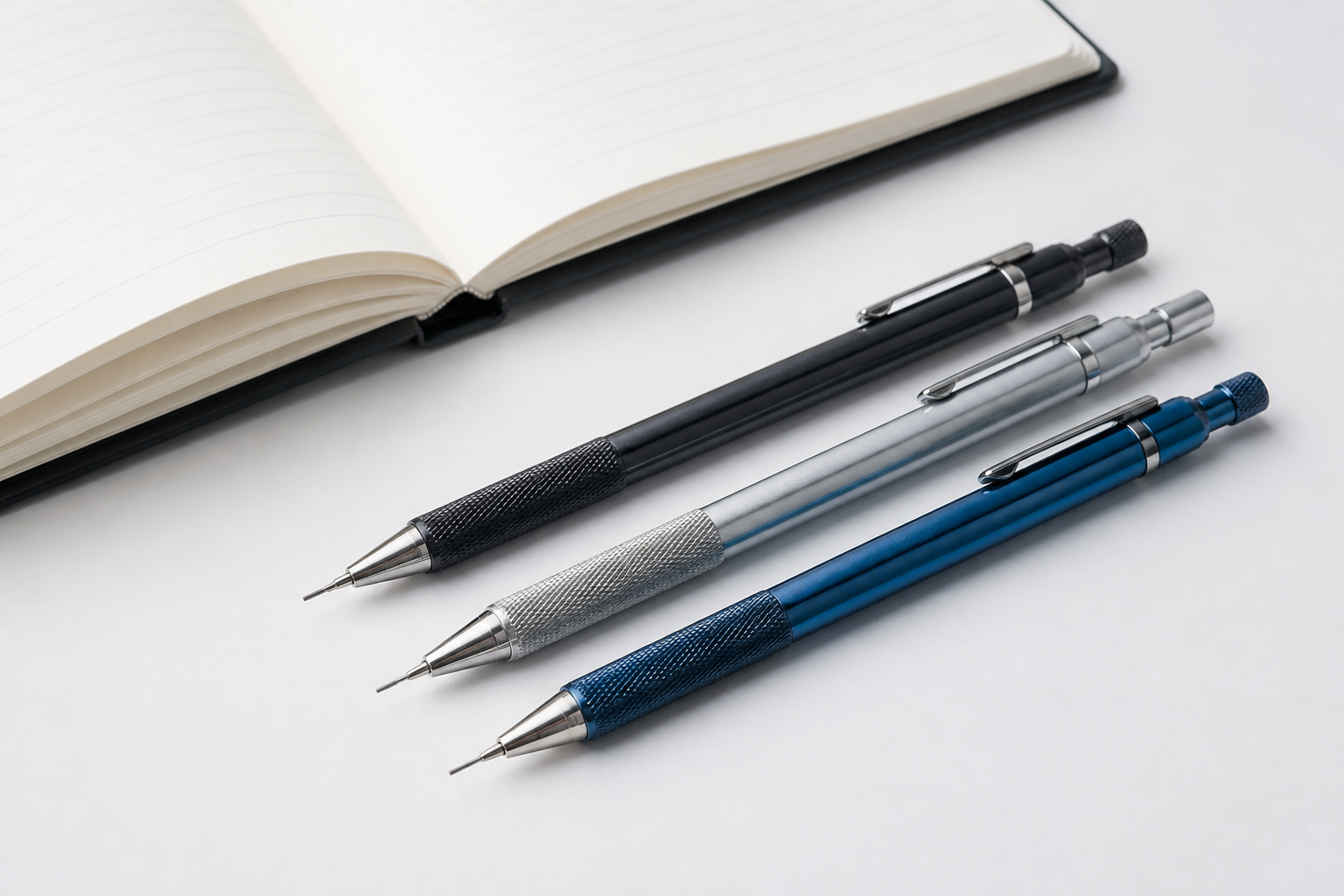
Four-tenths of a millimeter — that’s the entire gap between the lead size that wrecked my handwriting for three straight months and the one that fixed it overnight. Five years back, I picked up a mechanical pencil sized 0.9mm, assuming it was the ordinary kind, and spent a whole season producing lines that looked like they’d been drawn by a toddler gripping a crayon. Switching down to 0.5mm solved it instantly — the letters snapped into something crisp and deliberate. That one wrong purchase is what convinced me lead diameter isn’t a footnote spec; get it wrong and it genuinely changes how you write, sketch, and even think on the page.
In the years since, I’ve run mechanical pencil lead sizes through the same obsessive process I use on watches and pens — long stretches, ordinary conditions, no shortcuts. Graph paper filled with 0.3mm, a daily journal kept in 0.5mm, lecture halls and meetings survived on 0.7mm. I’ve snapped more 0.3mm leads than I’d like to confess, stumbled onto the reason 0.7mm is quietly the smartest choice for most grown-ups, and figured out that diameter alone doesn’t decide the outcome — grade, paper stock, and how fast your hand moves all pull equal weight.
What follows should clear up the fog. Whether this is your very first mechanical pencil purchase or you’re finally retiring the mismatched pack rattling around a drawer, getting a handle on these three main sizes will point you toward the tool that actually fits how you put words on paper.
Quick Verdict: 0.5mm or 0.7mm — Which Wins?
For the majority of writers, 0.5mm takes it. It’s the default everyone lands on because it splits the difference between sharpness, toughness, and comfort in hand. You can move at a normal clip without snapping lead, the line holds its edge on nearly any paper, and it handles notes, sketches, and technical marks with equal ease.
But — and here’s the piece most comparisons skip — 0.7mm pulls ahead if you write quickly, bear down hard, or work on cheap stock. That extra thickness almost refuses to break. Your grip stays loose instead of cautious. Under real pressure, day to day, 0.7mm beats 0.5mm more often than the spec sheets suggest. Plenty of architects, engineers, and students who ran both side by side ended up committing to 0.7mm for good.
From where I sit, asking “is 0.7 or 0.5 mechanical pencil better?” frames it wrong from the start. The real question is whether you’re chasing pure precision (0.5mm) or pure dependability (0.7mm). For most daily writing, dependability wins out. Still, if your touch is light or your paper is smooth, 0.5mm holds its title as the standard.
What Those Lead Size Numbers Actually Mean
That number stamped on the barrel — 0.3, 0.5, 0.7 — states the exact millimeter diameter of the graphite rod inside. Simple enough, until you put each size to paper and notice something strange: a 0.5mm lead never actually lays down a 0.5mm-wide line.
Here’s the mechanism behind that. Two things happen the instant lead meets paper: the tip presses a shallow groove, and the graphite flattens a bit under load. A 0.3mm lead ends up drawing somewhere between 0.35 and 0.45mm. A 0.5mm lead lands around 0.5 to 0.65mm. A 0.7mm lead spreads to 0.7–0.9mm. Exact width shifts with paper texture, hand pressure, and lead grade, but the finished line is always a touch wider than what’s printed on the tube.
That gap matters because it’s the reason 0.3mm feels like an entirely different tool from 0.5mm rather than a slightly thinner cousin. You’re not shaving off a little width — you’re stepping into a line so fine it demands a steadier, more careful hand. 0.7mm, meanwhile, isn’t merely “thicker.” It’s tolerant. It sacrifices some fine detail in exchange for never letting you down.
Diameter also dictates how often the lead snaps. Under the same amount of pressure, a 0.3mm lead breaks roughly three times as often as a 0.5mm lead. The cause is simple geometry — thin rods just have less structural backbone. Break a 0.3mm lead and you can lose a quarter of the usable point in one snap; break a 0.7mm lead and you barely notice. This isn’t an abstract spec — it changes how you hold and move the pencil in practice.
0.3mm Lead: Who Should Actually Reach for This Size
Let’s be upfront: 0.3mm isn’t built for everybody. It’s a specialist’s size — outstanding at its job, but far pickier than either 0.5mm or 0.7mm.
Its advantages are hard to argue with. You get razor-thin lines suited to technical drafting, architectural layouts, manga and comic panels, graph-paper math, and cramped marginal notes. When I’m jotting watch specs into the narrow margin of a notebook, 0.3mm is the only size that doesn’t look crammed or messy. That fine a line tucks into tight corners without crowding the page. For crossword grids, delicate handwriting, and detailed illustration, nothing else competes.
The downside is just as real: breakage. Across my own testing, a standard HB lead at 0.3mm snapped about once every 15 to 20 minutes of steady writing — not constant, but enough to grate on your patience. Cheap copy paper makes it worse, since the lead snags on rough fibers and fractures. It behaves only on smooth stock — Rhodia, Clairefontaine, HP Premium — where the surface is even and doesn’t fight back.
Here’s the twist that changed how I use 0.3mm: moving from HB up to 2H or 3H cuts breakage dramatically. Harder grades carry less binder, which leaves them physically tougher. A 0.3mm 2H lead snaps at roughly half the rate of 0.3mm HB. You trade away some darkness and pick up a bit of scratch, but for technical marks rather than filled-in areas, 2H is the smarter pick. Staedtler Mars 0.3mm 2H is what I reach for on technical annotation. Uni NanoDia’s 0.3mm 2H resists breaking even better, since the lead bites into the paper more securely.
Where 0.3mm earns its keep: technical drafting and CAD groundwork, manga and fine illustration, detailed architectural sketches, notes squeezed into margins, filling in crosswords and Sudoku grids, graph-paper computation, precision calligraphy, and detailed botanical drawing. Give it good paper and a patient hand, and 0.3mm repays you with precision nothing else matches.
0.5mm Lead: The Default, and Why It Earned That Spot
If lead diameters were put to a vote, 0.5mm would carry every district. It’s what most pencils ship loaded with, what every store keeps in stock, and what I pick up without thinking when I sit down to journal. There’s a reason it dominates: 0.5mm is the thinnest lead ordinary hands can push through a full day without constantly fighting breakage.
The mark it leaves — roughly 0.5 to 0.65mm on the page — stays sharp enough for margin notes and compact handwriting, while the lead itself holds up under normal pressure on mid-tier paper. From what I’ve seen, a 0.5mm HB in a decent barrel handles journaling, meeting notes, sketch underlays, and math homework without ever feeling mismatched to the task. That range is exactly why it’s my everyday-carry diameter.
So where does it stumble? Press down hard, write in a hurry, or land on rough copy paper, and 0.5mm starts breaking often enough to irritate you. It also deposits less graphite than the thicker options, so anyone with a heavy hand or a habit of bold shading will find the line coming out faint. Recognize yourself in either description? Keep reading — the next size solves both complaints.
0.7mm Lead: The Quietly Superior Workhorse
No one shows off a 0.7mm pencil at a pen meetup, yet it beats 0.5mm for a large slice of everyday writers without anyone noticing. That extra two-tenths of a millimeter nearly wipes out breakage altogether. Across months of use, I couldn’t get a 0.7mm HB to snap under normal writing — not in a chilly lecture hall, not scrawling on flimsy legal-pad paper, not while racing to keep up with someone talking fast.
That dependability is exactly why I point fast note-takers, exam-stressed students, and kids still learning pencil control — whose grip pressure swings wildly — toward 0.7mm. It also suits wide-ruled paper (7mm lines and up), where the bolder 0.7–0.9mm stroke looks proportioned rather than thin and lost. Cold fingers, gloves on, writing while standing — any situation short on fine control plays to 0.7mm’s strengths.
Its real weakness is sheer bulk. Cram it into a tight margin or small print, and the 0.7mm line starts running letters together. If your handwriting sits under roughly 5mm tall, you’ll feel it. That’s the honest trade-off: 0.5mm hands you precision, 0.7mm hands you durability, and no diameter gives you both at once.
0.7 vs 0.9mm Lead: Which Should You Pick?
Remember that 0.9mm pencil from the opening story — the one that kicked off this whole rabbit hole? Coming back to it with a clearer head, here’s my honest take: for ordinary writing, 0.7mm beats 0.9mm for nearly everyone. The 0.9mm line, closer to a full millimeter wide on the page, is simply too heavy for average handwriting, and the tip dulls quickly, so the line’s width drifts as you go.
None of that makes 0.9mm a bad size — it’s a specialty tool. It handles more like a freshly sharpened wood pencil than a mechanical one. Reach for 0.9mm if your writing runs large, your pressure runs heavy, you’re shading sketches, filling scantron bubbles, or working outside where the paper’s gone damp or rough. Carpenters, warehouse crews, and plein-air sketchers favor it precisely because it’s nearly impossible to break. Pentel’s GraphGear 1000 and the Uni Kuru Toga both offer a 0.9mm option if you want to test it in a well-made body.
Short version: grab 0.7mm for speed, 0.9mm for bold strokes and sketching. Torn between the two for note-taking? Go with 0.7mm.
Every Pencil Lead Diameter, From 0.2mm Up to the Biggest
Lead size, lead diameter, pencil thickness — three phrases pointing at the same measurement: the millimeter width of the graphite rod. The full spread runs wider than most people assume. Here’s every diameter you’ll actually run into, and what each one is good for.
| Lead diameter | Actual line width | Best for | Breakage risk |
|---|---|---|---|
| 0.2mm | ~0.25mm | Extreme detail (Pentel Orenz only) | Very high without a guide pipe |
| 0.3mm | 0.35–0.45mm | Technical drawing, margin notes | High — pair with 2H lead |
| 0.5mm | 0.5–0.65mm | Everyday writing, the universal default | Moderate |
| 0.7mm | 0.7–0.9mm | Fast notes, students, rough paper | Low |
| 0.9mm | 0.9–1.1mm | Bold writing, sketching, forms | Very low |
| 1.3mm | ~1.5mm | Large handwriting, kids, shading | Nearly none |
| 2.0mm | ~2mm+ (sharpenable) | Lead holders, drafting, art | Nearly none |
| 3.15–5.6mm | Varies with sharpening | Clutch pencils, charcoal-style sketching | None in practice |
So what actually counts as the thickest pencil lead? Inside a standard mechanical pencil, 0.9mm is the widest size you’ll commonly come across, with 1.3mm showing up in a handful of models like the Pentel Mars Micro and Uni Kuru Toga. Past that point you’re into lead holder territory — 2mm cores you sharpen the way you would a wood pencil — and clutch pencils that load 3.15mm or even 5.6mm leads for sketching work. For a click-advance pencil, 1.3mm is about as thick as it practically gets.
One thing worth clearing up, since the question keeps coming up: comparing “0.3 vs 0.5” in pens is a completely different comparison. Gel and needle-tip pens borrow the same millimeter labeling, but there it refers to the ball or tip width, and ink behaves differently on paper than graphite does. A 0.5mm gel pen lays down a noticeably finer line than a 0.5mm pencil. The underlying logic still carries over, though — smaller numbers ask for a lighter hand and smoother paper, whether you’re holding a pen or a pencil.
Does the Lead Brand Actually Make a Difference?
More than most people give it credit for. Pentel Hi-Polymer HB is my baseline — smooth and consistent enough that I measure everything else against it. Uni NanoDia grips the paper better and breaks noticeably less often at every diameter, which is why it’s my choice for 0.3mm and for anyone with a heavier hand. Staedtler Mars performs beautifully from 0.5mm on up but turns brittle at 0.3mm. Pilot Eno reads slightly softer and darker than its printed grade suggests, a trait some writers actually prefer for legibility.
Paper carries equal weight in this equation. Rough copy stock catches thin lead on its fibers and snaps it; smooth sheets like Rhodia or Clairefontaine let even 0.3mm behave itself. If your lead won’t stop breaking, upgrade the paper before you write off the pencil.
My Bottom Line on the Best Lead Size for Writing
After all that testing, the best mechanical pencil lead size for writing boils down to three lines. Pick 0.5mm HB if you want a single diameter that handles everything reasonably well — still the sensible default for most adults. Pick 0.7mm if you write fast, bear down hard, or live on cheap paper, since day-to-day reliability outweighs extra sharpness. Save 0.3mm for technical work and cramped annotation, and pair it with 2H lead so it can survive contact with your hand.
Whatever diameter you end up settling on, pick up a small tube of each before you commit to a whole pencil. Lead itself costs almost nothing; finding your actual size is worth far more than the few dollars it takes to test them all.
The Pencil That Finally Let My Handwriting Keep Up With My Head
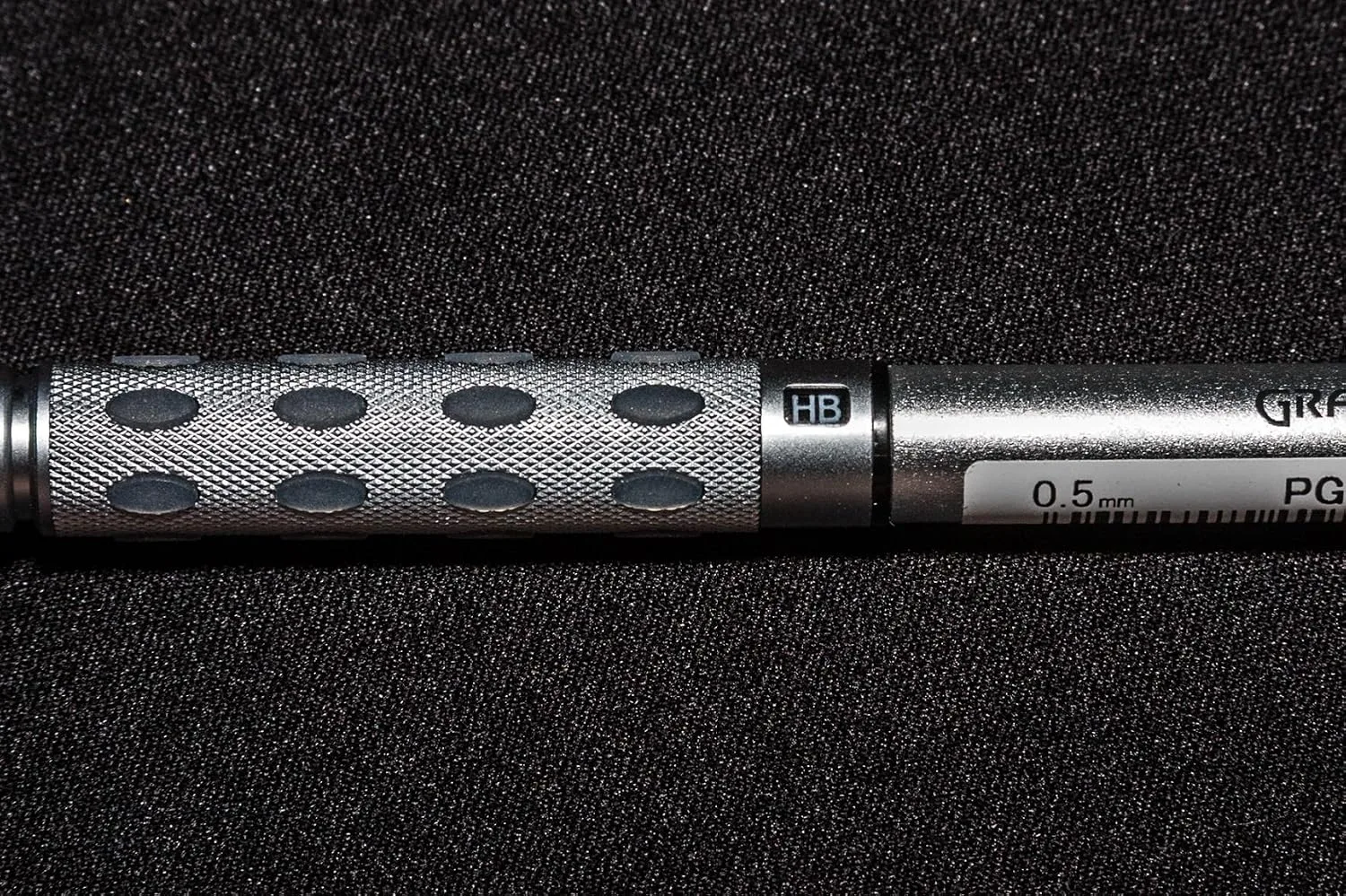
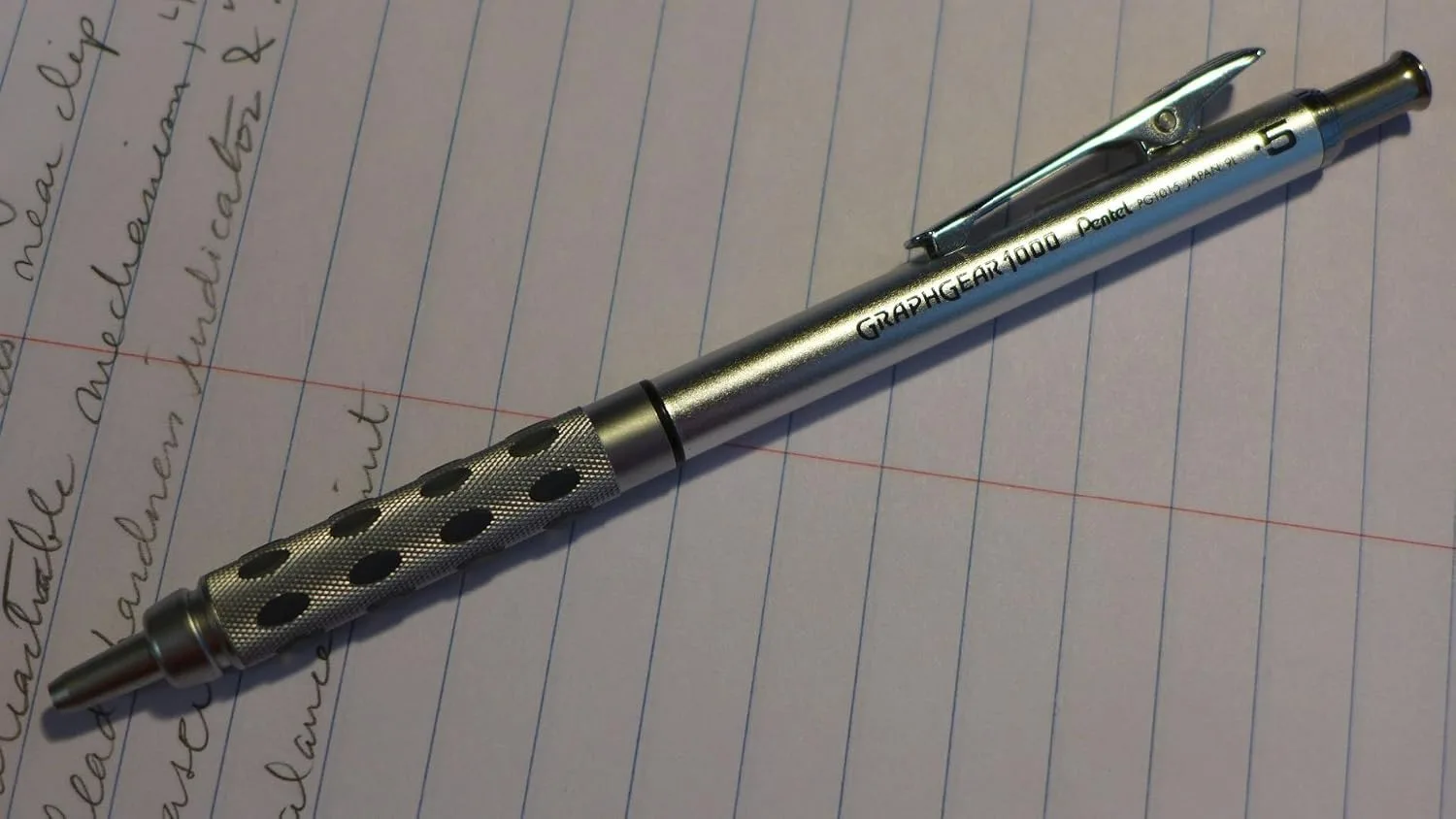
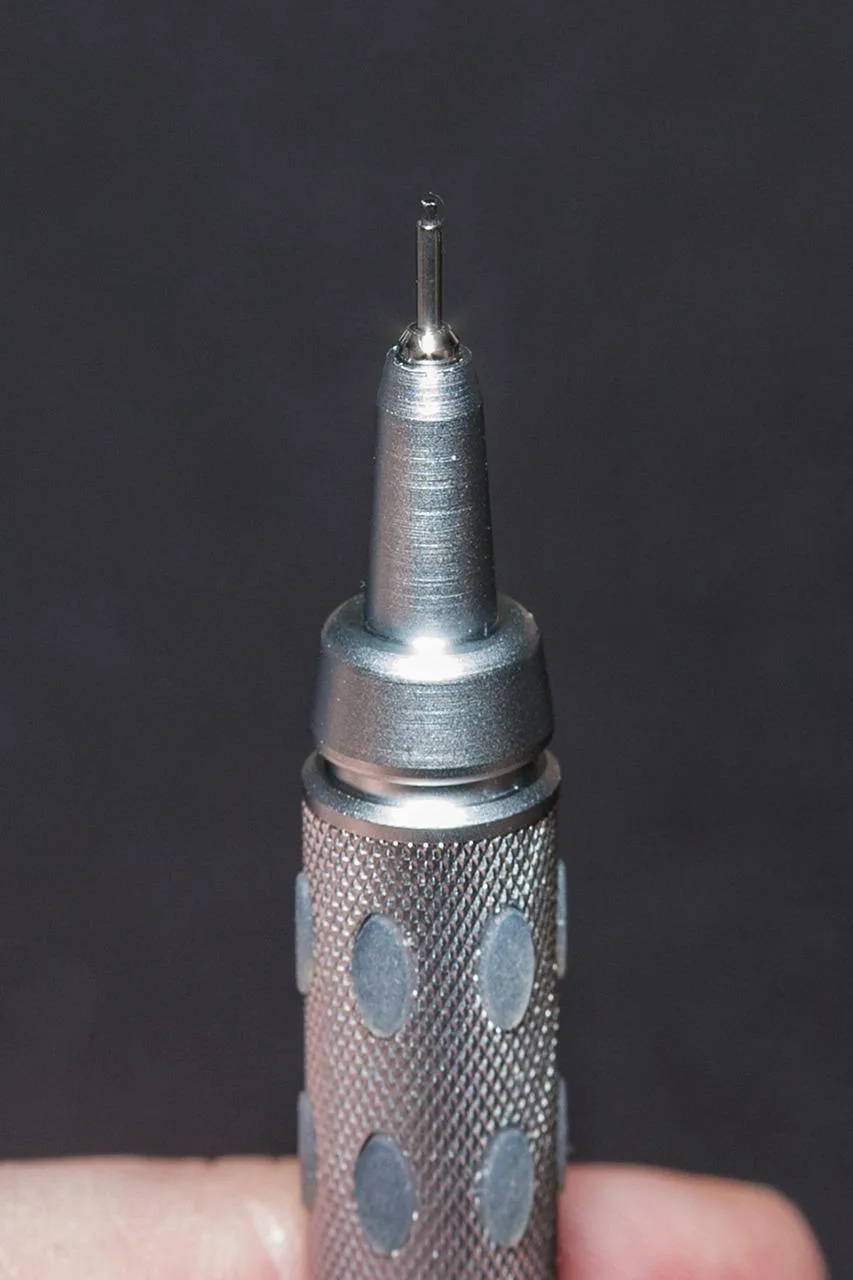
After that run-in with 0.9mm, I got fixated on tracking down the mechanical pencil that would give me real precision without asking me to sacrifice comfort or control. The 0.5mm sweet spot turned out to be about more than line weight — it was about learning to trust my own hand again.
Where it delivers
- That 0.5mm point lays down a crisp, disciplined line that turns sketches and handwritten notes into something that reads as intentional rather than sloppy.
- Grip and balance feel right for long writing stretches — you’re not wrestling the pencil to stay steady or squinting to make out what just landed on the page.
- The lead feeds out consistently, without the stutter or thickness swings that make you doubt whether you’ve grabbed the right tool for sketching, journaling, or fine illustration.
Where it falls short
- 0.5mm snaps more readily than the thicker sizes if you write heavy-handed or at an odd angle, meaning you’ll burn through refills faster than a 0.7mm user would.
- That narrower tip can’t deliver the bold, expressive stroke some artists want — anyone chasing visible shading or dramatic weight changes will feel boxed in.
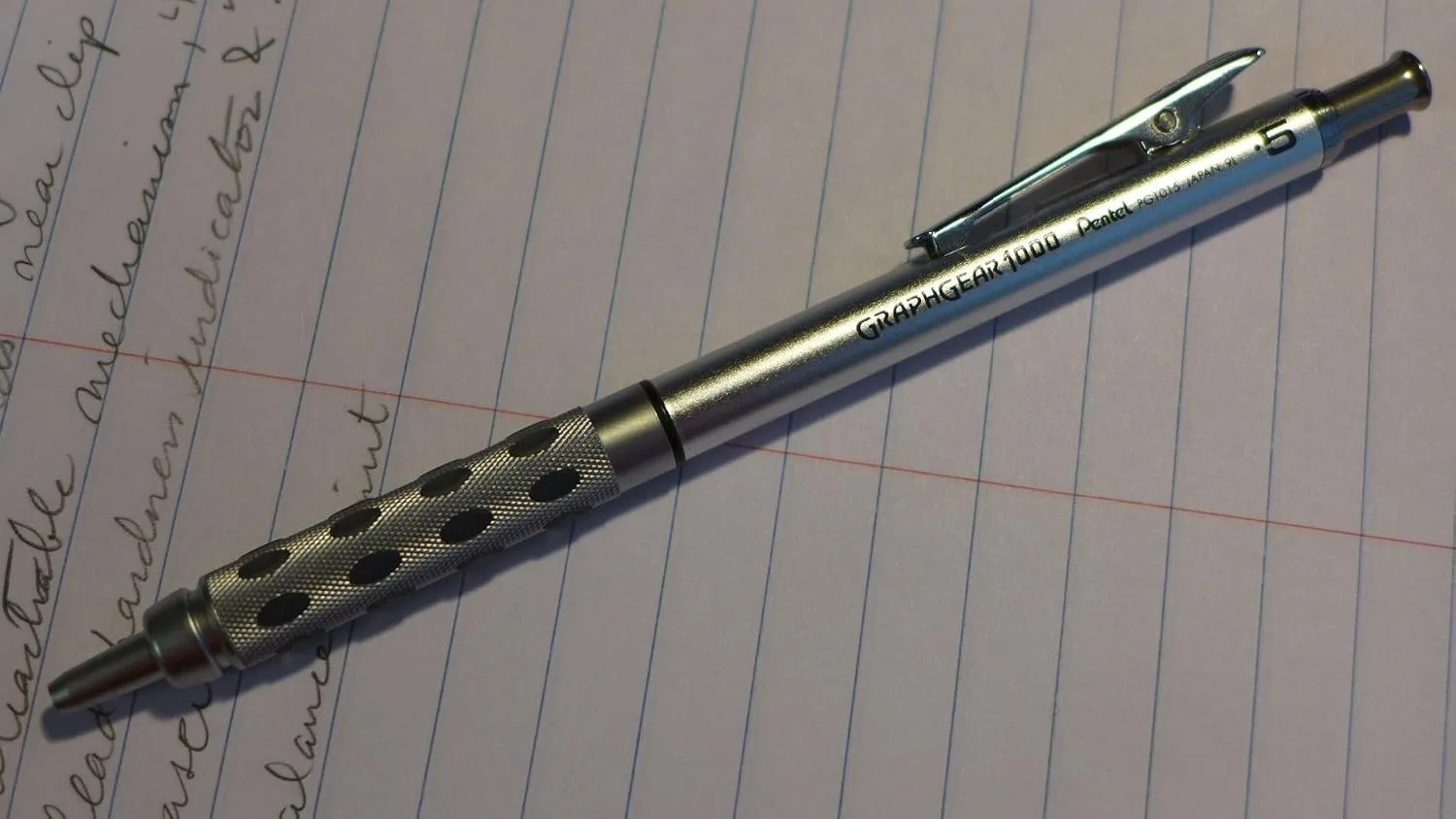
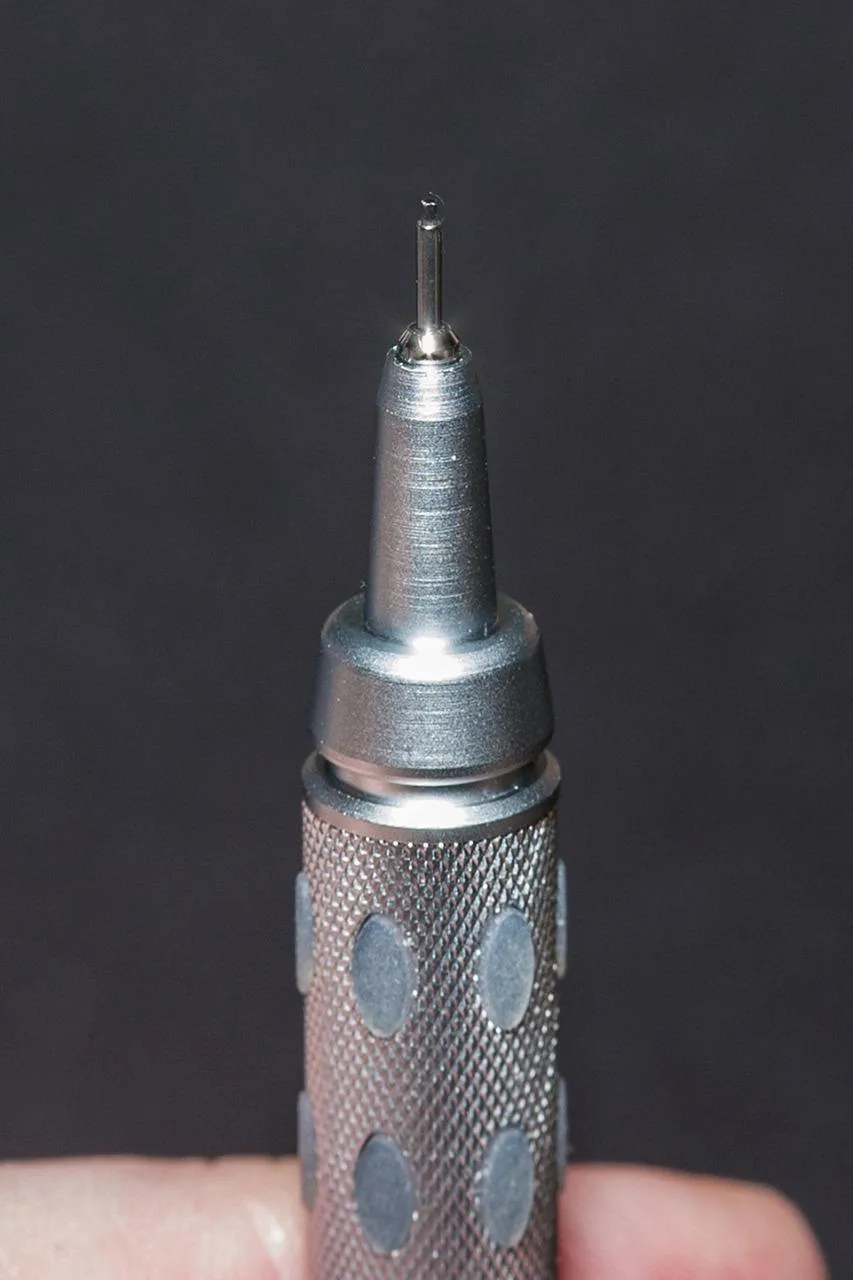
I almost didn’t buy this one because I was afraid I’d repeat my mistake and just pick another “standard” size without thinking. But the moment I held it and felt how the precision matched my actual intentions on paper, I knew the difference between a tool that fights you and one that disappears into the work. Get the Pentel GraphGear 1000 in 0.5mm and test it against whatever you’re using now.
About This Article

Written by Ellen Ashford. Watch collector, fountain pen enthusiast, and lifelong journaler. Time & Ink is where I explore the craft of analog living — from vintage timepieces and fine stationery to the simple pleasure of putting pen to paper. More about this site.
Verify this against a primary source
Specifics change, and your situation may differ from the one described here. These are the authorities worth checking directly:
- NAWCC — horological reference, archives and research library
- Smithsonian Institution — collection records for historic timepieces and writing instruments