Should you buy the automatic or train yourself to wind the other kind daily? After a decade of watch meets and forum threads, my honest answer is that most people arguing this are arguing the wrong question. They treat it like a contest with a single winner, when what actually decides it is how often you wear a given piece, how many mechanical watches are competing for your wrist, and what kind of daily ritual you’re genuinely after.
I stumbled into this lesson backwards. My entry point was a vintage Seiko 5 running a 7S26 automatic, snagged at an estate sale for $45. Wonderful piece — kept perfect time as long as it stayed on my wrist. Then a hand-wind Seiko with a 6R24 joined the collection, and that’s when trouble started. The Seiko 5 sat untouched in a drawer for three days, and by the time I picked it back up, it had died completely. It hadn’t occurred to me yet what owning more than one mechanical watch actually demands of you.
That single stopped watch launched me into a rabbit hole I’ve never really climbed out of. In the years since, I’ve run dozens of movements through their paces, lived with both winding styles across every price bracket, and landed on some strong convictions. What follows is everything that experience taught me — plus the $200 mistake I’d have skipped entirely if somebody had just leveled with me from the start.
What’s Actually Happening Inside an Automatic vs. a Hand-Wind Caliber
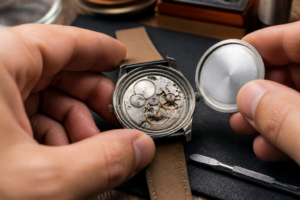
Before going further, let’s pin down the mechanics — collectors throw these terms around loosely more often than you’d expect. A hand-wind caliber, sometimes called manual-wind, needs you to physically turn the crown to load tension into the mainspring. That’s energy you’re storing yourself, no intermediary. Power reserves on most hand-wind watches land between 40 and 70 hours, with a handful of premium calibers stretching past 80.
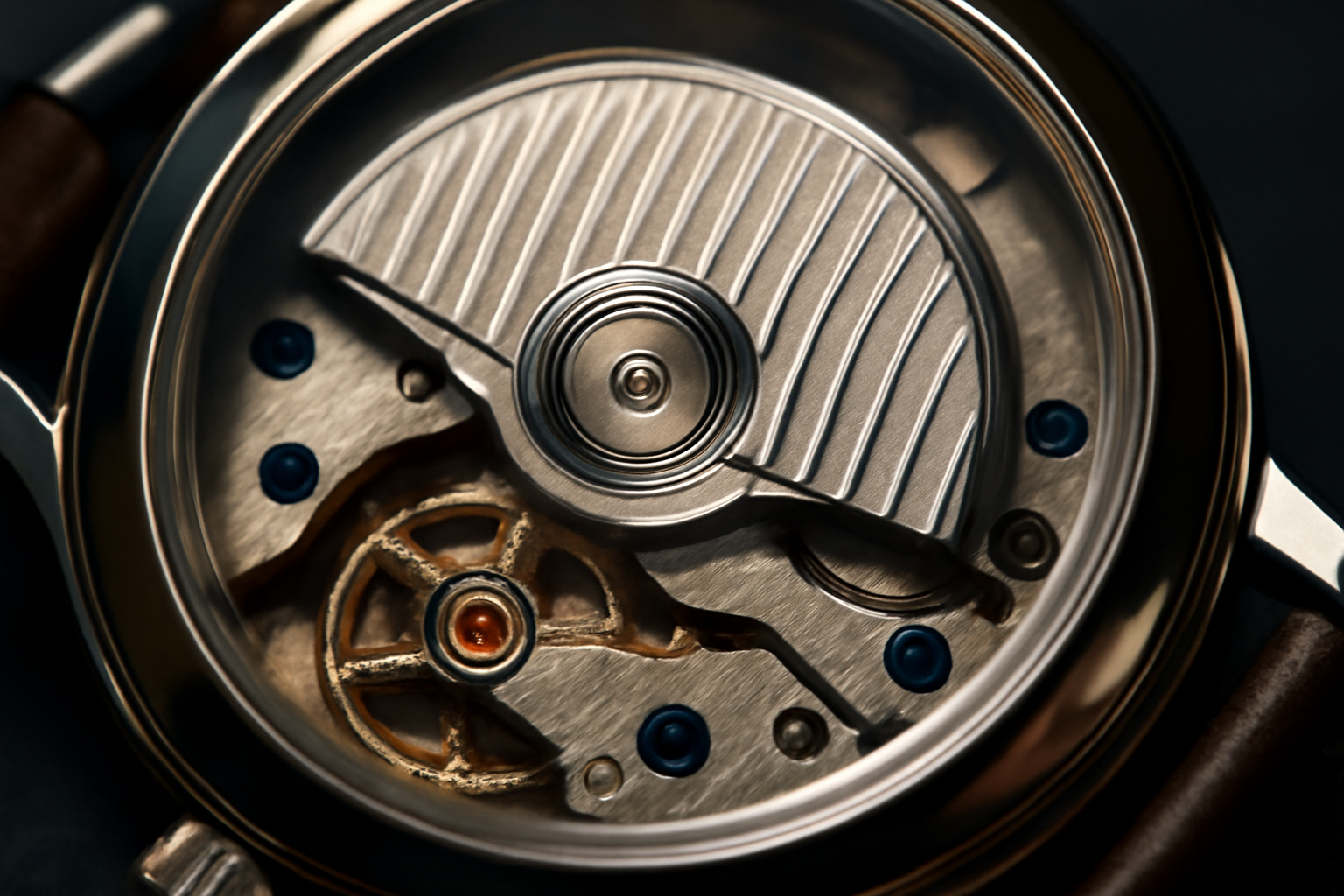
An automatic movement bolts on a rotor — a half-moon weighted piece that swings with the motion of your arm and winds the mainspring on your behalf. That’s the entire mechanical distinction between the two. Energy travels from that rotor through a gear train into the mainspring barrel. Most automatics still let you wind manually via the crown as a backup, though some older calibers skip that feature entirely. Reserve figures land in a comparable range — commonly 38 to 72 hours, depending on the caliber in question.
From where I sit, that rotor introduces a modest but real layer of complexity — extra parts mean extra places for wear to accumulate. In practice, though, that’s a non-issue with solid modern calibers like the ETA 2824, Miyota 9015, or Seiko NH35. What you do notice is the added weight. Setting my hand-wind Tissot Heritage pocket-watch conversion side by side with my automatic Tudor Black Bay 58, the heft gap between them was impossible to miss on the wrist.
Why I Keep Coming Back to Hand-Wind: Ritual, Slimness, and Feeling the Mechanism
No hedging here — hand-wind is the movement style I actually enjoy interacting with most. There’s a real satisfaction in turning that crown every morning, one that sounds silly until you’ve felt it done well. My A. Lange & Söhne Saxonia Thin, running caliber L941.1 for anyone keeping score, winds with a precision that borders on meditative. It’s the mechanical-watch version of uncapping a vintage Pelikan M800 with a broad nib — the process is the reward, not just the outcome.
Dropping the rotor also lets case designers shave real height off the movement. The Piaget Altiplano, at a 2mm movement height, sits at the far extreme, but even ordinary mid-tier hand-winds run noticeably slimmer than their automatic counterparts. That matters if you’re tucking a watch under a dress-shirt cuff or care about profile at all. I feel the difference every time I swap between my manual Frederique Constant Slimline and my automatic Tissot PRX Powermatic 80.
The trade-off is real discipline. Skip a day — maybe two, if you’re gambling on the tail end of the power reserve — and the watch just quits on you. Wear one watch and one watch only, and this is a non-problem. Rotate through four or five pieces, though, and it becomes an actual scheduling task. I found this out the hard way with my vintage Omega Seamaster De Ville, caliber 550, after leaving it alone over a long weekend. It stopped mid-wind, I reset the time incorrectly, and I showed up to an appointment 20 minutes early. Avoidable, and mildly humiliating.
Why Automatics Win on Convenience for a Rotating Collection
There’s a reason automatics own the majority of the market — they simply fit how most people actually live. Stay active during the day — commuting, walking around, using your hands — and the rotor keeps tension in the mainspring without you ever thinking about it. Call that smart engineering rather than laziness. The Miyota 9015 inside my Orient Star, for instance, charges up reliably from ordinary daily movement and carries 50 hours of reserve. I can set it down Friday night and pick it back up Sunday morning with hours to spare.
If you cycle through several watches, automatics are simply more merciful. There’s no need to track when each one was last wound — you can grab whichever matches your mood or your outfit without doing power-reserve math in your head first. I currently run a six-watch rotation — three automatics, two hand-winds, one quartz — and whenever I’m rushing out the door, the automatics are always the ones I reach for without a second thought.
None of that makes automatics flawless, though. The rotor can produce a faint internal motion you’ll hear if it’s quiet enough — some collectors call it “rotor rattle” — and while I don’t mind it, plenty of enthusiasts genuinely can’t stand it. It’s worse on certain budget automatics where rotor tolerances run loose. An early $90 Invicta Pro Diver in my collection had a rotor sound that crept right up to annoying. The lesson: rotor quality control swings wildly depending on what you’re paying.
My Personal Method for Choosing Automatic vs. Hand-Wind, Watch by Watch
After ten years of living with both types, I’ve boiled the decision down to four questions I ask myself every time. First: how frequently will this particular watch actually get worn? Anything I reach for daily defaults to automatic — the self-winding convenience is too real a quality-of-life gain to pass up. Second: does thinness matter here? Dress pieces and anything meant to slide under a cuff earn serious consideration for hand-wind.
Third: am I looking for a ritual connection with this piece? Some watches earn a spot in my collection precisely because I want to engage with them physically. My vintage Hamilton 992B railroad-grade pocket watch is hand-wind, and the daily act of winding it is a big part of why I still love owning it. Fourth: how large is the rotation this watch has to compete in? Collectors juggling several pieces run into real power-reserve headaches with hand-winds, while automatics quietly remove that friction.
These days my weekday lineup leans on automatics — the Seiko SPB143 Prospex, the Tudor Black Bay 58 — while hand-winds get saved for deliberate weekend wear. That split works well for me. It only holds together, though, because I finally solved the storage puzzle underneath it all — something I wish somebody had explained to me much earlier in this hobby.
The Watch Winder That Finally Ended My Automatic Guilt
Lean toward automatics but own more than two or three, and you’ll eventually hit the same wall I did: how do you keep them all running without wearing every single one every single day? A single watch winder solves that gap neatly — it keeps your automatics charged and ready without the low-grade guilt of finding one stopped in a drawer.
Where it earns its spot
- Its small footprint means it doesn’t take over your desk — it slots into a working creative space instead of dominating it the way a bulky multi-watch winder would.
- Swapping which watch occupies it week to week actually pushes you to be deliberate about which movement gets your attention on any given day.
- It closes the gap between preferring automatics in theory and actually owning a small collection of them — no more finding a dead watch and having to reset it from scratch.
Where it falls short
- It only makes sense once you already know you’re an automatic person — if you’re still on the fence, it just adds another thing cluttering up that decision.
- You still have to stay engaged with rotation and placement — it won’t rescue a collection you’re neglecting if you’re not paying it any real attention.
I almost dismissed watch winders as unnecessary luxury until I realized I was spending more mental energy resetting stopped automatics than actually enjoying wearing them. The Mcbazel Single Watch Winder removed that friction entirely.
About This Article

Written by Ellen Ashford. Watch collector, fountain pen enthusiast, and lifelong journaler. Time & Ink is where I explore the craft of analog living — from vintage timepieces and fine stationery to the simple pleasure of putting pen to paper. More about this site.
Verify this against a primary source
Specifics change, and your situation may differ from the one described here. These are the authorities worth checking directly:
- NAWCC — horological reference, archives and research library
- Smithsonian Institution — collection records for historic timepieces and writing instruments