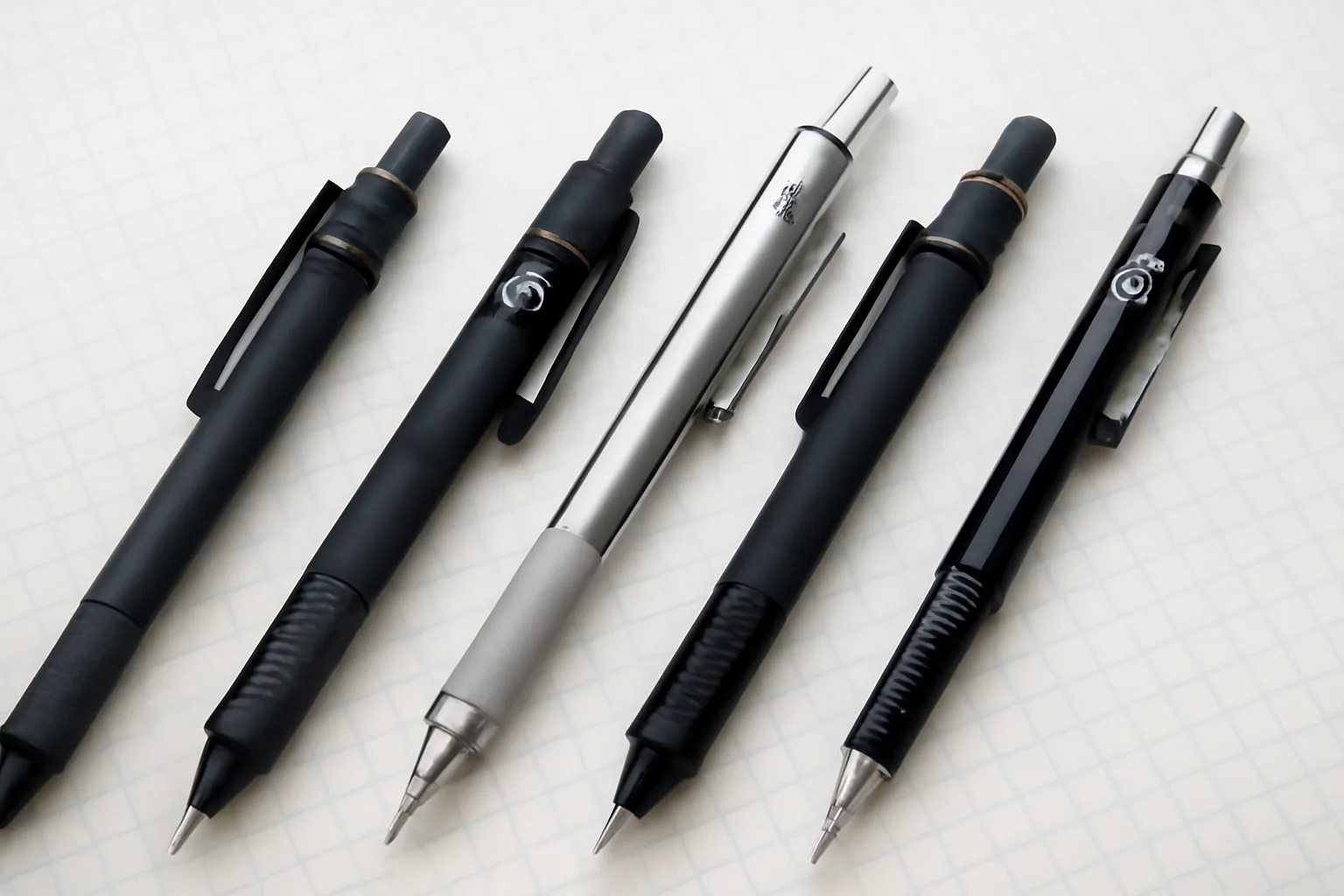
Eleven years and something like four thousand handwritten pages into this habit, the question I get most often has nothing to do with fountain pens or the notebooks I fill with them — it’s about mechanical pencils. For most of that stretch, I assumed the fault was mine: too much pressure, too little patience, lead snapping every few sentences because of how I gripped the thing. It wasn’t until I picked up one actually engineered to survive daily use that I understood the problem had never been my hand at all. What people are really asking, in a dozen different phrasings, is which mechanical pencils for writing can take real daily abuse and keep performing. It’s a more layered question than it looks, and I have firm opinions about it.
Here’s the assumption I run into constantly: that one mechanical pencil is functionally the same as the next. Click, lead advances, you write — end of story. So people grab whatever’s sitting in the office supply drawer, then wonder why the line skips, why the lead keeps snapping every few sentences, or why the grip goes slick after twenty minutes. None of that is coincidence. The internals matter enormously — lead diameter, the retraction mechanism, where the weight balances, how deep the knurling is cut. Every one of those details decides whether a pencil fades into the background while you think or becomes something you’re actively wrestling with.
Over the years I’ve put genuine hours into something like thirty or forty different mechanical pencils. A handful were impulse buys. A few I researched to an almost embarrassing degree before ordering. A couple I took apart on my kitchen table just to see how the click mechanism actually worked. What follows isn’t a spec-sheet rundown — it’s what actually holds up after thousands of hours of daily writing.
Lead Diameter: The Spec That Changes Everything
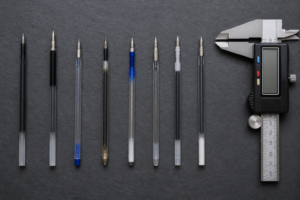
If there’s a single spec worth understanding before you buy a mechanical pencil, it’s lead diameter. Most people default to 0.7mm because it feels more forgiving. But for the kind of sustained writing I do daily — journaling, note-taking, drafting — I keep landing back on 0.5mm. Here’s why.
A 0.5mm lead lays down a thinner, steadier line. It also nudges you into holding the pencil at a slightly steeper angle, which, over a long session, actually improves your posture rather than straining it. The line weight stays consistent without needing pressure to keep it there. When I’m three pages deep into a dense journal entry or marking up a book’s margins, 0.5mm gives me something close to a fine-nib pen’s precision, minus ink’s commitment.
The tradeoff is that 0.5mm snaps more readily than 0.7mm — press too hard, or drop the pencil tip-first, and you’ll feel it. I learned this the expensive way with my first genuinely good mechanical pencil, a Staedtler 925: three broken leads in a single sitting, because I was still writing with the same heavy hand I’d trained on ballpoints. Easing off the pressure fixed it almost overnight. Lead hardness plays into this too — HB is the default most people reach for, but I’ve settled on 2H for journaling, since it resists smearing and holds a usable point longer between advances.
Writing Pencils vs. Drafting Pencils: Not the Same Tool
This is a distinction that catches a lot of people off guard. Drafting pencils are built for precision work — they typically carry a long, fixed lead sleeve, sometimes 4mm or more, that gives you a clear sightline to the page. They’re designed to sit flat on a drafting table, not to travel in a bag. Writing pencils have a different job entirely: they need to survive being held at shifting angles, tossed in a pocket, and gripped for long stretches at a time.
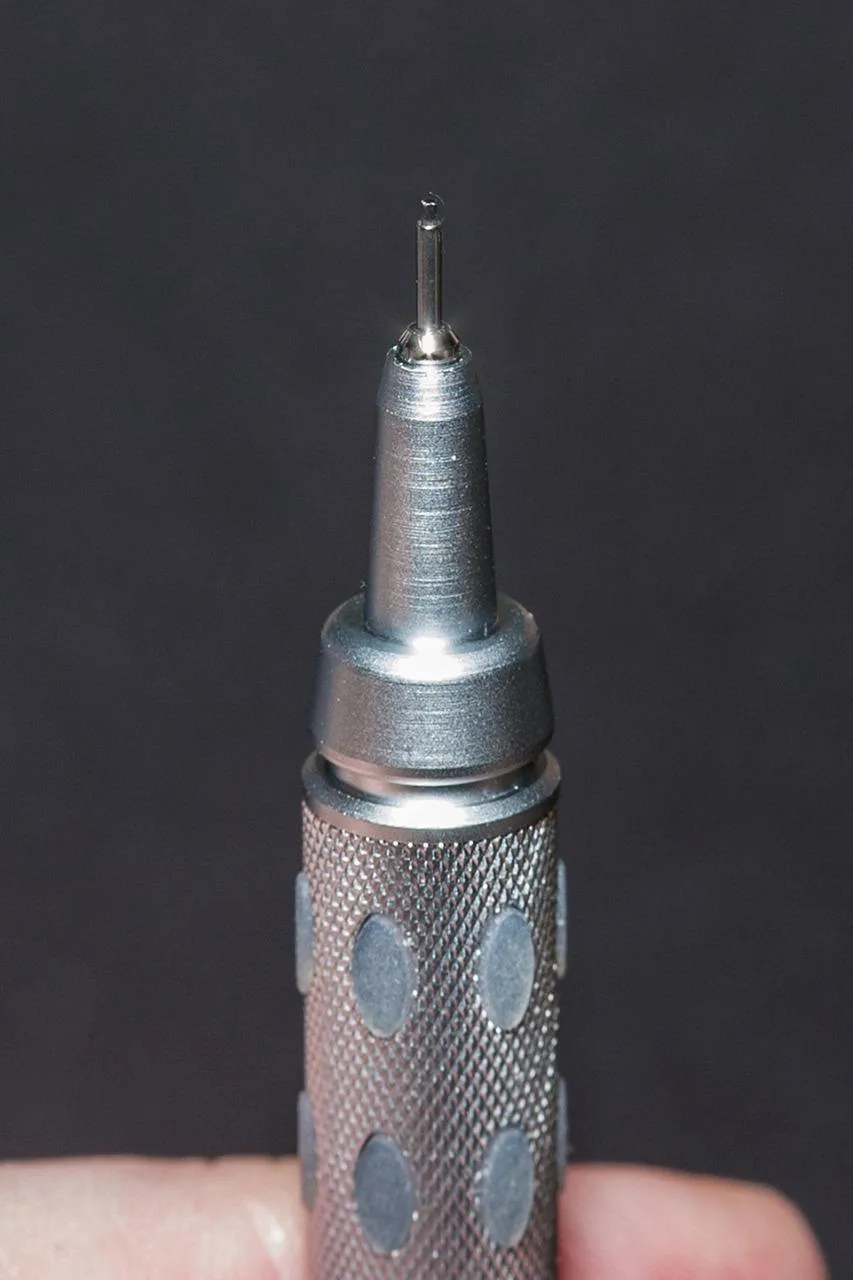
The mechanical pencils that actually work well for writing tend to have retractable lead sleeves — the tip tucks away when it’s not in use, so it doesn’t snap off in a bag or jab you when you reach for your journal at six in the morning, a lesson that sticks after happening exactly once. Grip texture matters just as much. I gravitate toward knurled metal grips because they hold their texture indefinitely and don’t rely on hand pressure to stay put. Rubber grips, by contrast, compress under sustained writing and tend to crack or slip loose somewhere between six and twelve months of regular use.
Balance is the third thing I check. A pencil that’s top-heavy — usually because of a bulky eraser — starts to wear on your hand after half an hour. From what I’ve tested, a total weight somewhere between 15 and 22 grams, with the center of gravity sitting near the grip section, is the range that holds up over a long writing session. Go heavier and your hand tires. Go lighter and the pencil starts to feel flimsy, almost like a toy.
My Honest Rankings of the Best Mechanical Pencils for Writing
Ten years of writing by hand every single day has narrowed my everyday lineup down to a short list of pencils. None are the priciest options out there, and none are winning any beauty contests. They’re simply the ones my hand keeps reaching for without thinking about it.
The Pencil That Finally Outlasted My Margin-Note Habit
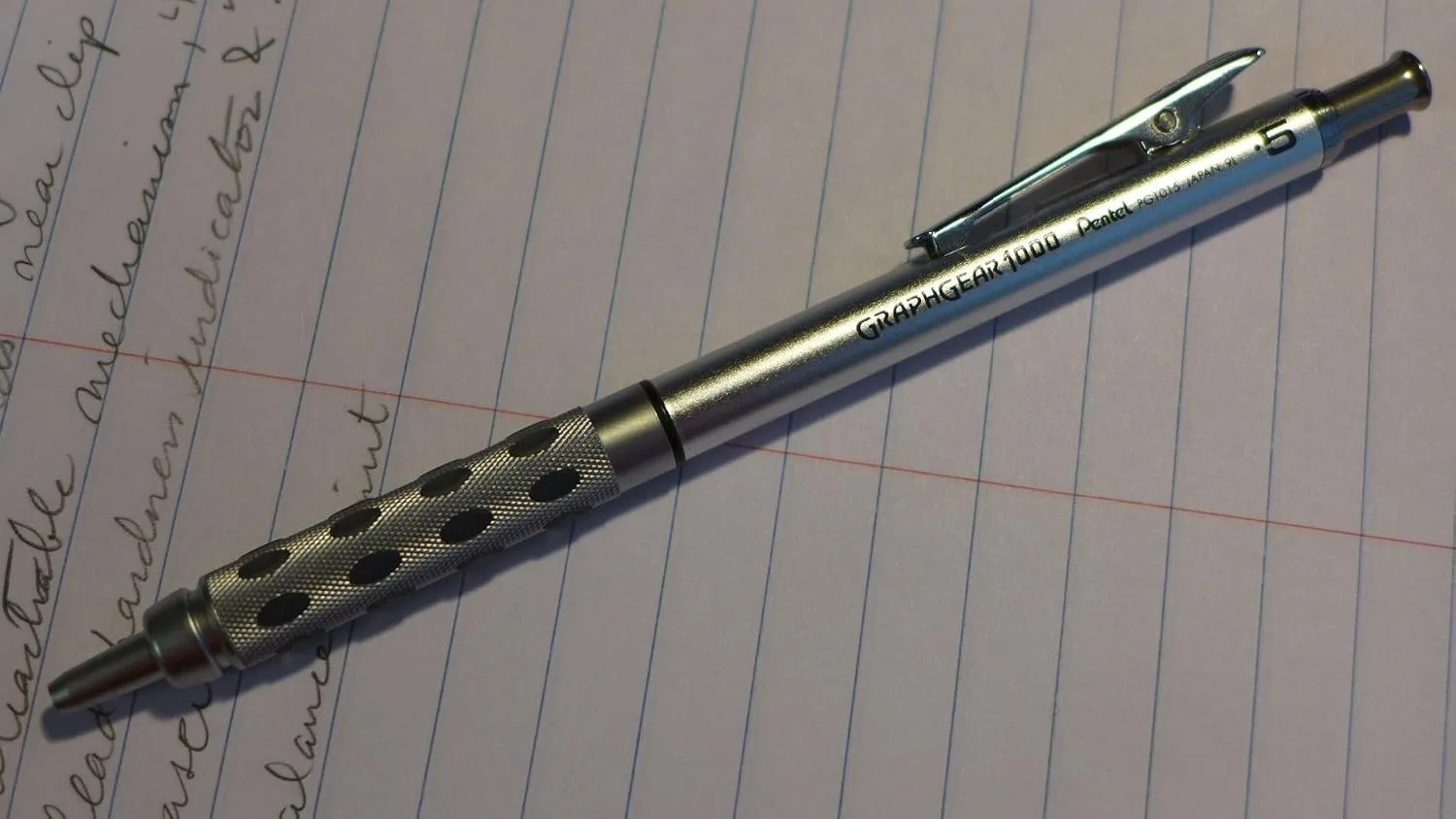
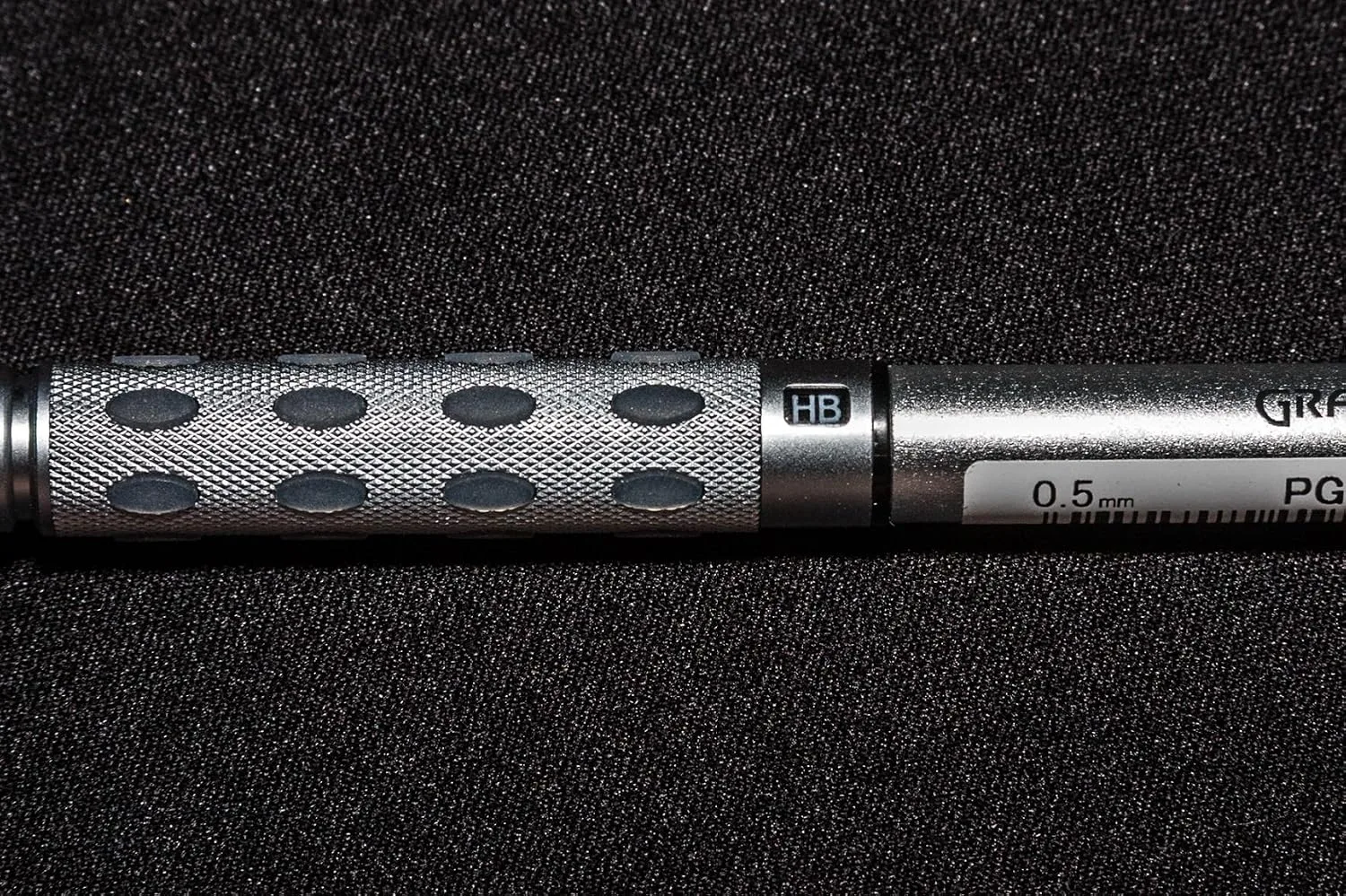
Years of watching pencils crack under the strain of margin notes and repeated drafting left me looking for something sturdy enough for both delicate sketch work and fast, aggressive note-taking. The GraphGear 1000 is the first one I’ve kept coming back to without treating it like it might fall apart in my hand.
Where This Pencil Delivers
- The metal barrel and knurled grip give the pencil real heft in hand — none of the plastic flex you get when pressing hard into a journal page.
- Its 0.5mm lead holds up better than finer diameters, so you can write at speed without constantly losing your train of thought to a snapped core.
- The eraser actually erases — it lifts graphite cleanly instead of smearing it around, which counts for something when you’re drafting straight into a notebook.
Where It Falls Short
- Given the build and weight, it costs more than disposable alternatives — durability you’re paying for upfront, which makes replacing it feel like an actual decision rather than an afterthought.
- That same metal body can feel cold and dense in the hand if you favor lighter pencils for long sessions or for traveling light.
I’ll admit: I almost gave up on mechanical pencils entirely after my third budget pencil shattered mid-sketch, leaving me with graphite dust and regret. That’s when I invested in the Pentel GraphGear 1000 (PG1015A) on Amazon, and it’s been in my rotation ever since.
About This Article

Written by Ellen Ashford. Watch collector, fountain pen enthusiast, and lifelong journaler. Time & Ink is where I explore the craft of analog living — from vintage timepieces and fine stationery to the simple pleasure of putting pen to paper. More about this site.
Verify this against a primary source
Specifics change, and your situation may differ from the one described here. These are the authorities worth checking directly:
- NAWCC — horological reference, archives and research library
- Smithsonian Institution — collection records for historic timepieces and writing instruments