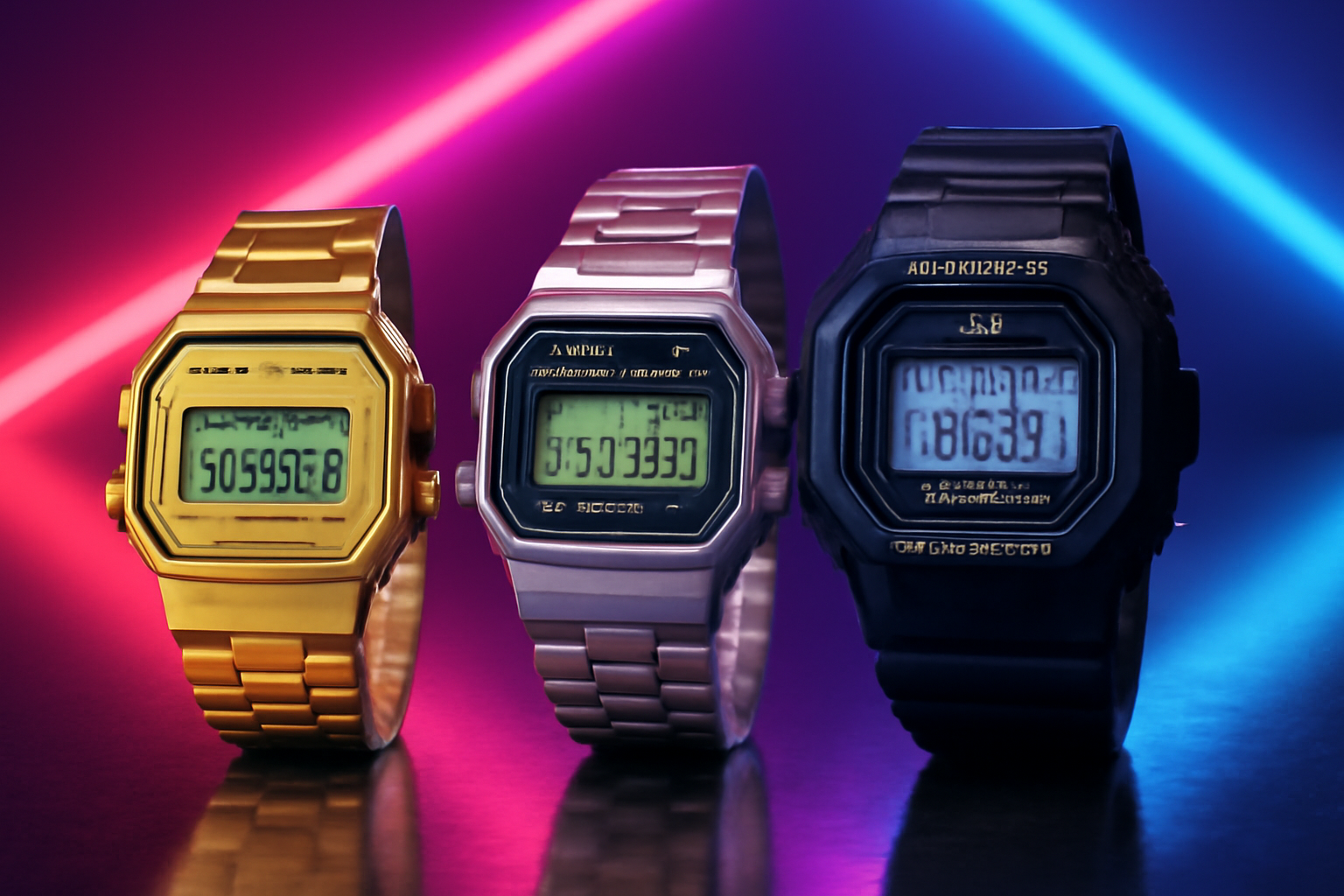
Turn one of my F-91Ws over in your hand and you’ll notice something odd: the case back is stamped with the same quiet confidence as the caseback on my 1960s Omega — module number, production code, no apology. I collect Casio digital watches right alongside my vintage Omegas, and for years that combination earned me sideways glances at watch meetups. People would compliment the Seamaster De Ville on my left wrist, clock the F-91W on my right, and just… go quiet. That silence was telling on itself.
Ten-odd years of collecting everything from $15 Seikos to a vintage Omega caliber 565 have left me with one working philosophy: value comes from engineering that’s honest about what it is. A watch that does its one job well, without dressing it up, has earned its place on the wrist. Nothing does that more plainly than Casio’s digital lineup. The real question was never whether these things belong in a serious collection — it’s why collectors took so long to say so out loud.
So this is me making the argument properly — not on nostalgia alone, though there’s plenty of that to go around, but with the same skeptical, hands-on scrutiny I apply to everything else on this site. I’ve put more than thirty Casio models through their paces over the past five years. Several earned my respect. A few tested my patience. Every single one taught me something about what it actually means to collect.
The History That Makes Casio Worth Taking Seriously
Casio’s first electronic calculator came out in 1957, but the real turning point for watches was 1974, when the Casiotron hit the market — the first automatic calendar watch with a digital display, and not a gimmick but a legitimate piece of engineering. That timing matters. Casio wasn’t riding a fad; they were laying groundwork. The quartz crisis that wiped out dozens of Swiss houses through the 1970s had Casio standing on the winning side of the disruption.
1983 brought the G-Shock, and that’s really where the legend starts. Engineer Kikuo Ibe reportedly tossed a prototype out a third-floor window over and over until one finally survived the fall. What came out of that was the DW-5000C, built around a module floating free inside a urethane shell. That’s not ad copy — it’s a genuine mechanical answer to a genuine engineering problem, and knowing it changes how you handle one of these on your wrist.
Most collectors who wave off digital watches, in my experience, simply haven’t dug into this backstory. Once I started actually researching Casio in earnest, I found caliber-style documentation, module numbers, and service manuals as thorough as anything in a Swiss reference catalog. Module 3159, the one inside the iconic F-91W, runs on a battery that lasts roughly seven years. That’s not luck — that’s precise power management engineered into a $15 watch.
What Casio Digital Watch Collectors Actually Look For
Collecting Casio isn’t the same exercise as just buying a digital watch off the shelf. Serious collectors zero in on module numbers, production eras, case-color variants, and — this surprises people — the condition of the resin. A yellowed or hairline-cracked strap on a vintage Casio carries exactly the same weight as a scratched crystal on a vintage Rolex. Preservation and context matter no matter what price bracket you’re shopping in.
The pieces dedicated collectors chase hardest are the original DW-5000C, the AW-500 series, late-1980s Databank models, and the limited-run G-Shock collaborations. You don’t have to chase any of those, though, to put together a collection with real substance. A CA-53W calculator watch or a stainless A168W retro model will run you under $30 and still carry legitimate historical weight.
I found this out the expensive way: I once handed over $180 for what I believed was a rare Japanese-market Casio, only to realize afterward it was a grey-market reissue carrying an entirely different module. The case looked correct. The module number stamped inside didn’t line up with the year it was supposedly produced. These days I cross-check that module number against documented production records before I hand over a dime in the secondary market. That one habit alone has kept hundreds of dollars in my pocket.
Modules, Movements, and Why They Matter
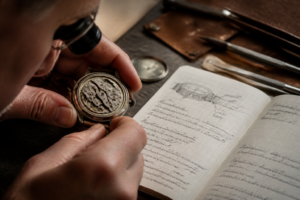
Treat a Casio module the same way you’d treat a Swiss caliber — because functionally, that’s exactly what it is. The module number pins down the electronic circuit design, the feature set, and the generation of the watch in question. Module 3159 drives the F-91W; Module 3434 runs the well-loved A700W. Both are documented, both are cross-referenceable, and both tell you precisely what’s ticking away on your wrist. Serious collectors track these numbers with the same rigor mechanical enthusiasts reserve for caliber variants.
Battery longevity shifts a lot depending on the module. Older modules found in NOS (new-old-stock) examples can carry a dead or dying battery regardless of how pristine the case looks. Still, the majority of Casio modules run on ordinary CR2016 or CR2025 cells — cheap, easy to find, and simple enough to swap at your own kitchen table with nothing more than a case-back tool. That ease of servicing is, on its own, a feature worth collecting for.
Why the Analog Collector Community Resisted Digital — And Why That’s Changing
The snobbery isn’t baseless — it comes from somewhere real. Classic horology has always prized mechanical complexity: jewel counts, escapement frequency, the finish on a rotor. A digital watch, by its very nature, has none of that. No escapement, no oscillating weight. To a certain collector mindset, that absence is disqualifying on its face. I get the logic — I held onto it myself for years before I let it go.
What actually shifted my thinking was time spent around fountain pen collectors. My own rotation runs from a vintage Pelikan 100N with a flex nib all the way down to a $15 Pilot Metropolitan with a plain steel fine nib. In pen circles, that $15 Japanese steel nib earns genuine respect the moment it proves it writes well and serves whoever’s using it. Nobody looks down on a Pilot Kakuno for lacking a gold nib. The standard is how it performs and what character it has — price doesn’t enter into it.
Once that parallel clicked, everything reshuffled. Applying the same pen-collector standard to watches, Casio’s digital pieces stopped reading as outliers to me. They started reading as well-built tools with real personality, documented histories, and genuine communities behind them. My collection shifted accordingly — and so, gradually, did the conversations I was having at meetups.
The Watch That Finally Made Me Stop Apologizing for Digital
Building a serious Casio collection means finding at least one piece that closes the gap between “fun novelty” and “legitimate collection object” — something worn on purpose, not as a guilty indulgence. The MDV-106B was the watch that convinced me a digital piece under $100 could hold its own in a collection full of watches costing ten times as much.
What works
- The build backs up the price tag — a solid stainless case and bracelet that hold their own on the wrist next to considerably pricier pieces.
- There’s a real story attached to it: Casio’s Duro line has genuine dive-watch heritage behind it, giving you something to talk about that isn’t just nostalgia or a wink at irony.
- The digital display stays legible in nearly any lighting, and the features actually get used — stopwatch, multiple time zones, alarms — rather than admired as complications you’ll never touch.
What doesn’t
- The resin case back picks up scratches and wear that analog watches tend to conceal more gracefully — you end up wearing the daily tool marks in plain sight.
- At meetups, some collectors will still write it off as entry-level — not because anything’s wrong with it, but because the format itself doesn’t send the prestige signal a lot of people were trained to look for.
I almost didn’t wear mine to a collector dinner, genuinely worried it would cheapen the conversation—until someone asked about it, and I realized I had more genuine stories about actually using it than I did about most of my other pieces. That moment shifted everything. If you’re building a collection that means something to you rather than to gatekeepers, grab the Casio MDV-106B Duro.
About This Article

Written by Ellen Ashford. Watch collector, fountain pen enthusiast, and lifelong journaler. Time & Ink is where I explore the craft of analog living — from vintage timepieces and fine stationery to the simple pleasure of putting pen to paper. More about this site.
Verify this against a primary source
Specifics change, and your situation may differ from the one described here. These are the authorities worth checking directly:
- NAWCC — horological reference, archives and research library
- Smithsonian Institution — collection records for historic timepieces and writing instruments