I used to dread swapping watch straps. Not because it was complicated, exactly, but because I kept scratching case backs with spring bar tools and spending ten frustrated minutes hunched over my desk with a loupe. Then I tried my first quick-release strap — and honestly, I felt a little foolish for waiting so long. If you’ve landed on this quick release watch strap review looking for a real answer, not a spec-sheet summary, you’re in the right place. I’ve been collecting watches for over fifteen years and rotating straps obsessively for the last five. Here’s what that experience actually taught me.
The misconception I hear most often is that quick-release hardware is a compromise — something for people who lack the patience to use a proper spring bar tool. That’s simply not true. Quick-release spring bars are engineered to meet the same retention standards as traditional bars. The spring-loaded tab design maintains lateral tension comparable to a standard 1.8mm spring bar at normal wrist loads. These aren’t shortcuts. They’re a smarter mechanical solution.
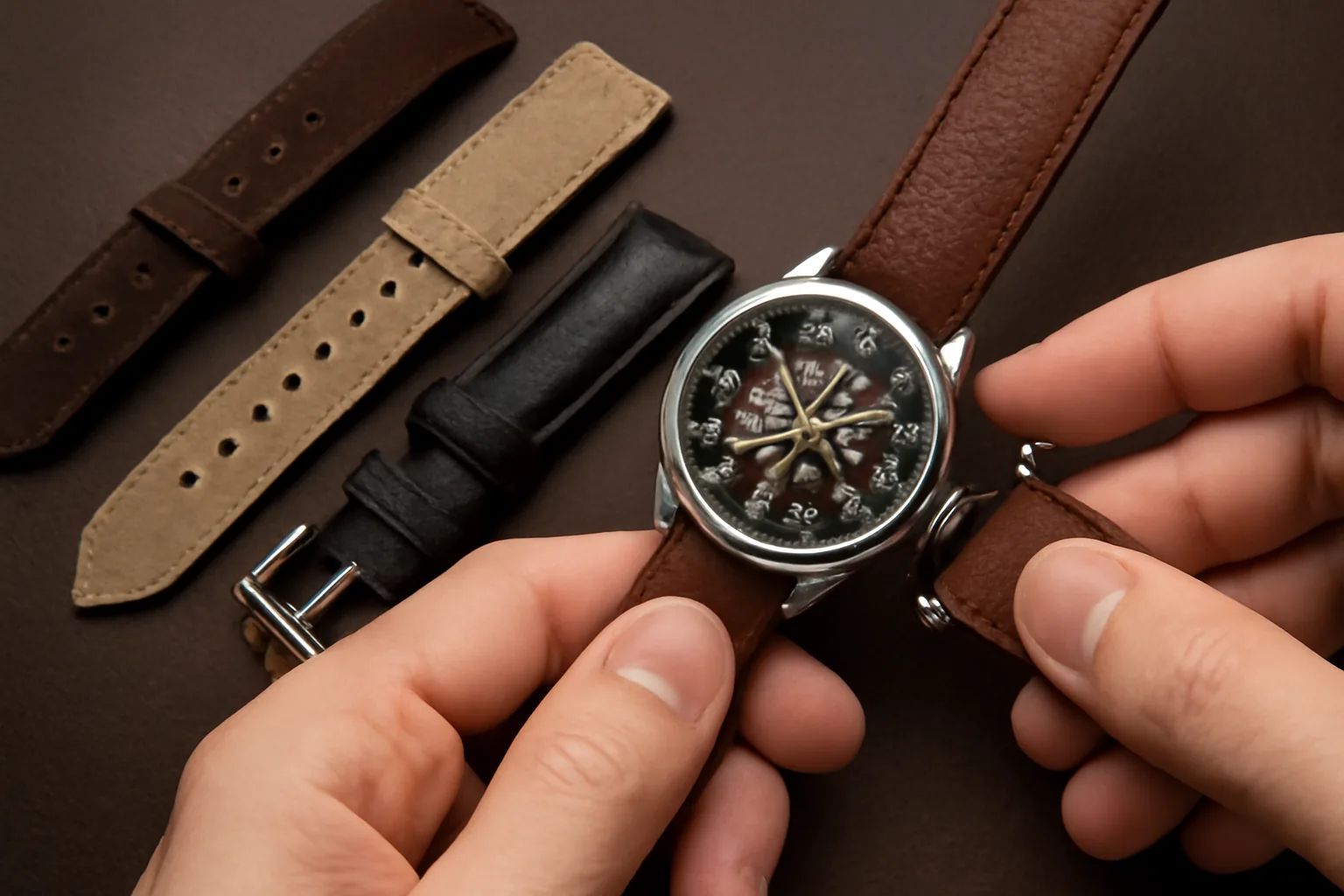
What changed for me wasn’t just convenience. It was the way I started relating to my watch collection. When swapping a strap takes eight seconds instead of eight minutes, you actually do it. You match a leather dress strap to a dinner out, swap to silicone for a weekend hike, and put the NATO back on for Monday errands. Quick-release hardware made my collection feel alive in a way it hadn’t before.
What Quick-Release Spring Bars Actually Are (and How They Work)
A traditional spring bar is a simple tensioned rod — roughly 1.5mm to 1.8mm in diameter — that sits inside the lug holes of your watch case. Removing it requires a forked spring bar tool, steady hands, and patience. Quick-release bars add a small protruding tab on one end. Push that tab inward and the bar compresses, releasing the strap. No tools required.
The tabs are typically located on the underside of the strap, near where it meets the lug. Most quality manufacturers machine these from 316L stainless steel, the same alloy used in surgical instruments. That matters for durability and for corrosion resistance — especially if you’re wearing a watch near water. The spring mechanism inside the bar is rated for thousands of compression cycles before meaningful fatigue sets in. In practical terms, that’s years of weekly swaps.
One thing worth knowing: quick-release bars are lug-width specific. A 20mm strap uses 20mm quick-release bars. A 22mm strap uses 22mm bars. These are not interchangeable. I learned this the hard way when I ordered a beautiful cordovan strap and discovered I’d bought the wrong lug width. It sat in a drawer for three months before I found a watch to fit it. Measure your lug width before you buy — most watch manufacturers list it in the spec sheet, or you can measure between the lugs with digital calipers.
How to Evaluate a Quick-Release Strap Before You Buy
Not all quick-release straps are created equal. After testing well over thirty different options across price points from $8 to $120, I’ve developed a short checklist I run through before committing to any strap.
Check the Spring Bar Quality First
The bar itself is the most critical component. Press the release tab and feel for smooth, positive spring tension. If it feels gritty, stiff, or loose, that’s a red flag. A well-machined bar clicks cleanly and releases without requiring significant force. Rough tolerances mean wear happens faster — and a worn bar can release unexpectedly, which is a real problem when your watch slides off your wrist.
Good quick-release bars should also seat flush with the strap edge. If the tab protrudes enough to snag on jacket cuffs or catch your other hand, the design is off. I’ve returned straps for exactly this reason. The release should be intentional — requiring a deliberate inward press — not accidental.
Evaluate the Buckle and Keeper Hardware
Buckle quality is often overlooked. A good buckle sits flat, doesn’t rotate freely on the strap, and has a keeper loop that actually holds the tail end of the strap in place. Cheap buckles have sharp interior edges that cut through strap material over time. Stainless steel buckles outlast zinc alloy ones significantly — you can usually identify zinc alloy by its lighter weight and slightly rough casting marks.
For silicone straps specifically, look for a deployant clasp or a solid pin buckle with a polished interior edge. Silicone is softer than leather, so it’s more vulnerable to edge wear from a poorly finished buckle. A $30 strap with a well-finished buckle will outlast a $30 strap with a cheap one by a wide margin.
The Barton Elite Silicone Band: My Go-To Quick Release Watch Strap Review
I’ve been wearing the Barton Elite Silicone Watch Band in 20mm for about fourteen months now. It replaced a generic silicone strap I’d been tolerating on my daily-wear field watch, and the difference was immediate. This is the strap I recommend most often when someone asks me where to start with quick-release.
The silicone compound Barton uses is noticeably different from budget options. It’s firm without being stiff, and it doesn’t attract lint the way softer silicones do. After fourteen months of daily wear — including open-water swimming, hiking in summer heat, and a winter trip to Iceland — the strap shows almost no degradation. No edge cracking, no discoloration, and the texture hasn’t gone slick. That’s a meaningful endorsement from someone who has destroyed cheaper silicone straps in three months.
The quick-release mechanism is genuinely one of the better implementations I’ve tested. The tabs sit flush, the spring tension is positive and consistent, and the bars haven’t loosened over fourteen months of weekly swaps. The stainless steel buckle has a polished interior edge that hasn’t cut into the strap. At around $20 to $25, this strap delivers quality I’ve paid $50 for elsewhere. It’s compatible with both traditional watches and most major smartwatch lugs — I’ve run it on a Garmin Instinct and a vintage Seiko field watch without any fitment issues.
Waterproof and Hypoallergenic Claims — Do They Hold Up?
Barton markets this strap as waterproof and hypoallergenic. In my experience, both claims are accurate. I’ve worn it swimming in chlorinated pools and saltwater without any swelling, stiffening, or dye bleed. The hypoallergenic designation refers to the silicone compound being free of latex and common contact allergens — relevant for anyone who’s experienced skin irritation from cheaper rubber straps. Silicone itself is biologically inert, which is why it’s used in medical devices. The Barton strap behaves accordingly.
The Runner-Up: Barton Top Grain Leather Quick Release Strap
If silicone isn’t your style, the Barton Top Grain Leather Quick Release Strap in 20mm is my runner-up recommendation. It’s typically available for $18 to $22, making it genuinely affordable for a top grain leather option. The black leather with black stitching reads as clean and professional — it’s the strap I’d reach for with a dress watch or a vintage chronograph.
Top grain leather is the second-highest grade of leather, sitting below full grain but above corrected grain. It’s had the outer surface sanded slightly, which removes natural imperfections but also some of the fiber density. In practical terms, this means the Barton leather strap will develop a patina more slowly than a full grain strap, and it’s slightly more resistant to moisture damage. For a strap in this price range, top grain is a smart choice — you get real leather behavior without paying full grain premiums.
The quick-release mechanism on the leather version matches the silicone — same stainless bar construction, same positive tab feel. However, I’d be honest here: leather and water don’t mix. This strap is not a gym strap or a swimming strap. Keep it for dress occasions or dry-weather daily wear and it will last you well over two years. Push it into humidity or sweat consistently, and you’ll shorten that lifespan significantly.
Building a Quick-Release Strap Rotation
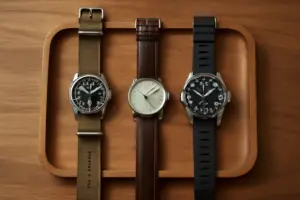
Once you commit to quick-release, the natural next step is building a small rotation. I keep three straps per watch: one silicone for active wear, one leather for formal occasions, and one NATO or nylon for casual weekend use. With quick-release hardware, swapping between all three takes under thirty seconds total. The straps store flat in a small drawer or a dedicated strap roll.
The total investment for a three-strap rotation at this quality level runs roughly $60 to $75. That’s less than many single aftermarket straps from boutique brands — and frankly, the Barton hardware has held up better than some boutique options I’ve paid three times as much for. For someone starting out, I’d suggest beginning with the Elite Silicone as your daily driver and adding the leather strap second. That covers 90% of wearing occasions.
One practical note: keep a small container of silicone conditioner for your silicone straps and a quality leather conditioner for the leather strap. Apply the leather conditioner every sixty to ninety days. Conditioning extends strap life meaningfully and keeps the leather supple enough to buckle without cracking at the holes.
When to Call a Watchmaker Instead of DIY
Quick-release straps genuinely are a DIY-friendly upgrade. That said, there are situations where I’d send a watch to a qualified watchmaker rather than attempting changes yourself.
- Integrated bracelet watches: Some high-end watches use proprietary integrated lugs that aren’t compatible with standard spring bar sizing. Forcing a standard bar into a proprietary lug can damage the case. If you’re unsure, consult a watchmaker before attempting anything.
- Watches under manufacturer warranty: Modifying straps generally doesn’t void warranties, but if your watch has a water resistance rating — ISO 22810 is the relevant standard for dive watches — and you’re concerned about maintaining that rating, have a watchmaker perform a pressure test after any strap change. This typically costs $25 to $50 and is worth it for dive watches.
- Vintage watches with soft lug metal: Older watches, particularly pre-1970 pieces, sometimes have softer alloys around the lug holes. A spring bar that’s even slightly oversized can deform the lug. On any vintage piece worth more than $500, I’d have a watchmaker handle initial strap changes and assess lug condition first.
- Any case back manipulation: Quick-release straps don’t require case back removal. If someone is telling you a strap change requires opening the case, get a second opinion.
Final Thoughts
If there’s one upgrade I’d recommend to any watch enthusiast — beginner or seasoned collector — it’s switching to quick-release hardware. This quick release watch strap review comes down to a simple truth: the friction of a difficult strap swap is the main reason most collectors don’t rotate their straps. Remove that friction, and the entire experience of wearing a watch collection changes.
The Barton Elite Silicone Band is where I’d start. At around $20 to $25, it’s priced to try without hesitation — and in fourteen months of daily use, it’s earned a permanent place in my rotation. The Barton Top Grain Leather is the logical second purchase when you’re ready to dress your watch up. Both deliver reliable quick-release mechanisms at prices that make building a rotation genuinely accessible.
Analog living — whether that’s writing with a good fountain pen or wearing a mechanical watch — is about intentionality. Quick-release straps don’t compromise that. They just get out of your way so you can enjoy it.
This post contains affiliate links. As an Amazon Associate, I earn from qualifying purchases at no extra cost to you.