I remember the exact moment I strapped my Seiko 5 onto my wrist for the first time. It was a Tuesday in late January, cold enough that I could see my breath, and I was standing at my kitchen counter second-guessing a $60 watch purchase. A year later, I’m writing this Seiko 5 one year review with a very clear answer: yes, the hype holds up — but not for the reasons most people think. The budget watch community tends to focus on value. I want to talk about something more interesting: what this watch actually teaches you about horology.
My name is Ellen Ashford. I collect watches, journal with fountain pens, and think deeply about the things we carry through our days. I’ve worn everything from a $35 Casio F-91W to a vintage Omega Constellation. I service my own watches when I can, and I know the difference between a lever escapement and a co-axial. That context matters, because the Seiko 5 looks different when you understand what’s inside it.
Over the past twelve months, I wore this watch to writers’ retreats, through a rainy Scottish border crossing, and on three weeks of daily journaling sessions. Here’s everything I learned.
What You’re Actually Getting Inside a Seiko 5
Let’s start with the movement, because that’s the heart of the argument. Most Seiko 5 models run the 7S26 automatic caliber. It’s a 21-jewel, 21,600 vph (3 Hz) movement with no hacking and no hand-winding. That last detail surprises people. You can’t stop the seconds hand to set the time precisely, and you can’t manually wind the rotor. For purists, those are genuine limitations.
In my experience, neither limitation matters much in daily wear. The 7S26 keeps time within roughly ±15 to ±20 seconds per day — which is wider than COSC chronometer standards (±4 to -6 seconds per day), but entirely livable. I tracked mine for thirty days straight using a timegrapher app and found it running at +12 seconds per day consistently. That’s predictable. Predictable I can work with.
The movement is also incredibly robust by design. Seiko engineered it for high-volume production, and that means simplified construction with fewer points of failure. The first time I opened a 7S26 case back — using a proper case wrench, not a coin, please — I was genuinely impressed by how clean and accessible the movement looks. It’s not a finishing showcase. However, it is a mechanical education in a very affordable package.
Build Quality After 12 Months of Real Wear
Here’s where I can give you the most honest data. After one year, my Seiko 5 shows minor bracelet stretch, a few small surface scratches on the case, and zero functional issues. The crown still screws in smoothly. The crystal — a hardlex mineral rather than sapphire — picked up one light scratch around the four o’clock position. That’s fair for a $60 watch worn daily.
The bracelet is the weakest point. Seiko 5 bracelets at this price tier use stamped, hollow links. After about eight months, I noticed a subtle side-to-side play in three links near the clasp. It’s not dangerous or unusual — this is a known characteristic. That said, if bracelet longevity matters to you, budget an extra $25–$40 for an aftermarket NATO or leather strap. The lug width on most Seiko 5 models is 18mm or 22mm, depending on the case size, so aftermarket options are abundant.
Water resistance is rated at 30 meters on most models — which means splash and rain protection only. Do not swim with it. The ISO 22810 standard requires 30-meter-rated watches to withstand only light splashing. I ignored this caveat once while washing dishes vigorously. Nothing happened, but I got lucky and I won’t test it again.
My Seiko 5 One Year Review: The Dial Dial-In
Dial quality is where Seiko genuinely punches above its weight. The variety in the Seiko 5 lineup is staggering — patterned dials, sunburst dials, open hearts, classic field styles. I’ve handled probably thirty different references over the years, and the dial execution is consistently better than what you’d expect at this price point.
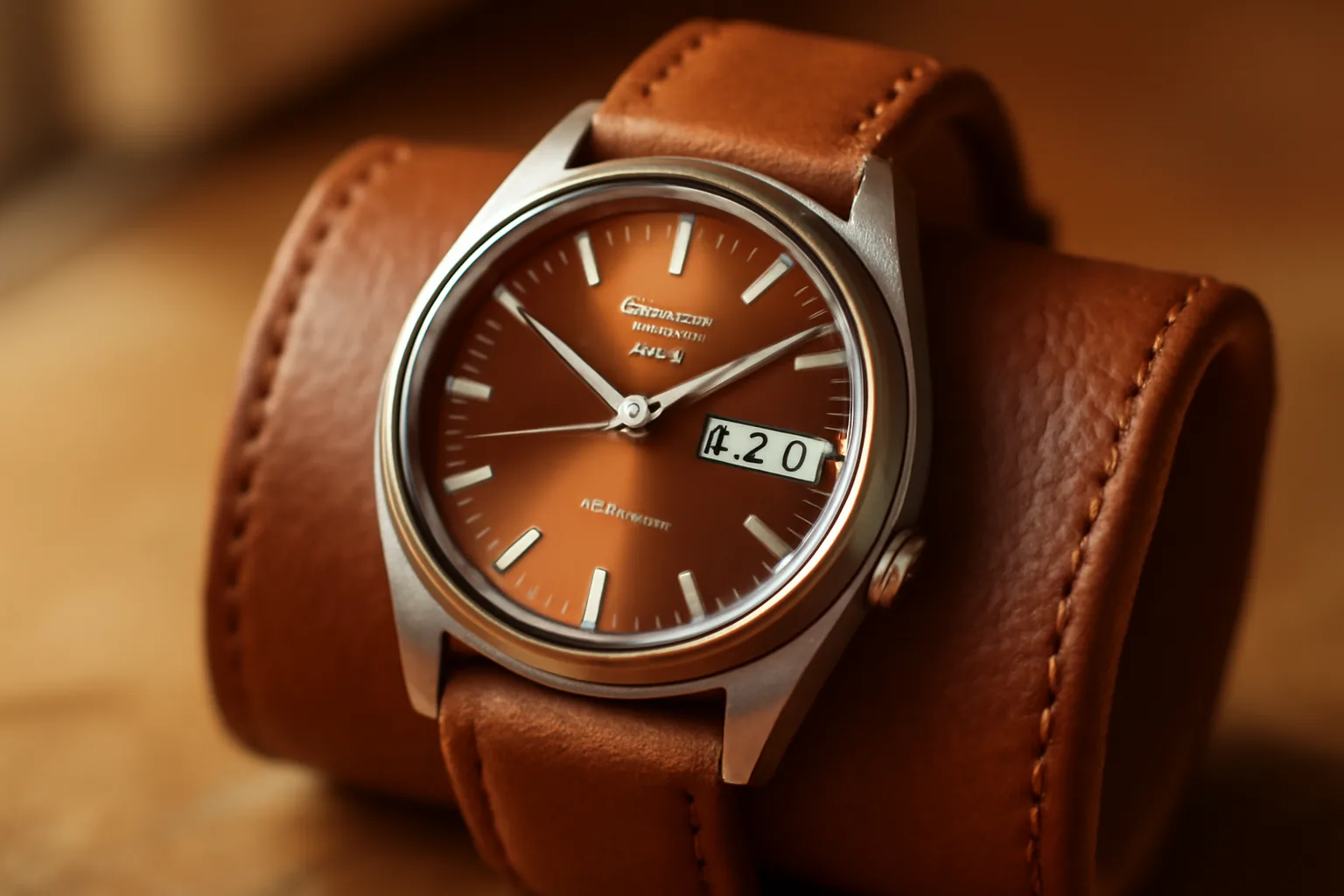
The model I keep returning to — and the one I now actively recommend to new collectors — is the Seiko Men’s SNXL72 Seiko 5 Automatic Gold-Tone Stainless Steel Bracelet Watch with Patterned Dial. The patterned dial on the SNXL72 is genuinely striking. It has a textured weave finish that catches light differently throughout the day. Paired with the gold-tone stainless steel bracelet, it reads as a dress watch at a glance — which is unusual for this price bracket.
I wore the SNXL72 to a formal dinner last autumn and received two unprompted compliments. Neither person asked what the watch cost. That’s the real test for a dress-adjacent piece: whether it creates a moment of appreciation before it triggers a price conversation. This one does.
What the SNXL72 Gets Right Specifically
- The patterned dial texture adds visual depth without looking busy
- Gold-tone case and bracelet maintain consistent color after 12 months of wear
- Case diameter sits at 37mm — slim enough for dress shirt cuffs
- The day-date complication uses both English and an alternate language display, standard across the Seiko 5 line
- Runs the same reliable 7S26 movement discussed above
At its current price point — typically $65–$85 on Amazon — the SNXL72 is, in my opinion, the strongest entry point into automatic watches for someone who wants something that looks intentional rather than utilitarian.
The Storage Question: Why I Now Use a Watch Winder
Here’s something I learned the hard way. I rotated the SNXL72 out of daily wear for about six weeks last spring, letting it sit in a watch roll. When I came back to it, the movement had run completely dry of kinetic energy. That’s expected — the 7S26 has a power reserve of approximately 40 hours. What I didn’t expect was how long it took to get the amplitude back up to normal running condition through wrist wear alone.
A timegrapher showed the watch running at +28 seconds per day on day one back on the wrist. By day three, it settled back to its baseline +12. The amplitude had just needed time to normalize. That experience converted me to using a watch winder for any automatic I’m not wearing daily.
The winder I currently use is the Mcbazel Single Watch Winder with Ultra Quiet Japanese Motor. It runs on both AC power and batteries, which I appreciate for desk use and travel respectively. The motor is genuinely quiet — I keep mine on my writing desk, two feet from where I journal, and I’ve never once noticed it audibly. For the 7S26, I set it to 650 turns per day in clockwise rotation, which keeps the rotor topped off without over-winding stress.
The crocodile-pattern exterior looks sharp for the price. More importantly, the rotation modes are programmable, which matters because different movements wind in different directions. The Mcbazel covers clockwise, counter-clockwise, and alternating — so it works across your whole collection as it grows.
Honest Limitations: What the Seiko 5 Won’t Do
I’d be doing you a disservice if I only praised it. The Seiko 5 has real limitations, and you should know them before you buy.
The movement finishing is purely functional. If you look closely at the rotor under magnification, there’s no Geneva stripes, no perlage, no beveling. Seiko reserves those finishing techniques for their higher-tier lines — the Presage collection starts around $250–$300 and shows a meaningful jump in decoration. For some collectors, movement aesthetics matter. For this watch, they don’t apply.
Accuracy is also not precision-grade. I mentioned ±15 to ±20 seconds per day as the realistic window. Some examples run better, some worse. If you need accurate timekeeping within a few seconds per day, you want a quartz movement — or you want to spend considerably more on a regulated mechanical. The Seiko 5 is not that watch. However, it is a mechanical watch that teaches you how to relate to time differently, and that’s worth something.
Finally: the crown position at 4 o’clock is a Seiko 5 trademark, and it divides people sharply. It exists to allow the day-date complication to sit at 3 o’clock. Functionally it works perfectly. Aesthetically, you either accept it quickly or it bothers you forever. Look at pictures before you buy.
When to Call a Pro: Servicing Your Seiko 5
The 7S26 movement is DIY-friendly by watchmaking standards, but “friendly” is relative. A full movement service — disassembly, ultrasonic cleaning, lubrication, reassembly, and regulation — requires tools that add up fast. A proper watchmaker’s loupe, movement holder, oiler set, and timing machine represent a $200–$400 investment before you’ve touched a single watch. That math only makes sense if you’re servicing multiple pieces regularly.
For a $60–$85 watch, here’s my honest recommendation: find a local watchmaker and ask about a basic service. Expect to pay $50–$90 for a full service on a 7S26. Yes, that can equal or exceed the watch’s purchase price. Do it anyway if you want the watch to run properly for another decade. Seiko recommends service intervals of every 3–5 years for their automatic calibers under normal wearing conditions.
Call a professional immediately if you notice: the crown feels gritty or loose, the seconds hand stutters irregularly, or the watch loses more than 30 seconds per day despite regular wrist time. These symptoms suggest either a dirty movement or a mainspring issue. Neither is a DIY repair without proper training and tools.
Final Thoughts: Is the Seiko 5 Still Worth It After One Year?
My Seiko 5 one year review comes down to this: it’s the best mechanical watch education available for under $100, and the SNXL72 specifically is the version I’d put on a friend’s wrist without hesitation. It taught me to read amplitude, to understand beat rate, and to think about the relationship between daily wear and mechanical performance. No watch at this price point offers that combination.
It’s not a perfect watch. The bracelet stretches, the crystal scratches, the accuracy doesn’t meet chronometer standards, and the no-hack, no-hand-wind movement will frustrate precise types. Those are real trade-offs, not footnotes.
That said, after 365 days, the SNXL72 is still in my rotation. It still looks sharp. It still runs reliably. And every time I wind down a journal page at my desk with it on my wrist — glancing at that patterned dial catching the afternoon light — I remember exactly why I bought it. Sometimes $65 buys you more than you expect.
Pair it with the Mcbazel watch winder for rest days, get a professional service at the five-year mark, and this watch will outlast most expectations. That’s the honest answer after a year on the wrist.
This post contains affiliate links. As an Amazon Associate, I earn from qualifying purchases at no extra cost to you.