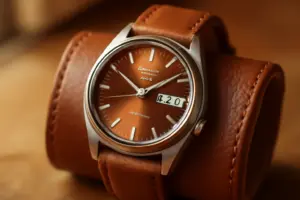
The first watch I ever bought with intention cost me $47 at a flea market in Cincinnati. It was a beat-up Seiko 5 with a scratched crystal and a bracelet that pinched arm hair. I wore it every single day for two years. That watch taught me more about building a beginner watch collection on a budget than any YouTube rabbit hole ever could. People assume you need thousands of dollars to collect watches meaningfully. You do not. What you need is a clear framework, a little patience, and an honest understanding of what you actually want on your wrist.
I’ve been collecting watches for over a decade now. My collection sits at 23 pieces, ranging from a $65 Casio to a $1,400 Hamilton Khaki Field Mechanical. In between those two bookends, I’ve made smart purchases, a few regrettable ones, and learned exactly where the sweet spots are for a beginner watch collection budget. Today I’m laying out the three-watch foundation I recommend to every new collector who asks me where to start — and how to do it without wrecking your finances.
Why Three Watches Is the Perfect Starting Point
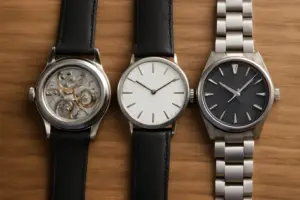
Three watches sounds arbitrary. It isn’t. There’s a reason seasoned collectors talk about the “holy trinity” approach — one casual watch, one dressy watch, and one sport or field watch. Together, those three pieces cover roughly 95% of your daily wrist needs. You’re not over-buying. You’re not under-equipped. For a beginner, that balance is everything.
When I built my own starter trio back in 2013, I kept a hard budget cap of $400 total. That felt tight at the time. Looking back, that constraint was a gift. It forced me to research deeply, prioritize movement quality over flashy dials, and think about long-term wearability. My $400 cap bought me three watches I still own today. That’s a better return than most investments I’ve made.
The three-watch framework also protects your movements. Rotating three watches instead of wearing one daily extends service intervals significantly. Mechanical watches typically need a service every 3–5 years. Rotating reduces wear on the mainspring and escapement. That’s real money saved over time — a watch service at a reputable watchmaker runs $150–$350 depending on the caliber.
Watch One: The Everyday Casual (Budget: $50–$120)
Your everyday casual watch takes the most abuse. It hits doorframes, gets sweated on, and goes from the gym to the grocery store. This is not where you spend big. This is where you spend smart.
My personal recommendation here is the Seiko 5 series — specifically the SNXS79 or the newer SRPE55 if you want a more modern case. The SNXS79 runs on Seiko’s caliber 7S26, a 21-jewel automatic that keeps time within roughly ±15 seconds per day. It retails around $65–$85 depending on where you find it. For that price, you get a fully automatic Japanese movement, a 100-meter water resistance rating, and a day-date complication. Nothing at this price point touches it.
That said, if automatic movements feel overwhelming as a beginner, the Casio MQ24-7B2 quartz is $15 well spent. Quartz accuracy runs within ±15 seconds per month — far better than most entry automatics. There’s no shame in starting with quartz. I wore quartz-only for my first three years of collecting, and I learned to read movements, case construction, and finishing quality without the pressure of regulating an automatic.
What to Look for in Case Quality
At this price tier, you want stainless steel — specifically 316L surgical-grade stainless, which most reputable brands use. Avoid watches that list the case material only as “alloy” or “metal.” Those terms are evasive for a reason. Check for a screw-down crown if water resistance matters to you. A push-pull crown is fine for everyday use, but it won’t hold up to swimming or heavy rain reliably.
Watch Two: The Dress Watch (Budget: $100–$200)
A dress watch does one thing: it disappears under a shirt cuff and completes a professional or formal look without calling attention to itself. Thin profile, clean dial, minimal complications. This is the watch that earns you quiet respect in a boardroom or at a wedding.
In my experience, the Tissot Everytime series is the best value in this category right now. The Tissot Everytime Small (T109.210.16.031.00) runs on the ETA G10.212 quartz caliber, keeps beautiful time, and wears at 38mm — appropriately slim for dress wear under a suit. Street price sits around $175–$195. Tissot is a Swiss Made brand regulated under COSC standards, and even their non-COSC pieces show consistently excellent finishing for the price.
I learned this the hard way: I cheaped out on my first dress watch. I bought a generic $40 fashion watch with a logo I’d never heard of, a dial that aged badly under fluorescent office lighting, and a movement that drifted three minutes per week. It looked fine in photos. In person, it looked exactly like what it was. Spend a little more on your dress watch. You’ll wear it at moments that matter.
The Strap Upgrade Trick
One of the best bang-for-your-buck moves in collecting is buying an affordable watch and upgrading the strap. A quality Italian leather strap from Hirsch or Strapcode runs $25–$45 and transforms even a mid-range watch. For dress watches specifically, a simple leather swap from a standard black to a warm tan or cordovan brown changes the entire character of the piece. It’s one of those tricks that separates collectors from casual wearers.
Watch Three: The Field or Sport Watch (Budget: $120–$250)
Your field or sport watch is the utility player. It handles outdoor activities, casual weekends, and anything where your dress watch would feel precious and your Seiko 5 might look too casual. This is where I personally enjoy spending the most research time, because the options are genuinely exciting even at modest prices.
My strongest recommendation is the Orient Mako II (FAA02004B9). It’s a Japanese automatic diver running the Orient caliber F6922, which beats at 22,800 vph and includes a hand-winding and hacking function — features that many beginner automatics skip entirely. Water resistance is rated to 200 meters, meeting ISO 6425 diver’s watch standards. Street price is typically $130–$160. For a legitimately ISO-certified dive watch at that price, nothing else comes close.
Alternatively, if you prefer a field watch aesthetic, the Hamilton Khaki Field Quartz (H68551833) at around $195 is exceptional. Hamilton is owned by the Swatch Group and produces movements in Biel, Switzerland under real Swiss Made certification. The Khaki Field has military heritage dating to WWII U.S. Army contracts, and it shows in the legibility, the dial design, and the durability of the case. It wears at 38mm and looks correct in virtually any casual setting.
Storing Your Beginner Watch Collection on a Budget the Right Way
Here’s something most beginner guides skip entirely: how you store your watches matters as much as how you choose them. Watches left in a drawer pile up scratches from each other. Bracelets tangle. Dust settles into crown gaps. Proper storage protects your investment from day one.
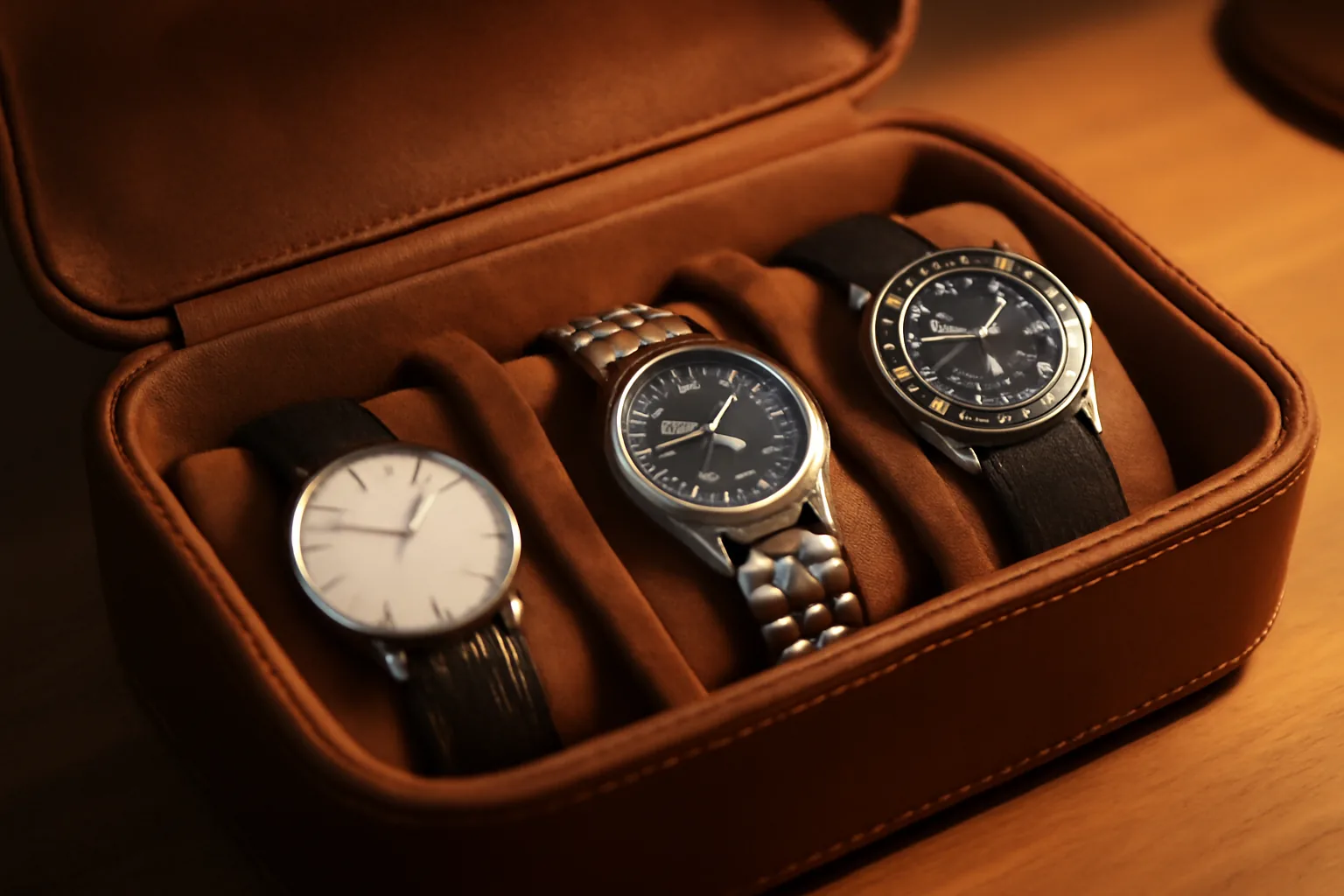
After testing several watch boxes over the years, my current recommendation for a beginning collector is the ProCase Watch Box Organizer — 12 Slot, Brown. I’ve had mine for about eight months now. The brown faux-leather exterior looks genuinely handsome on a shelf, the glass lid lets you see your watches at a glance without opening it, and the individual cushioned pillows hold watches securely without scratching bracelets or crystals. The 12-slot capacity gives a beginning collector room to grow — you won’t outgrow it at three watches, or even at eight.
What I specifically appreciate is the lid’s hinge construction. It opens smoothly and stays open while you’re selecting a watch, which sounds minor until you’ve knocked a case off a dresser fumbling with a flimsy lid. The interior lining is a soft gray material that hasn’t shown any transfer staining on my lighter-dialed pieces. At its price point, it punches well above its weight for everyday functionality.
If you want a slightly more budget-conscious option, the SONGMICS 12-Slot Watch Case Organizer (UJWB12BK) in black synthetic leather is a solid runner-up. The removable pillows are a nice practical feature, and it photographs well if gifting is your goal. In my experience, the ProCase has slightly more refined interior cushioning, but both protect your watches effectively at this price tier.
One Storage Rule I Never Break
Keep automatic watches off their crown side when stored. Pressure on the crown can stress the stem gasket over time, affecting water resistance. Store them crown-up or dial-up. It costs nothing and preserves your water resistance rating longer. This is the kind of detail most beginner guides don’t mention — but it’s the difference between a watch that services cleanly and one that needs a gasket replacement sooner than expected.
When to Call a Pro — And When You Don’t Need To
Most beginner watch maintenance is genuinely DIY-friendly. Strap swaps require only a spring bar tool — a $6 item on Amazon. Light case and bracelet cleaning with a soft toothbrush and warm soapy water is safe on water-resistant watches. Adjusting bracelet links using a push-pin tool is straightforward with a few YouTube references.
However, there are firm limits. Do not open a watch case unless you have watchmaking experience, a dust-free environment, and proper tools. Introducing debris to a movement causes damage that costs more to repair than the watch is worth at this price tier. Movement regulation — adjusting beat rate and amplitude — requires a timegrapher and trained hands. Send it to a watchmaker.
Crystal replacement on entry-level watches typically runs $25–$60 at a local watchmaker for mineral crystal. Sapphire crystal replacements run $60–$120 depending on the case. Full service intervals for automatics at this tier should be every 5–7 years with regular wear. Budget approximately $150–$200 per service for Seiko and Orient calibers from a reputable independent watchmaker. The Watch Repair Network and AWCI (American Watchmakers-Clockmakers Institute) both maintain directories of certified watchmakers if you need a referral.
Final Thoughts: Building Your Beginner Watch Collection on a Budget
A solid beginner watch collection budget of $370–$570 can get you three genuinely excellent watches that cover every life situation. That’s not a compromise — that’s a collection. The Seiko 5 for daily wear, a Tissot Everytime for professional moments, and an Orient Mako II for everything outdoors. Those three pieces represent real horology: legitimate movements, honest case construction, and brands with decades of manufacturing credibility.
Store them properly in a case like the ProCase Watch Box so they stay protected and organized from day one. Rotate them regularly. Learn their quirks. A watch you wear tells you things a watch on a shelf never will.
The flea market Seiko I mentioned at the start? It’s sitting in slot three of my ProCase right now. Still running. Still worth every lesson it taught me. That’s what collecting on a real budget looks like — patient, intentional, and deeply satisfying. Start with three. Build from there. You won’t regret it.
This post contains affiliate links. As an Amazon Associate, I earn from qualifying purchases at no extra cost to you.